Back to Network



















6
Shared Docs
5
Same-Page
6 / 6
Mentions
Document Mentions (6 shared documents)
2 mentions1 same-page
Page ?Same page
ctured around the world on the future of science and its role in society, including at the World Economic Forum, the National Academies of Science, the Royal Society, the National Institutes of Health, the State Department, NASA, the Chinese Ministry of Science and Technology, The Museum of Modern Art, and The
ry millennium. This clock became the Clock of the Long Now, a name invented by the songwriter and composer, Brian Eno. Hillis wrote an article for Wired magazine suggesting a clock that would last over to,000 years. The project led directly to the founding of the Long Now Foundation in 1996 by Hill
2 mentions1 same-page
Page ?Same page
edical Research Council Laboratory of Molecular Biology, Cambridge University; recipient of the Nobel Prize in Chemistry (2009); current president of the Royal Society; and the author of Gene Machine: The Race to Discover the Secrets of the Ribosome. HOUSE_OVERSIGHT_016806 Stuart Russell is a professor of computer
ly later did I learn that Yudkowsky wasn’t the original dissident speaking this particular truth. In April 2000, there was a lengthy opinion piece in Wired titled, “Why the Future Doesn’t Need Us,” by Bill Joy, co-founder and chief scientist of Sun Microsystems. He warned: Accustomed to living with almo
2 mentions1 same-page
Page ?Same page
edical Research Council Laboratory of Molecular Biology, Cambridge University; recipient of the Nobel Prize in Chemistry (2009); current president of the Royal Society; and the author of Gene Machine: The Race to Discover the Secrets of the Ribosome. A former colleague of mine, Gérard Bricogne, used to joke that ca
ters—Crays—which were half the power of your phone now, but they were the supercomputers of the time. Meanwhile, we were reading this magazine called Wired, which came out in 1993, and we realized that this tool we scientists use could have applications for everybody. The Internet wasn’t just about scien
Sponsored
2 mentions1 same-page
Page ?Same page
edical Research Council Laboratory of Molecular Biology, Cambridge University; recipient of the Nobel Prize in Chemistry (2009); current president of the Royal Society; and the author of Gene Machine: The Race to Discover the Secrets of the Ribosome. HOUSE_OVERSIGHT_016223 Stuart Russell is a professor of computer
ly later did I learn that Yudkowsky wasn’t the original dissident speaking this particular truth. In April 2000, there was a lengthy opinion piece in Wired titled, “Why the Future Doesn’t Need Us,” by Bill Joy, co-founder and chief scientist of Sun Microsystems. He warned: Accustomed to living with almo
2 mentions1 same-page
Page ?Same page
edical Research Council Laboratory of Molecular Biology, Cambridge University; recipient of the Nobel Prize in Chemistry (2009); current president of the Royal Society; and the author of Gene Machine: The Race to Discover the Secrets of the Ribosome. A former colleague of mine, Gérard Bricogne, used to joke that ca
ters—Crays—which were half the power of your phone now, but they were the supercomputers of the time. Meanwhile, we were reading this magazine called Wired, which came out in 1993, and we realized that this tool we scientists use could have applications for everybody. The Internet wasn’t just about scien
Page HOUSE_OVERSIGHT_017533
lectured around the world on the future of science and its role in society, including at the World Economic Forum, the National Academies of Science, the Royal Society, the National Institutes of Health, the State Department, NASA, the Chinese Ministry of Science and Technology, The Museum of Modern Art, and The Aca
Page: HOUSE_OVERSIGHT_017533 →Page HOUSE_OVERSIGHT_017542
very millennium. This clock became the Clock of the Long Now, a name invented by the songwriter and composer, Brian Eno. Hillis wrote an article for Wired magazine suggesting a clock that would last over 10,000 years. The project led directly to the founding of the Long Now Foundation in 1996 by Hillis
Page: HOUSE_OVERSIGHT_017542 →Sponsored
Mutual Connections (1,561)
Entities connected to both the Royal Society and Wired
Jeffrey Epstein
PERSON16 w/ the·15 w/ Wired
George W. Bush
PERSON12 w/ the·12 w/ Wired
Woody Allen
PERSON13 w/ the·9 w/ Wired
Marc Rich
PERSON10 w/ the·12 w/ Wired
Stephen Hawking
PERSON9 w/ the·12 w/ Wired
Barack Obama
PERSON9 w/ the·12 w/ Wired
Elon Musk
PERSON11 w/ the·8 w/ Wired
Bill Gates
PERSON7 w/ the·12 w/ Wired
Robert Gates
PERSON7 w/ the·11 w/ Wired
Alan Dershowitz
PERSON7 w/ the·9 w/ Wired
Daniel Kahneman
PERSON8 w/ the·8 w/ Wired
Martha Stewart
PERSON9 w/ the·7 w/ Wired
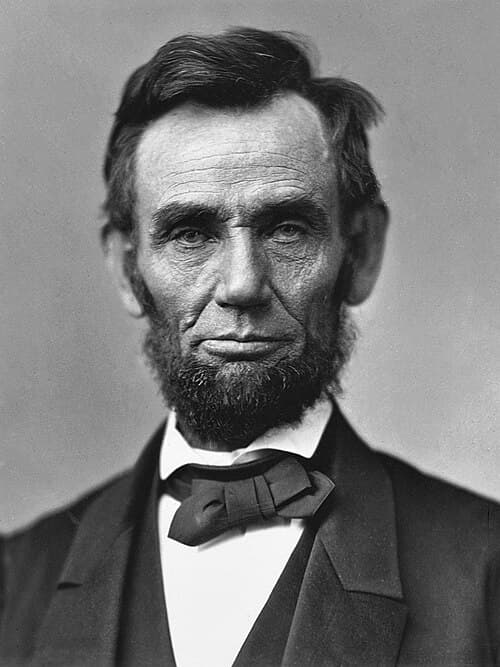
Abraham Lincoln
PERSON13 w/ the·3 w/ Wired
John Brockman
PERSON8 w/ the·8 w/ Wired
Wilbur Ross
PERSON6 w/ the·10 w/ Wired
Prince Andrew
PERSON6 w/ the·10 w/ Wired
Harvard University
ORGANIZATION13 w/ the·3 w/ Wired
Prince Charles
PERSON7 w/ the·8 w/ Wired
Oliver Stone
PERSON6 w/ the·9 w/ Wired
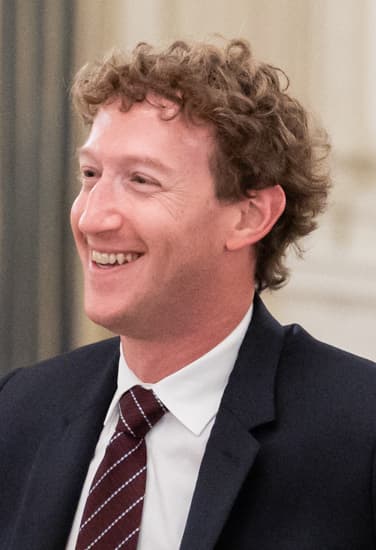
Mark Zuckerberg
PERSON8 w/ the·7 w/ Wired