Back to Network



7
Shared Docs
5
Same-Page
7 / 7
Mentions
Document Mentions (7 shared documents)
2 mentions1 same-page
Page EFTA00016737Same page
ssurances of preservation -- requires a full factual record and, if appropriate, sanctions for the loss of the evidence. The Supreme Court held in Brady v. Maryland, 373 U.S. 83, 87 (1963), that "the suppression by the prosecution of evidence favorable to the accused upon request violates due proces
Page: EFTA00016737 →character or record and any of the circumstances of the offense that the defendant proffers as a basis for a sentence less than death."' Eddings v. Oklahoma, 455 U.S. 104, 110 (1982) (quoting Lockett v. Ohio, 438 U.S. 586, 604 [1978]). See also Eddings, at 113-14 (1982) (both due process and the Eighth A
Page: EFTA00016737 →2 mentions1 same-page
Page ?Same page
e attorneys representing criminals, the Office would promptly turn over all information in its possession that was helpful to these criminals under Brady v. Maryland, 373 U.S. 83 (1963), and related decisions. Victims' counsel asked the Office to extend to the victims the same assistance that it would
t from asserting privilege against those whose interests it must protect, such as Indian tribes. See, e.g., Osage Nation and/or Tribe of Indians of Oklahoma v. United States, 66 Fed. Cl. 244 (2005); Cobell v. Norton, 212 F.R.D. 24 (D.D.C. 2002). For instance, in Osage Nation, the Government argued agains
2 mentions1 same-page
Page ?Same page
for their U.S. fleets in coming years, undercutting one of the Trump administration's most aggressive climate policy rollbacks. Juliet Eilperin and Brady Dennis report: "The compromise between the California Air Resources Board and Ford, Honda, Volkswagen and BMW of North America came after weeks of
Jacob Bogage reports: "Kanter's jersey from his time with the Oklahoma City Thunder hangs in the office of Sen. James Lankford, a Republican from Oklahoma. He talks about the NBA with Sen. Ron Wyden, an Oregon Democrat known throughout the Senate as a basketball devotee. He has discussed Interpol red
Sponsored
2 mentions1 same-page
Page ?Same page
convicted. Under these cir- cumstances we choose not to catalogue the S. Rich also argues that the Govemmeeyy breached its duty of disclosure under Brady Maryland. 373 U.S. 83. 83 S.Q. 1194. Ib L.Edld 313 (1963). by failing to release Was- goner's grand jury testimony. Under Brady, governmental supp
-calculate the defendant's sentence. I. The presentence report ("PSI") presented the following basic facts. During an investigation conducted in Oklahoma in May 2003, the FBI learned that Warren Paul Perkins, III, had emailed child pornography images to the America OnLine ("AOL") screen name "moonki
2 mentions1 same-page
Page ?Same page
e attorneys representing criminals, the Office would promptly turn over all information in its possession that was helpful to these criminals under Brady v. Maryland, 373 U.S. 83 (1963), and related decisions. Victims' counsel asked the Office to extend to the victims the same assistance that it would
t from asserting privilege against those whose interests it must protect, such as Indian tribes. See, e.g., Osage Nation and/or Tribe of Indians of Oklahoma v. United States, 66 Fed. Cl. 244 (2005); Cobell v. Norton, 212 F.R.D. 24 (D.D.C. 2002). For instance, in Osage Nation, the Government argued agains
HOUSE_OVERSIGHT_016509 - HOUSE_OVERSIGHT_016551
Article: Criminal Enforcement Redundancy: Oversight of Decisions Not to Prosecute
2 mentions
Page HOUSE_OVERSIGHT_016511
de v. McLaughlin, 500 U.S. 44, 52-58 (1991) (defining "prompt" under Gerstein's requirement of a prompt judicial determination of probable cause). 6 Brady v. Maryland, 373 U.S. 83, 86 (1963) (holding prosecution's withholding of the confession of defendant's confederate violated defendant's due process
Page: HOUSE_OVERSIGHT_016511 →Page HOUSE_OVERSIGHT_016528
the public prosecutor remain in continuous control of the case). Scattered marginal remnants of private enforcement may remain elsewhere, such as an Oklahoma statute providing that prosecutions for adultery (a felony) may be "commenced and carried on against either of the parties to the crime only by his
Page: HOUSE_OVERSIGHT_016528 →Sponsored
HOUSE_OVERSIGHT_017635 - HOUSE_OVERSIGHT_017713
ARTICLE: Treating Crime Victims Fairly: Integrating Victims into the Federal Rules of Criminal Procedure
2 mentions
Page HOUSE_OVERSIGHT_017639
ly unknown even to the most experienced judges and attorneys. The prime illustration of the ineffectiveness of the Victims’ Rights Act comes from the Oklahoma City bombing case, where victims were denied rights protected by statute in large part because the rights were not listed in the criminal rules. 77
Page: HOUSE_OVERSIGHT_017639 →Page HOUSE_OVERSIGHT_017673
lso United States v. Ruiz, 536 U.S. 622, 629 (2002) (quoting Weatherford, 429 U.S. at 559). 298 Wardius v. Oregon, 412 U.S. 470,474 (1973). 299 See Brady v. Maryland, 373 U.S. 83, 87 (1963). 300 See United States v. Bagley, 473 U.S. 667, 675 (1985). 301 United States v. Garrett, 238 F.3d 293, 302 (St
Page: HOUSE_OVERSIGHT_017673 →Sponsored
Mutual Connections (1,052)
Entities connected to both Brady and Oklahoma
Jeffrey Epstein
PERSON181 w/ Brady·203 w/ Oklahoma
United States
LOCATION113 w/ Brady·129 w/ Oklahoma
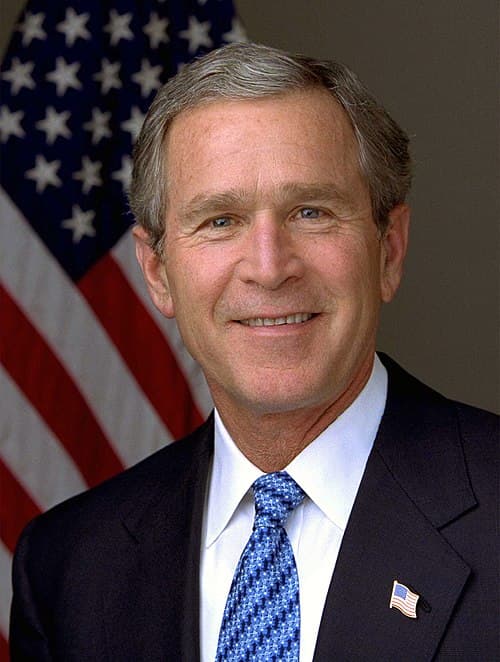
George W. Bush
PERSON60 w/ Brady·145 w/ Oklahoma
Ghislaine Maxwell
PERSON91 w/ Brady·106 w/ Oklahoma
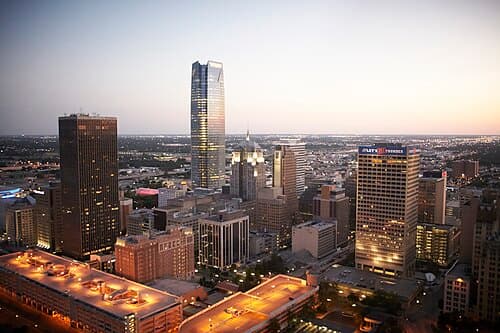
Oklahoma City
LOCATION9 w/ Brady·175 w/ Oklahoma
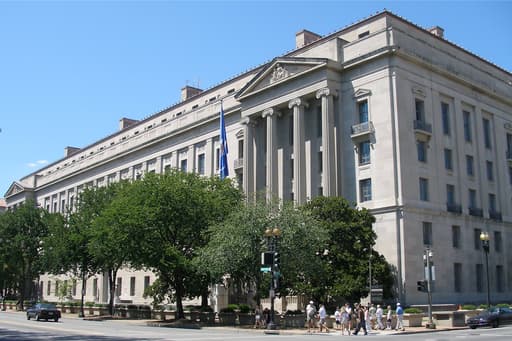
Department of Justice
ORGANIZATION66 w/ Brady·108 w/ Oklahoma
Prince Andrew
PERSON68 w/ Brady·104 w/ Oklahoma
Donald Trump
PERSON48 w/ Brady·122 w/ Oklahoma
LB
Leon Black
PERSON47 w/ Brady·109 w/ Oklahoma
Virginia Giuffre
PERSON23 w/ Brady·121 w/ Oklahoma
Colorado
LOCATION24 w/ Brady·106 w/ Oklahoma
Julie K. Brown
PERSON45 w/ Brady·85 w/ Oklahoma
FBI
ORGANIZATION61 w/ Brady·59 w/ Oklahoma
Joe Biden
PERSON25 w/ Brady·93 w/ Oklahoma
Scarlett Johansson
PERSON50 w/ Brady·64 w/ Oklahoma
Michigan
LOCATION12 w/ Brady·101 w/ Oklahoma
the Southern District
LOCATION77 w/ Brady·35 w/ Oklahoma
Bill Clinton
PERSON32 w/ Brady·80 w/ Oklahoma
Michael Jackson
PERSON17 w/ Brady·91 w/ Oklahoma
Marc Rich
PERSON34 w/ Brady·72 w/ Oklahoma