Back to Network












3
Shared Docs
3
Same-Page
15 / 3
Mentions
Document Mentions (3 shared documents)
8 mentions1 same-page
Page ?Same page
SANBORN, and THOMAS, Circuit Judges. STONE, Circuit Judge- This is an appeal from a conviction for violation of the White Slave Traffic Act, IS U.S.C.A. § 397 ct seq. Appellant urges here three claimed er- rors: (1) Improper restriction of cross- examination of a witness; (2) error in the charge to
ses the emotional and psychic harm suffered by the child"). New York I Ferber. 458 U.S. 747. 758-59 & trtr9-1011982) (citations omitted); see also United Slates Yuknavich. 419 F.3d 1302. 1310 (11th Cir.2005) ("possession of child pornography is not a victimless crime")• Goff. 501 F.3d at 259 ("Consum
tside the Guidelines, the judge will explain why he has done so." 127 S.Ct. at 2468. The Supreme urt most recently addressed sentencing in Gall United Stases. 128 S.Ct. 586 (2007), and Kimbroushi United States. 128 S.Ct. 558 (2007). F" Gall reviewed the reasonableness of a sentence falling far below the
ssed; (4) submit to searches based on reasonable suspicion; and (5) register with the state sex-offender registry. After the district court denied the United States's motion to reconsider the sentence and impose either a sentence within the Guidelines, or a sentence of at least one day in prison followed by a li
f § 2423(c). Adopted in 2003 as part of the PROTECT Act, § 2423(c) provides as follows: (c) Engaging in illicit sexual conduct in foreign places. Any United States citizen or alien admitted for permanent residence who travels in foreign commerce, and engages in any illicit sexual con- duct with another person
1984 U.S.C.C.A.N. at 3258-59. "411 11. Notably, this notion of "just deserts" or retribution is a distinct consideration from general deterrence. See United States' Foss. 501 F.2d 522. 527 (1st Cir.1974) (cited with approval in the legislative history of Section 3553(a)) ("[T]he @ 2008 Thomson/West. No Claim t
immoral purposes, such act is not causing such trip within the meaning of section 2 but is, if any crime, the one stated in section 3 of the Act, U.S.C.A. Title 18, § 399. The pertinent language in the two sec- tions is: Section 2. "Any person who shall knowingly • • • cause to be transport- ed • •
bert S. Lasnik, District Judge, Presiding. D.C. No. CR- 03-00406-L. Before HUG, FERGUSON, and McKEOWN, Cir- cuit Judges. Opinion by Judge McKEOWN; Dissent by Judge FERGUSON. C 2008 Thomson/West. No Claim to Orig. U.S. Govt. Works. haps://web2.westlaw.com/print/printstream.aspx?sv=Full&rs=WLW8.018Lprf
5 mentions1 same-page
Page ?Same page
until, at the earliest, a suspect's initial appearance before a judicial officer. U.S. Const. Amend. 6. *1246 On Petition for Writ of Mandamus to the United States District Court for the Southern District of Florida, D.C. Docket No. 9:08-cv-80736-KAM Attorneys and Law Firms Paul Cassell, University of Utah Co
words of the statute as they are commonly and ordinarily understood and must construe the statute so each of its provisions is given full effect." P United States it McLymont, 45 F.3d 400, 401 (I I th Cir. 1995). Therefore, "[w]e do not look at one word or term in isolation, but instead we look to the entire
nt Venture, 245 F.3d 1217, 1222 (11th Cir. 2001). We are bound to "presume that Congress said what it meant and meant what it said." Id. (quoting P. United States it Steele, 147 F.3d 1316, 1318 (11th Cir. 1998) (en bane)); see alsol° Keene Corp., 508 U.S. at 208, 113 S.Ct. 2035. Therefore, under the plain la
the Majority, Judge Tjoflat's concurring opinion, and I agree that the Executive has exclusive and complete authority over charging decisions. See? li United States v. Nixon, 418 U.S. 683, 693, 94 S.Ct. 3090, 41 L.Ed.2d 1039 (1974) ("[T]he Executive Branch has exclusive authority and absolute discretion to deci
of whether the remedy provision in § 377I(d) applies pre-charge. Second, as to the merits of that first en banc issue, I agree with Judge Branch's Dissent that under the plain language of the CVRA victims have reasonable rights to confer with prosecutors and these rights attach pre-charge, and that th
5 mentions1 same-page
Page ?Same page
istent with how our circuit and others have articulated the doctrine. See, e.g., United States v. Villasenor. 608 F.3d 467. 471-72 (9th Cir.2010); United Stales v. Yang, 286 F.3d 940.945-46 (7th Cir.2002); United States v. Hyde, 37 F.3d 116. 120 n. 2 (3d Cit 1994); United States v. Santiago, 837 F.2d 1545.
010). Reasonable suspicion is required precisely because the individual has regained an expectation of privacy by moving away from the border. See United Slates v. Villasenor. 608 F.3d 467.471-72 (9th Cir.), cert. denied, —U.S., 131 S.Ct. 547. 178 L.Ed.2d 401 (2010); United States v. Whiting. 781 F.2d 692.
bing a functional border search and those describing an extended border search, not in defining the standard for a search at the border. See, e.g., United States v. Cardona, 769 F.2d 625, 628 (9th Cir.1985) ("We have recently recognized the difficulty of making sharp distinctions between searches at the func
he Court has expressed support for the deterrence value of suspicionless searches of a routine nature, such as vehicle checkpoints near the border. See United States v. Maninez— Fuerte, 428 U.S. 543, 556, 96 S.Ct. 3074, 49 L.Ed.2d 1116 (1976) ("We note here only the substantiality of the public interest in the p
ment of the case. Judge Wardlaw was drawn as her replacement. Opinion by Judge McKEOWN; Partial Concurrence and Partial Dissent by Judge CALLAHAN; Dissent by Judge MILAN D. SMITH, JR. OPINION McKEOWN, Circuit Judge: Every day more than a million people cross American borders, from the physical bord
Sponsored
Mutual Connections (45)
Entities connected to both United States and Dissent
Jeffrey Epstein
PERSON4,786 w/ United·3 w/ Dissent
George W. Bush
PERSON2,223 w/ United·2 w/ Dissent
Ghislaine Maxwell
PERSON1,187 w/ United·2 w/ Dissent
Department of Justice
ORGANIZATION1,116 w/ United·4 w/ Dissent
the Southern District
LOCATION1,096 w/ United·2 w/ Dissent
LB
Leon Black
PERSON927 w/ United·2 w/ Dissent
John F. Kennedy
PERSON829 w/ United·2 w/ Dissent
Prince Charles
PERSON701 w/ United·2 w/ Dissent
Marc Rich
PERSON626 w/ United·3 w/ Dissent
Scarlett Johansson
PERSON525 w/ United·4 w/ Dissent
Samantha Power
PERSON458 w/ United·2 w/ Dissent
Michael Cohen
PERSON383 w/ United·3 w/ Dissent
Michael Jackson
PERSON377 w/ United·3 w/ Dissent
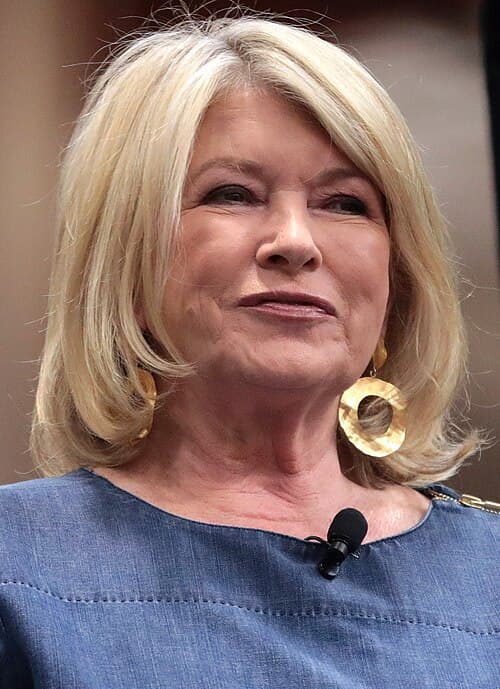
Martha Stewart
PERSON345 w/ United·2 w/ Dissent
Supreme Court
ORGANIZATION304 w/ United·4 w/ Dissent
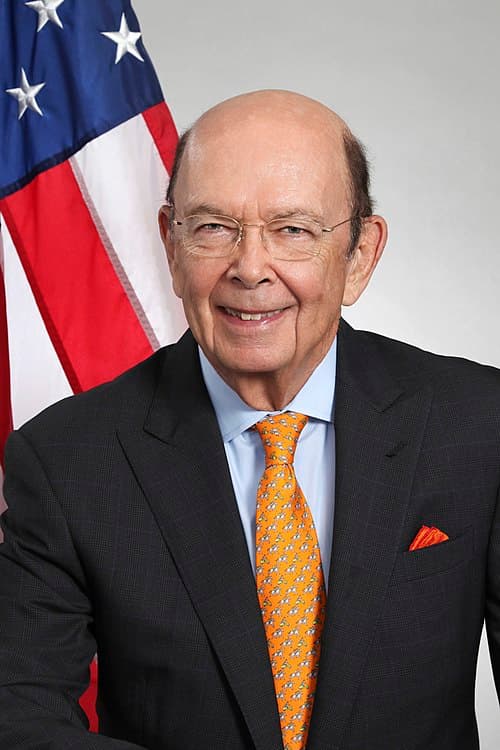
Wilbur Ross
PERSON269 w/ United·3 w/ Dissent
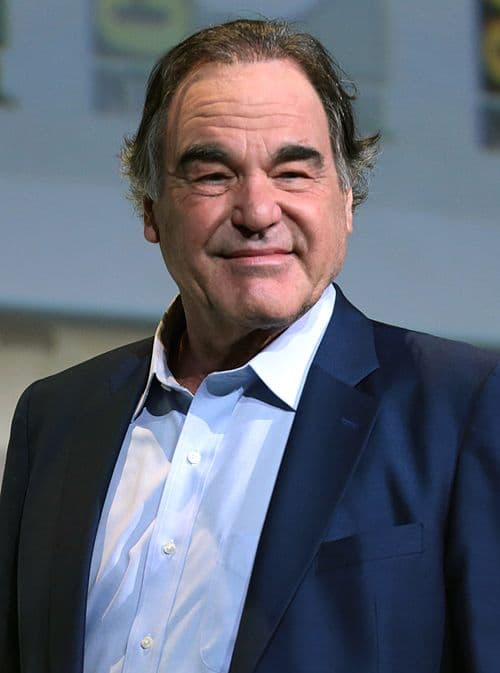
Oliver Stone
PERSON221 w/ United·2 w/ Dissent
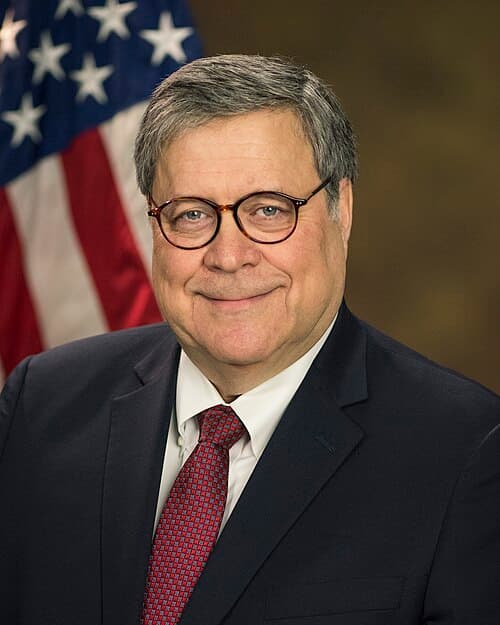
William Barr
PERSON203 w/ United·2 w/ Dissent
Puerto Rico
LOCATION187 w/ United·2 w/ Dissent
Seattle
LOCATION140 w/ United·2 w/ Dissent