Back to Network


















4
Shared Docs
4
Same-Page
5 / 6
Mentions
Document Mentions (4 shared documents)
4 mentions1 same-page
Page ?Same page
ly that any communication or movement, Snowden made during his next 18 days in Hong Kong would escape its scrutiny. HOUSE_OVERSIGHT_020338 187 The U.Ss also had the ability to track Snowden’s movements via the cell phones of his lawyers and other confederates after he surfaced. This tracking could al
wald, Poitras and MacAskill did not concern themselves with the issue of the mechanics of the largest theft of top secret documents in the history of the United States. In entire filmed interview at the Mira Hotel, they did not ask their source how he managed to get access to the documents. Unlike those interviews,
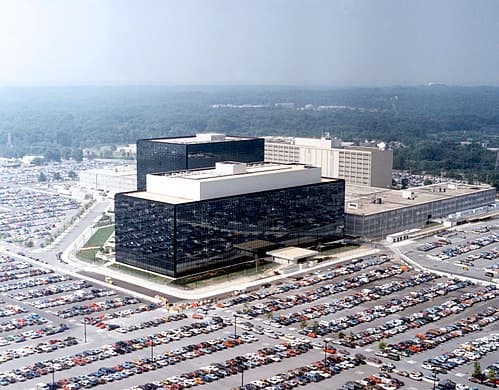
the NSA. In 2010, the NSA’s “Q” division handled such security and espionage threats. It reportedly initiated a counter-espionage probe at the NSA’s Fort Meade headquarters on receiving the tip. But since the NSA’s cryptological service had in 2010 no fewer than 35,000 military and civilian contractor employ
le its adversaries took full advantage of the setback. Several hundred US and British intelligence officers worked around the clock in Washington DC, Fort Meade, Maryland and Cheltenham, England for months on end to determine if which parts could be still salvaged from what had been until the Snowden breach t
3 mentions1 same-page
Page ?Same page
on was its undisputed dominance in the business of obtaining and deciphering the communications of other nations. The NSA was the instrument by which the United States both protected its own secret communications and stole the secrets of foreign nations. The NSA, however, has an Achilles’s heel: It is dependent on c
ing the NSA. In 2010, the NSA division that handled such security and espio- nage threats reportedly initiated a counterespionage probe at the NSA’s Fort Meade headquarters. According to a former NSA official, “They [were] looking for one or more Russian spies that NSA [was] convinced resided at Fort Meade a
adversaries took full advantage of the setback. Sev- eral hundred U.S. and British intelligence officers worked around the clock in Washington, D.C., Fort Meade, Maryland, and Cheltenham, England, for months on end to determine which parts of the most powerful communications intelligence system in the world c
2 mentions1 same-page
Page ?Same page
le awaiting his trial and was facing a long prison sentence. There was no reason for Snowden to expect a better outcome for himself if he returned to the United States or was arrested anywhere else that had an extradition treaty with the United States. As the Russian officials in Hong Kong would have informed him, R
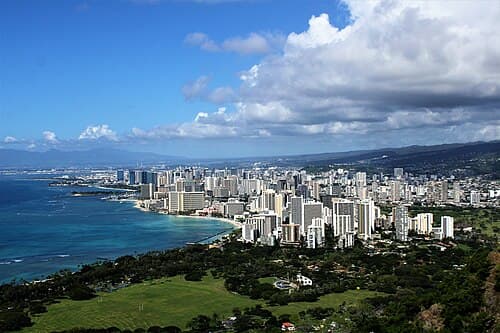
ing the breach to a team headed by Richard “Rick” Ledgett, who was then director of the NSA’s Threat Opera- tions Center at the NSA’s headquarters in Fort Meade, Maryland. Ledgett was the logical choice to head the damage assessment inves- tigation because the center’s regional branch in Hawaii was under his
Sponsored
2 mentions1 same-page
Page ?Same page
whistle-blowing concept to adversaries was echoed by Russian President Vladimir Putin. He complimented Snowden for having “uncovered illegal acts by the United States around the globe,” Putin’s view implies a convenient global concept of whistle-blowing that justified breaking US laws. Even so, this whistle-blower
the sensitive job of investigating the breach to Richard “Rick” Ledgett, the Director of the NSA’s Threat Operations Center at NSA’s headquarters in Fort Meade, Maryland. It was a key position since the top- secret unit was responsible for discovering and countering the threats posed by Chinese, Russian and
Sponsored
Mutual Connections (336)
Entities connected to both United States and Fort Meade
Jeffrey Epstein
PERSON4,786 w/ United·3 w/ Fort
George W. Bush
PERSON2,223 w/ United·4 w/ Fort
Honolulu
LOCATION1,239 w/ United·3 w/ Fort
Department of Justice
ORGANIZATION1,116 w/ United·4 w/ Fort
LB
Leon Black
PERSON927 w/ United·2 w/ Fort
Alan Dershowitz
PERSON875 w/ United·4 w/ Fort
John F. Kennedy
PERSON829 w/ United·4 w/ Fort
Bradley Edwards
PERSON718 w/ United·2 w/ Fort
Prince Charles
PERSON701 w/ United·3 w/ Fort
Marc Rich
PERSON626 w/ United·4 w/ Fort
Hawaii
LOCATION611 w/ United·4 w/ Fort
Donald Trump
PERSON579 w/ United·3 w/ Fort
Bill Clinton
PERSON528 w/ United·4 w/ Fort
Julie K. Brown
PERSON494 w/ United·2 w/ Fort
Virginia Giuffre
PERSON474 w/ United·3 w/ Fort
Barack Obama
PERSON419 w/ United·4 w/ Fort
Richard Kahn
PERSON347 w/ United·2 w/ Fort
Stephen Hawking
PERSON342 w/ United·2 w/ Fort
George Mitchell
PERSON338 w/ United·4 w/ Fort
Woody Allen
PERSON294 w/ United·4 w/ Fort