Back to Network















7
Shared Docs
7
Same-Page
7 / 7
Mentions
Document Mentions (7 shared documents)
2 mentions1 same-page
Page ?Same page
s were vacated by New York Supreme Court Justice Charles J. Tejada on December 19, 2002. As Morgenthau rec
uts and tax increases) self-defeating or the unavoidable response to high budget deficits and debt? Can central banks such as the Federal Reserve or the European Central Bank engineer recovery by holding short-term interest rates near zero and by buying massive amounts of bonds (so-called "quantitative easing")? Or will
2 mentions1 same-page
Page ?Same page
Wayne Shorter, Herbie Hancock, Pat Metheny, and Charles Mingus; the latter asked her to collaborate on hi
only being kept out of the abyss by a debt restructure in 2012. And under that restructure it now owes money mainly to other European governments, the European Central Bank (ECB) and the IMF. These official creditors have slashed interest rates and stretched out maturities, but not enough. With a debt stock of 175% of G
2 mentions1 same-page
Page ?Same page
d unpaid time at a pro-Romney rally; to David and Charles Koch, who sent anti-Obama and pro-Romney materia
emanke understood the depths of the problem early and responded energetically and creatively. The clearest vindication of his actions has been that the European Central Bank, after charting the opposite course for three years with disastrous results, has adopted policies similar to the Fed's — and averted a potential Leh
Sponsored
2 mentions1 same-page
Page ?Same page
rs in Britain were often thrown into jail (as in Charles Dickens's "Little Dorrit"), though Samuel Johnson
, Moody's and Fitch are back in the limelight. Every time they change the rating of a sovereign debt they move the markets. For a while the rules of the European Central Bank seemed to give enormous power to just one agency, Moody's. Had it downgraded Greece, the country's government bonds would not have been eligible fo
2 mentions1 same-page
Page ?Same page
3,600, up 90 percent from a year earlier, writes Charles Fishman in an excellent article in December's At
That's weakened, and there's "no new model to replace it." Domestic demand will prove an inadequate substitute. Central banks (the Federal Reserve, the European Central Bank, the Bank of Japan) have tried to fill the void with hyper-easy money policies. Smick fears damaging outcomes: currency wars as countries strive to
2 mentions1 same-page
Page ?Same page
n Meir Dagan, August Nanning, R. James Woolsey, Charles Guthrie, Kristen Silverberg and Mark D. Wallace
t have to happen; the euro (or at least most of it) could still be saved. But this will require that European leaders, especially in Germany and at the European Central Bank, start acting very differently from the way they've acted these past few years. They need to stop moralizing and deal with reality; they need to s
Sponsored
2 mentions1 same-page
Page ?Same page
of the lone craftsman in his workshop with his glasses pulled down on his nose, hand-making their rod. That sounds mostly right to me. Of course, Charlie was too modest to add that, in his case, the other half was one damned fine fly rod. 0 your fly: says Hutcheson, who's fished stripers there as a
er of industrial oil manufacturer Hafa. Bottlenecks in labor supply are one of the main constraints on growth in the European economy, frustrating the European Central Bank. After slash- ing interest rates and pumping billions into the economy with quantitative easing, the ECB says the onus is now on governments to do
Sponsored
Mutual Connections (296)
Entities connected to both Prince Charles and the European Central Bank
Jeffrey Epstein
PERSON3,475 w/ Prince·13 w/ the
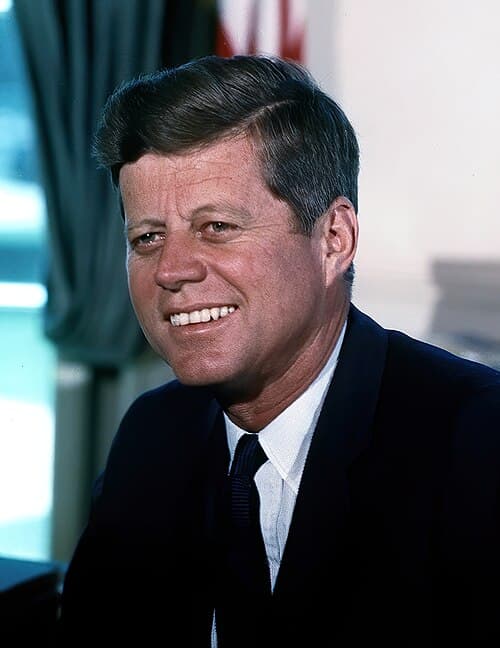
John F. Kennedy
PERSON1,636 w/ Prince·5 w/ the
George W. Bush
PERSON1,166 w/ Prince·18 w/ the
United States
LOCATION701 w/ Prince·11 w/ the
Prince Andrew
PERSON679 w/ Prince·5 w/ the
LB
Leon Black
PERSON549 w/ Prince·5 w/ the
Marc Rich
PERSON497 w/ Prince·15 w/ the
Donald Trump
PERSON492 w/ Prince·6 w/ the
Ghislaine Maxwell
PERSON450 w/ Prince·12 w/ the
Michael Jackson
PERSON415 w/ Prince·7 w/ the
Eric Trump
PERSON407 w/ Prince·3 w/ the
Alan Dershowitz
PERSON405 w/ Prince·3 w/ the
Julie K. Brown
PERSON375 w/ Prince·5 w/ the
MF
Maria Farmer
PERSON374 w/ Prince·3 w/ the
Stephen Hawking
PERSON357 w/ Prince·2 w/ the
Joe Biden
PERSON333 w/ Prince·2 w/ the
Bill Clinton
PERSON320 w/ Prince·10 w/ the
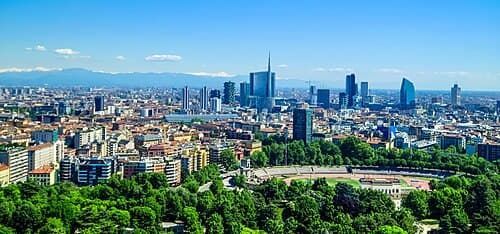
Milan
LOCATION317 w/ Prince·2 w/ the
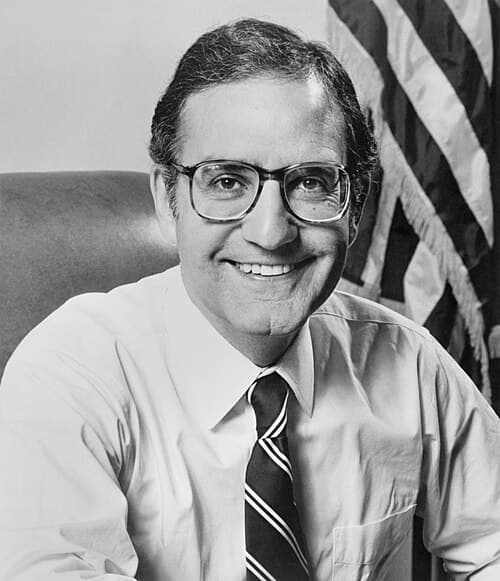
George Mitchell
PERSON311 w/ Prince·5 w/ the
Virginia Giuffre
PERSON312 w/ Prince·2 w/ the