Back to Network















5
Shared Docs
5
Same-Page
9 / 5
Mentions
Document Mentions (5 shared documents)
3 mentions1 same-page
Page ?Same page
nk the prime minister and the defense minister, [Ehud Barak,] feel a profound, historic obligation not
ltation and intelligence coordination around that question, Israel feels more vulnerable. And I think the prime minister and the defense minister, [Ehud Barak,] feel a profound, historic obligation not to put Israel in a position where it cannot act decisively and unilaterally to protect the state of Isra
through a porous border with Egypt soured Israelis' mood. Sooner or later, the plan could be revived, coupled with an Israeli military presence in the Jordan Valley to minimize risks of a Gazan repeat. Fatah and the Ramallah-based Palestinian Authority have a long-term objective that differs markedly from Isra
3 mentions1 same-page
Page ?Same page
ent with nuclear-tipped cruise missiles. The missiles can be launched using a previously secret hydraulic ejection system. Israeli Defence Minister Ehud Barak told SPIEGEL that Germans should be "proud" that they have secured the existence of the state of Israel "for many years." In the past, the German g
draulic ejection system. Israeli Defence Minister Ehud Barak told SPIEGEL that Germans should be "proud
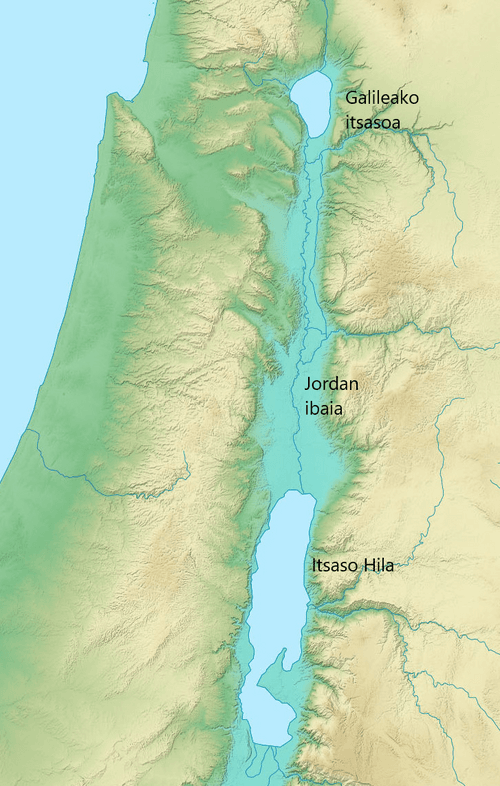
descendents of those who once lived in what is now Israel. It will require an agreement over Jerusalem, plus assurances about Israel's security in the Jordan Valley and in areas that could pose the threat of rocket attacks like those that have come from the Gaza Strip in recent years. Both sides say they want
3 mentions1 same-page
Page ?Same page
/ BARAK / 15 By November, even his Foreign Minister, David Levy, was making noises about quitting. He said it would be a waste of time to stay in the cabine
ed his no-confidence resolution, he came to see me in my office in the Knesset. He was worried. Not about the vote, but about what would come after. “Ehud, I’m sure we can topple the government,” he told me. “But only you know whether we’re ready — whether you ’re ready — to defeat Bibi in an election.”
ver.” In other words, if we did hand back at least the major part of the West Bank, it would be demilitarized and we would have security control over the Jordan Valley. Finally, we would not “‘accept responsibility for the birth of the refugee problem and its solution.” Though there could be a “right of return” into
Sponsored
3 mentions1 same-page
Page ?Same page
/ BARAK / 15 By November, even his Foreign Minister, David Levy, was making noises about quitting. He said it would be a waste of time to stay in the cabinet
ed his no-confidence resolution, he came to see me in my office in the Knesset. He was worried. Not about the vote, but about what would come after. "Ehud, I'm sure we can topple the government," he told me. "But only you know whether we're ready - whether you're ready - to defeat Bibi in an election."
ver." In other words, if we did hand back at least the major part of the West Bank, it would be demilitarized and we would have security control over the Jordan Valley. Finally, we would not "accept responsibility for the birth of the refugee problem and its solution." Though there could be a "right of return" into
2 mentions1 same-page
Page ?Same page
, in 1995, and then with centrist Prime Minister Ehud Olmert, in 2008. Twice, Abbas endorsed principles
and Olmert told me in separate interviews for the New York Times Magazine in 2011, the outline would include a non-militarized Palestinian state in the Jordan Valley, with American security guarantees for Israel; borders based on the 1967 lines, with land swaps to allow a majority of Jewish settlers to remain in
Sponsored
Mutual Connections (341)
Entities connected to both Ehud Barak and the Jordan Valley
Jeffrey Epstein
PERSON5,264 w/ Ehud·4 w/ the
Nili Priell Barak
PERSON1,008 w/ Ehud·2 w/ the
Marc Rich
PERSON591 w/ Ehud·2 w/ the
Larry Summers
PERSON395 w/ Ehud·2 w/ the
John F. Kennedy
PERSON372 w/ Ehud·3 w/ the
Terje Rod-Larsen
PERSON299 w/ Ehud·7 w/ the
Jes Staley
PERSON258 w/ Ehud·2 w/ the
Bill Clinton
PERSON222 w/ Ehud·4 w/ the
Joe Biden
PERSON179 w/ Ehud·3 w/ the
Barack Obama
PERSON149 w/ Ehud·10 w/ the
George W. Bush
PERSON139 w/ Ehud·7 w/ the
Benjamin Netanyahu
PERSON136 w/ Ehud·10 w/ the
Prince Charles
PERSON138 w/ Ehud·3 w/ the
Donald Trump
PERSON128 w/ Ehud·2 w/ the
United States
LOCATION121 w/ Ehud·9 w/ the
Michael Cohen
PERSON118 w/ Ehud·4 w/ the
Peter Mandelson
PERSON100 w/ Ehud·5 w/ the
Hillary Clinton
PERSON77 w/ Ehud·4 w/ the
Jerusalem
LOCATION70 w/ Ehud·10 w/ the
Larry Delson
PERSON78 w/ Ehud·2 w/ the