Back to Network



















7
Shared Docs
6
Same-Page
15 / 8
Mentions
Document Mentions (7 shared documents)
4 mentions1 same-page
Page ?Same page
l, in his first term as prime minister, back in 1998, Benjamin Netanyahu did authorize indirect negotiations with Syria. And the IDF—and especially Ehud Barak, a former head of the IDF, Israel's defense minister, and a close adviser to Netanyahu—has long favored such a deal. The IDF theory was that if Sy
gotiations with Syria. And the IDF—and especially Ehud Barak, a former head of the IDF, Israel's defens
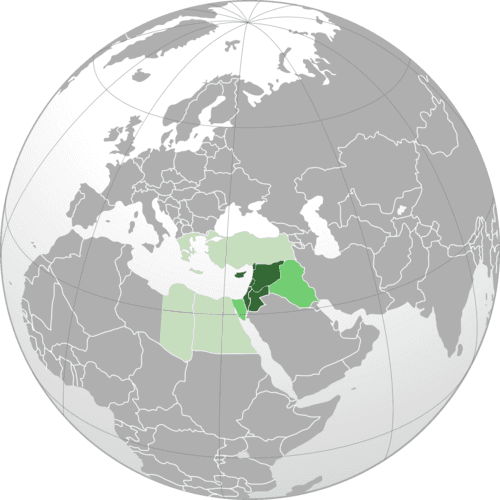
eft the southern flank exposed. Therefore, by holding the Levant, an eastern power protected itself against attacks from Mediterranean powers. The Levant was also important to any empire originating to the north or south of Israel. If Egypt decided to move beyond the Nile Basin and North Africa eastw
y over nearly 3,000 years. For convenience, we will use the term "Israel" to connote all of the Hebrew and Jewish entities that have existed in the Levant since the invasion of the region as chronicled in the Book of Joshua. As always, geopolitics requires a consideration of three dimensions: the int
4 mentions1 same-page
Page ?Same page
ssue is a personal compulsion of =etanyahu is reflected in estimates that even within his own cabinet (and e=en with the support of Defense Minister Ehud Barak), a vote in favor of war with Iran might be as close as eight t= six. A former Likud activist who has become a critic of Netanyahu explain=, "Bibi i
nd e=en with the support of Defense Minister Ehud Barak), a vote in favor of war with Iran might be as c
et (and e=en with the support of Defense Minister Ehud Barak), a vote in favor of war with Iran might b
ogether =ith "the part of the Syrian people" who steadfastly reject what =he party believes is essentially a pro-Zionist push for supremacy over the Levant, will necessarily be forced to use counterfo=ce at some point -- the logic of resistance -- to defend mutual interests =o clearly threatened by a di
3 mentions1 same-page
Page ?Same page
all. The Palestinian date with the United Nations looms large, though no one is exactly sure what will happen after it. Israel's defense minister, Ehud Barak, warned that his country faced a "diplomatic tsunami." Others worry that it will kick off a third intifada, given the political ferment elsewhere i
will happen after it. Israel's defense minister, Ehud Barak, warned that his country faced a "diplomati
Syria, believes that the Syrian recognition of the Palestinian state today means that the al- Assad regime may give up the idea of custody over the Levant, i.e. Lebanon and Palestine, especially as Damascus also previously prevented Lebanon from recognizing the Palestinian state. The Syrian recogniti
Sponsored
3 mentions1 same-page
Page ?Same page
i Arabia. Israeli fears are driving the process. Ehud Barak, the Israeli defence minister, has talked
disastrous for Israel's security. Those believed to favor a military option, such as Israeli Prime Minister Benjamin Netanyahu and Defense Minister Ehud Barak, argue that the Middle East with a nuclear-armed Iran would be far more dangerous than a military attack to prevent it. But their position rests on
o. EFTA_R1_00229020 EFTA01842223 Let's consider a post-attack Middle East. The risk factors are well known: potential Iranian retaliation in the Levant, the Persian Gulf and perhaps against Israeli and American interests abroad, as well as destabilizing consequences for global oil markets. Those I
3 mentions1 same-page
Page ?Same page
217 order has largely returned. The mission has been lauded by such leaders as U.S. Secretary of State Hillary Clinton, Israeli Defense Minister Ehud Barak, Palestinian President Mahmoud Abbas, and former British Prime Minister Tony Blair. But it is perhaps the opinion of Palestinian citizens themselv
State Hillary Clinton, Israeli Defense Minister Ehud Barak, Palestinian President Mahmoud Abbas, and
he "Shia arc." Jordan and Egypt were natural fits. These predominantly Sunni countries were equally concerned with rising Iranian influence in the Levant and were determined to counter what they perceived as Tehran's outsized influence in the region. Yet Riyadh went a step further and aimed to also
3 mentions1 same-page
Page ?Same page
all. The Palestinian date with the United Nations looms large, though no one is exactly sure what will happen after it. Israel's defense minister, Ehud Barak, warned that his country faced a "diplomatic tsunami." Others worry that it will kick off a third intifada, given the political ferment elsewhere i
will happen after it. Israel's defense minister, Ehud Barak, warned that his country faced a "diplomati
Syria, believes that the Syrian recognition of the Palestinian state today means that the al- Assad regime may give up the idea of custody over the Levant, i.e. Lebanon and Palestine, especially as Damascus also previously prevented Lebanon from recognizing the Palestinian state. The Syrian recogniti
Sponsored
Page HOUSE_OVERSIGHT_031836
all, in his first term as prime minister, back in 1998, Benjamin Netanyahu did authorize indirect negotiations with Syria. And the IDF—and especially Ehud Barak, a former head of the IDF, Israel's defense minister, and a close adviser to Netanyahu-has long favored such a deal. The IDF theory was that if Syria
Page: HOUSE_OVERSIGHT_031836 →tions with Syria. And the IDF—and especially Ehud Barak, a former head of the IDF, Israel's defense minis
Page: HOUSE_OVERSIGHT_031836 →Page HOUSE_OVERSIGHT_031858
icy over nearly 3,000 years. For convenience, we will use the term "Israel" to connote all of the Hebrew and Jewish entities that have existed in the Levant since the invasion of the region as chronicled in the Book of Joshua. As always, geopolitics requires a consideration of three dimensions: the intern
Page: HOUSE_OVERSIGHT_031858 →Sponsored
Mutual Connections (467)
Entities connected to both Ehud Barak and Levant
Jeffrey Epstein
PERSON5,264 w/ Ehud·6 w/ Levant
Marc Rich
PERSON591 w/ Ehud·16 w/ Levant
LB
Leon Black
PERSON552 w/ Ehud·3 w/ Levant
Prince Andrew
PERSON444 w/ Ehud·9 w/ Levant
John F. Kennedy
PERSON372 w/ Ehud·9 w/ Levant
Richard Kahn
PERSON362 w/ Ehud·3 w/ Levant
Terje Rod-Larsen
PERSON299 w/ Ehud·15 w/ Levant
Alan Dershowitz
PERSON289 w/ Ehud·3 w/ Levant
George Mitchell
PERSON275 w/ Ehud·4 w/ Levant
Bill Clinton
PERSON222 w/ Ehud·15 w/ Levant
Robert Gates
PERSON190 w/ Ehud·3 w/ Levant
Joe Biden
PERSON179 w/ Ehud·7 w/ Levant
Barack Obama
PERSON149 w/ Ehud·29 w/ Levant
Eric Trump
PERSON169 w/ Ehud·2 w/ Levant
George W. Bush
PERSON139 w/ Ehud·24 w/ Levant
Benjamin Netanyahu
PERSON136 w/ Ehud·18 w/ Levant
United States
LOCATION121 w/ Ehud·28 w/ Levant
Ghislaine Maxwell
PERSON146 w/ Ehud·3 w/ Levant
Prince Charles
PERSON138 w/ Ehud·4 w/ Levant
Donald Trump
PERSON128 w/ Ehud·8 w/ Levant