Back to Network


















4
Shared Docs
4
Same-Page
7 / 6
Mentions
Document Mentions (4 shared documents)
4 mentions1 same-page
Page ?Same page
t networks. @ Following the 9/11 attacks on the Pentagon and the World Trade Center, the surveillance of the Internet became an integral part of the Bush administration’s war on terrorism. In October 2001, Con- gress expanded the NSA’s mandate by passing the USA Patriot Act. As I described earlier, Sec
hat had been provided to Ronald Reagan, George H. W. Bush, and Bill Clinton. Even more shocking, in tr
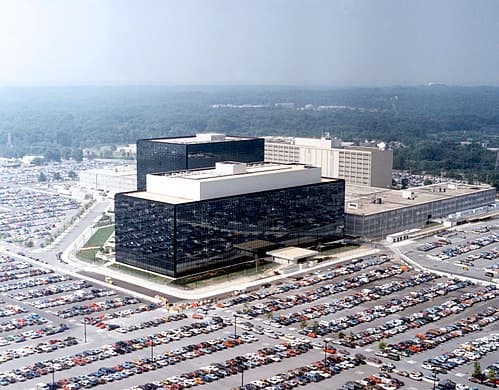
ing the NSA. In 2010, the NSA division that handled such security and espio- nage threats reportedly initiated a counterespionage probe at the NSA’s Fort Meade headquarters. According to a former NSA official, “They [were] looking for one or more Russian spies that NSA [was] convinced resided at Fort Meade a
adversaries took full advantage of the setback. Sev- eral hundred U.S. and British intelligence officers worked around the clock in Washington, D.C., Fort Meade, Maryland, and Cheltenham, England, for months on end to determine which parts of the most powerful communications intelligence system in the world c
4 mentions1 same-page
Page ?Same page
hree American Presidents, Ronald Reagan, George H.W. Bush and Bill Clinton. Even more shocking, in tra
ernment networks. Following the 9/11 attack on the Pentagon and World Trade Center, the surveillance of the Internet also became an integral part of Bush’ administration’s war on terrorism. In October 2001, Congress expanded the NSA’s mandate by passing the USA Patriot Act. Section 215 of the act direc
the NSA. In 2010, the NSA’s “Q” division handled such security and espionage threats. It reportedly initiated a counter-espionage probe at the NSA’s Fort Meade headquarters on receiving the tip. But since the NSA’s cryptological service had in 2010 no fewer than 35,000 military and civilian contractor employ
le its adversaries took full advantage of the setback. Several hundred US and British intelligence officers worked around the clock in Washington DC, Fort Meade, Maryland and Cheltenham, England for months on end to determine if which parts could be still salvaged from what had been until the Snowden breach t
3 mentions1 same-page
Page ?Same page
ing by the New York Times in December 2005. After President Bush’s own Justice Department then held that such surv
btain "tangible things" such as "books, records, papers, documents, and other items." Under the interpretation of this section of the law by both the Bush and Obama administrations, the FISA court was enabled by Congress to issue warrants to telephone companies demanding that they turn over to the NSA t
the sensitive job of investigating the breach to Richard “Rick” Ledgett, the Director of the NSA’s Threat Operations Center at NSA’s headquarters in Fort Meade, Maryland. It was a key position since the top- secret unit was responsible for discovering and countering the threats posed by Chinese, Russian and
Sponsored
2 mentions1 same-page
Page ?Same page
btain “tangible things” such as “books, records, papers, documents, and other items.” Under the interpretation of this section of the law by both the Bush and the Obama administrations, the FISA court was enabled by Congress to issue warrants to telephone companies demanding that they turn over to the N
ing the breach to a team headed by Richard “Rick” Ledgett, who was then director of the NSA’s Threat Opera- tions Center at the NSA’s headquarters in Fort Meade, Maryland. Ledgett was the logical choice to head the damage assessment inves- tigation because the center’s regional branch in Hawaii was under his
Sponsored
Mutual Connections (336)
Entities connected to both George W. Bush and Fort Meade
Jeffrey Epstein
PERSON5,075 w/ George·3 w/ Fort
Honolulu
LOCATION2,486 w/ George·3 w/ Fort
United States
LOCATION2,223 w/ George·4 w/ Fort
John F. Kennedy
PERSON2,074 w/ George·4 w/ Fort
Hawaii
LOCATION1,251 w/ George·4 w/ Fort
Prince Charles
PERSON1,166 w/ George·3 w/ Fort
Donald Trump
PERSON954 w/ George·3 w/ Fort
Bradley Edwards
PERSON907 w/ George·2 w/ Fort
LB
Leon Black
PERSON901 w/ George·2 w/ Fort
Alan Dershowitz
PERSON865 w/ George·4 w/ Fort
Marc Rich
PERSON853 w/ George·4 w/ Fort
Bill Clinton
PERSON800 w/ George·4 w/ Fort
Julie K. Brown
PERSON750 w/ George·2 w/ Fort
Department of Justice
ORGANIZATION689 w/ George·4 w/ Fort
Barack Obama
PERSON635 w/ George·4 w/ Fort
Stephen Hawking
PERSON535 w/ George·2 w/ Fort
Richard Kahn
PERSON521 w/ George·2 w/ Fort
Virginia Giuffre
PERSON499 w/ George·3 w/ Fort
Wilbur Ross
PERSON478 w/ George·3 w/ Fort
Woody Allen
PERSON403 w/ George·4 w/ Fort