Back to Network



















4
Shared Docs
4
Same-Page
7 / 4
Mentions
Document Mentions (4 shared documents)
3 mentions1 same-page
Page ?Same page
t networks. @ Following the 9/11 attacks on the Pentagon and the World Trade Center, the surveillance of the Internet became an integral part of the Bush administration’s war on terrorism. In October 2001, Con- gress expanded the NSA’s mandate by passing the USA Patriot Act. As I described earlier, Sec
hat had been provided to Ronald Reagan, George H. W. Bush, and Bill Clinton. Even more shocking, in tr
Nation, in 2014. He had already discussed the likelihood of his being captured in Ecuador with Assange before his departure for Moscow. He later told Alan Rusbridger, the editor of The Guardian, that he considered himself at risk in Latin America. So why would Snowden, who told Greenwald that his “first priority”
3 mentions1 same-page
Page ?Same page
ing by the New York Times in December 2005. After President Bush’s own Justice Department then held that such surv
btain "tangible things" such as "books, records, papers, documents, and other items." Under the interpretation of this section of the law by both the Bush and Obama administrations, the FISA court was enabled by Congress to issue warrants to telephone companies demanding that they turn over to the NSA t
rking for a private contractor at the time. Snowden had little concern about misleading journalists when it suited his purpose. For example, he told Alan Rusbridger of the Guardian, Brian Williams of NBC News, James Bamford of Wired Magazine, Katrina vanden Heuvel of the Nation, Barton Gellman of the Washington P
3 mentions1 same-page
Page ?Same page
hree American Presidents, Ronald Reagan, George H.W. Bush and Bill Clinton. Even more shocking, in tra
ernment networks. Following the 9/11 attack on the Pentagon and World Trade Center, the surveillance of the Internet also became an integral part of Bush’ administration’s war on terrorism. In October 2001, Congress expanded the NSA’s mandate by passing the USA Patriot Act. Section 215 of the act direc
n his escape route. Two later months later and safely in Moscow, he made this point HOUSE_OVERSIGHT_020260 109 clear in a lengthily interview with Alan Rusbridger, the editor of the Guardian. He told him that it never had been part of his plan to use Hong Kong to escape the legal consequences of his act. “The p
Sponsored
2 mentions1 same-page
Page ?Same page
btain “tangible things” such as “books, records, papers, documents, and other items.” Under the interpretation of this section of the law by both the Bush and the Obama administrations, the FISA court was enabled by Congress to issue warrants to telephone companies demanding that they turn over to the N
thing more than a temporary stopover on his escape route. Two months later and safely in Moscow, he made this point clear in a lengthy interview with Alan Rusbridger, the editor of The Guard- ian. He told him that it had never been part of his plan to use Hong Kong to escape the legal consequences of his act. “The
Sponsored
Mutual Connections (336)
Entities connected to both George W. Bush and Alan Rusbridger
Jeffrey Epstein
PERSON5,075 w/ George·3 w/ Alan
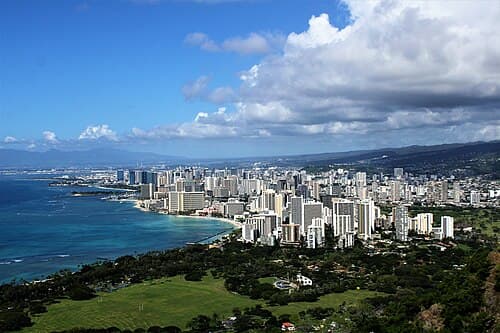
Honolulu
LOCATION2,486 w/ George·3 w/ Alan
United States
LOCATION2,223 w/ George·4 w/ Alan
John F. Kennedy
PERSON2,074 w/ George·4 w/ Alan
Hawaii
LOCATION1,251 w/ George·4 w/ Alan
Prince Charles
PERSON1,166 w/ George·3 w/ Alan
Donald Trump
PERSON954 w/ George·3 w/ Alan
Bradley Edwards
PERSON907 w/ George·2 w/ Alan
LB
Leon Black
PERSON901 w/ George·2 w/ Alan
Alan Dershowitz
PERSON865 w/ George·4 w/ Alan
Marc Rich
PERSON853 w/ George·4 w/ Alan
Bill Clinton
PERSON800 w/ George·4 w/ Alan
Julie K. Brown
PERSON750 w/ George·2 w/ Alan
Department of Justice
ORGANIZATION689 w/ George·4 w/ Alan
Barack Obama
PERSON635 w/ George·4 w/ Alan
Stephen Hawking
PERSON535 w/ George·2 w/ Alan
Richard Kahn
PERSON521 w/ George·2 w/ Alan
Virginia Giuffre
PERSON499 w/ George·3 w/ Alan
Wilbur Ross
PERSON478 w/ George·3 w/ Alan
Woody Allen
PERSON403 w/ George·4 w/ Alan