Back to Network


















4
Shared Docs
4
Same-Page
10 / 4
Mentions
Document Mentions (4 shared documents)
4 mentions1 same-page
Page ?Same page
ss) * On lalling throughout history: Wrangham, R.W. & Glowacki, L. (in press). Intergroup aggression
r, including cases where society at large also suffers. Smith initiated the study prior to the US Presidential elections in 2004 involving Republican George W. Bush and Democrat John Kerry; during this period, the Republicans controlled both executive branches of the government. Each subject — all college undergr
party. Next, every subject read and provided reactions to short newspaper articles describing tragicomic moments for the two candidates, one in which Bush fell off his bicycle while riding, and the other involving Kerry wearing a bizarre space outfit during a visit to NASA. Last, subjects read and react
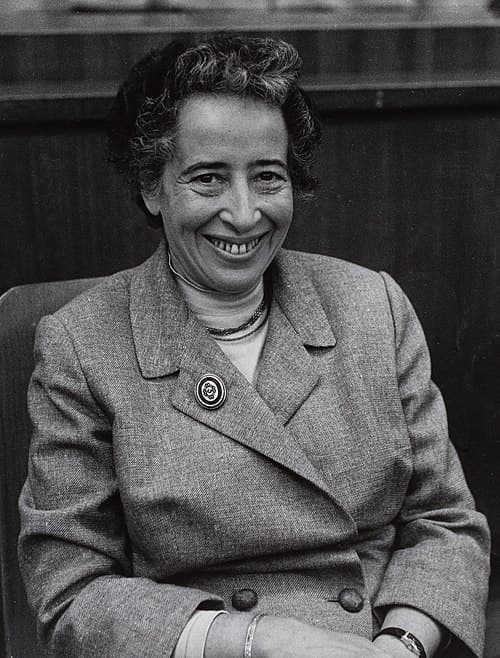
nto that Darkness: From Mercy Killing to Mass Murder. London: Random House). There have been different treatments of Adolf Eichmann, most famously by Hannah Arendt in her Hichmann in Jerusalem: A report on the banality of evil. (1963, New York, Viking Press). Arendt’s perspective on Eichmann as an ordinary gentl
4 mentions1 same-page
Page ?Same page
individual differences, and normality. Organizational Behavior and Human Decision Processes, 94, 74-85; Cushman, F., Knobe, J., & Sinnott-Armstrong, W. (2008). Moral appraisals affect doing/allowing judgments. Cognition, 308, 281-289; Haidt, J., & Baron, J. (1996). Social roles and the moral judgment
d to foreseeable atrocities. Sometimes our desires are toxic, as when we plot to extinguish a culturally distinctive group. On one reading, President George W. Bush may well have initiated the wars in Afghanistan and Iraq as retaliatory attacks on terrorists, designed to protect American interests and well-being.
nctive group. On one reading, President George W. Bush may well have initiated the wars in Afghanistan a
st, and most famous psychological Hauser Chapter 4. Wicked in waiting 127 HOUSE_OVERSIGHT_012873 experiments were related in one way or another to Hannah Arendt’s thoughts about Adolf Eichmann and the fact that good people are capable of horrific things: the banality of evil. Hiding behind every average Joe i
3 mentions1 same-page
Page ?Same page
(with Brian Christian) of Algorithms to Live By. W. Daniel “Danny” Hillis is an inventor, entrepreneu
nvitation of some Google engineers. The occasion was the sixtieth anniversary of John von Neumann's proposal for a digital computer. After the visit, George wrote an essay, “Turing’s Cathedral,” which, for the first time, alerted the public about what Google 's founders had in store for the world. “We are
isn’t scaremongering: It’s safety engineering. Before the moon-landing mission, NASA 18 https://futureoflife.org/ai-principles/ 19 See, for example, Hannah Arendt, Eichmann in Jerusalem: A Report on the Banality of Evil (New York: Penguin Classics, 2006). 67 HOUSE_OVERSIGHT_016870 systematically thought thro
Sponsored
3 mentions1 same-page
Page ?Same page
nvitation of some Google engineers. The occasion was the sixtieth anniversary of John von Neumann's proposal for a digital computer. After the visit, George wrote an essay, “Turing’s Cathedral,” which, for the first time, alerted the public about what Google 's founders had in store for the world. “We are
(with Brian Christian) of Algorithms to Live By. W. Daniel “Danny” Hillis is an inventor, entrepreneu
isn’t scaremongering: It’s safety engineering. Before the moon-landing mission, NASA 18 https://futureoflife.org/ai-principles/ 19 See, for example, Hannah Arendt, Eichmann in Jerusalem: A Report on the Banality of Evil (New York: Penguin Classics, 2006). 67 HOUSE_OVERSIGHT_016287 systematically thought thro
Sponsored
Mutual Connections (552)
Entities connected to both George W. Bush and Hannah Arendt
John F. Kennedy
PERSON2,074 w/ George·2 w/ Hannah
Prince Charles
PERSON1,166 w/ George·2 w/ Hannah
Ghislaine Maxwell
PERSON1,138 w/ George·2 w/ Hannah
LB
Leon Black
PERSON901 w/ George·4 w/ Hannah
Alan Dershowitz
PERSON865 w/ George·2 w/ Hannah
Marc Rich
PERSON853 w/ George·6 w/ Hannah
Prince Andrew
PERSON817 w/ George·3 w/ Hannah
Bill Clinton
PERSON800 w/ George·3 w/ Hannah
Joe Biden
PERSON770 w/ George·4 w/ Hannah
Julie K. Brown
PERSON750 w/ George·4 w/ Hannah
MF
Maria Farmer
PERSON680 w/ George·3 w/ Hannah
Barack Obama
PERSON635 w/ George·4 w/ Hannah
Stephen Hawking
PERSON535 w/ George·3 w/ Hannah
Richard Kahn
PERSON521 w/ George·3 w/ Hannah
Samantha Power
PERSON510 w/ George·6 w/ Hannah
Scarlett Johansson
PERSON487 w/ George·2 w/ Hannah
Wilbur Ross
PERSON478 w/ George·2 w/ Hannah
Eric Trump
PERSON460 w/ George·2 w/ Hannah
Michael Jackson
PERSON445 w/ George·2 w/ Hannah
Vicky Ward
PERSON433 w/ George·3 w/ Hannah