Back to Network

















6
Shared Docs
6
Same-Page
16 / 6
Mentions
Document Mentions (6 shared documents)
4 mentions1 same-page
Page ?Same page
upporters in the United States considered Saddam Hussein nearly the threat that Iran was. Israeli Prime Minister Ariel Sharon then warned President George W. Bush privately that he thought an attack on Iraq would be a mistake. After the Iraq vote, to prove its innocence, AIPAC organized a letter from 16 Jewis
force as it had before, possibly even with tactical nuclear weapons, but happily clearer heads prevailed even amidst the collapse. The George H.W. Bush administration, especially then-secretary of state James Baker, worked hard to negotiate a peaceful dissolution of the Soviet empire, and it found
nister Ariel Sharon then warned President George W. Bush privately that he thought an attack on Iraq
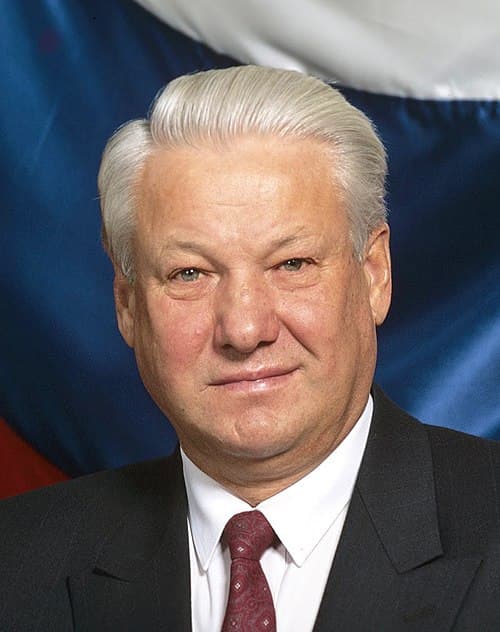
f state James Baker, worked hard to negotiate a peaceful dissolution of the Soviet empire, and it found reluctant partners in Mikhail Gorbachev and Boris Yeltsin. In the following decade, U.S. policy was less wise and balanced, and Russia also provided a less judicious counterpart. No doubt, Russian power a
4 mentions1 same-page
Page ?Same page
her side of the English Channel. One could see the strength of that bond as recently as 2003, when then-Prime Minister Tony Blair joined President George W. Bush in his Iraq adventure despite grave misgivings on the Continent. In Brussels, which has for decades been depicted in the British press as little m
cs say the White House had a chance to curb Iranian influence but was too busy looking for an exit. The result, according to Doug Feith, one of the Bush administration's chief architects of the war, pushed Maliki toward greater reliance on Iran. Others, however, defend the developments as inevitable
rime Minister Tony Blair joined President George W. Bush in his Iraq adventure despite grave misgivi
ss compared to what Russia watchers call the "super" presidency enshrined in the 1993 constitution that was hastily written by Putin's predecessor, Boris Yeltsin, Russia's first elected president. Between the collapse of the Soviet Union in 1991 and 1993, Yeltsin faced a recalcitrant parliament (then called
4 mentions1 same-page
Page ?Same page
gagement failed. The Clinton administration tried to outsource Yugoslavia to the Europeans in the 1990s and was ultimately pulled into the Balkans. George W. Bush tried to conduct foreign policy around and over the heads of "Old Europe"; the experience was not a success. President Obama has similarly sought t
was ultimately pulled into the Balkans. George W. Bush tried to conduct foreign policy around and over
nd was ultimately pulled into the Balkans. George W. Bush tried to conduct foreign policy around and
lagrantly ignored German wishes and interests. This is how we treated Russia in the 1990s. The West provided economic aid to the "Weimar Russia" of Boris Yeltsin much as the Young and the Dawes plans helped Germany relaunch its economy in the 1920s. But in the 1990s as in the 1920s the West was uninterested
Sponsored
4 mentions1 same-page
Page ?Same page
Air Power Michael Beschloss THE AGE OF AIRPOWER By Martin van Creveld Illustrated. 498 pp. PublicAffairs. $35. April 22, 2011 -- When President George W. Bush launched his war against Saddam Hussein's Iraq with an incandescent burst of "shock and awe," political commentators marveled at the seemingly magi
$35. April 22, 2011 -- When President George W. Bush launched his war against Saddam Hussein's Iraq w
e Egyptian case was the fate of South Africa's P.W. Botha, a former prime minister who was president
be too destabilizing for the country. When Vladimir Putin became president of Russia, he offered an even more extensive pardon to his predecessor, Boris Yeltsin, as well as to Yeltsin's family, citing similar considerations. Perhaps an even more relevant example to the Egyptian case was the fate of South A
3 mentions1 same-page
Page ?Same page
ng the West, and particularly America, because it institutionalises gridlock, trivialises decision-making and throws up second-rate presidents like George Bush junior. Yu Keping of Beijing University argues that democracy makes simple things "overly complicated and frivolous" and allows "certain sweet-talk
Iraq war. When Saddam Hussein's fabled weapons of mass destruction failed to materialise after the American-led EFTA00684346 invasion of 2003, Mr Bush switched instead to justifying the war as a fight for freedom and democracy. "The concerted effort of free nations to promote democracy is a prelud
in Wall in 1989 the democratisation of the old Soviet Union seemed inevitable. In the 1990s Russia took a few drunken steps in that direction under Boris Yeltsin. But at the end of 1999 he resigned and handed power to Vladimir Putin, a former KGB operative who has since been both prime minister and president
3 mentions1 same-page
Page ?Same page
nouncement like this as a possible October surprise. | thought we might capture Osama bin Laden. Or that there could be impeachment and conviction of Bush and Cheney, but it would leave Nancy Pelosi as the new president, and we surely don’ t want that Maybe Obama would be assassinated, then there would
as “CIA operatives” Merle Haggard and Kris Kristofferson). With unintentional prophetic irony, Cathy described her 1983 meeting with Ronald Reagan, George Bush and Dick Cheney: HOUSE_OVERSIGHT_015231
good, that’ s good.” And | replied, “Il gave you a blow job, but! didn’ t swallow.” He started laughing hysterically, just like that time he did with Boris Yeltsin. Bill liked my sense of humor. That’ s why we went from flirtation to friendship. However, the reasons | visited the White House thirty-seven times
Sponsored
Mutual Connections (227)
Entities connected to both George W. Bush and Boris Yeltsin
Jeffrey Epstein
PERSON5,075 w/ George·2 w/ Boris
United States
LOCATION2,223 w/ George·6 w/ Boris
John F. Kennedy
PERSON2,074 w/ George·3 w/ Boris
Donald Trump
PERSON954 w/ George·2 w/ Boris
LB
Leon Black
PERSON901 w/ George·5 w/ Boris
Alan Dershowitz
PERSON865 w/ George·2 w/ Boris
Marc Rich
PERSON853 w/ George·4 w/ Boris
Prince Andrew
PERSON817 w/ George·2 w/ Boris
Bill Clinton
PERSON800 w/ George·7 w/ Boris
Joe Biden
PERSON770 w/ George·3 w/ Boris
Julie K. Brown
PERSON750 w/ George·2 w/ Boris
Department of Justice
ORGANIZATION689 w/ George·4 w/ Boris
Barack Obama
PERSON635 w/ George·8 w/ Boris
Samantha Power
PERSON510 w/ George·5 w/ Boris
Condoleezza Rice
PERSON508 w/ George·2 w/ Boris
Vicky Ward
PERSON433 w/ George·2 w/ Boris
MW
Martin Weinberg
PERSON428 w/ George·3 w/ Boris
Michael Douglas
PERSON419 w/ George·2 w/ Boris
DB
Doug Band
PERSON407 w/ George·3 w/ Boris
Hillary Clinton
PERSON405 w/ George·3 w/ Boris