Back to Network





4
Shared Docs
4
Same-Page
4 / 4
Mentions
Document Mentions (4 shared documents)
2 mentions1 same-page
Page ?Same page
le-entry bookkeeping method used by the Florentine merchants of the 13th century and described by Luca Pacioli, the "father of accounting" in book Summa de Arithmetica, Geometric, Proportioni et Proportionality published 1494. When you take, for instance, a contract that pays out $1 million if it rains tomorrow, a
e simply don't work. The simplest version of this model would mean that the more money you had, the happier you would be, which Daniel Kahneman and Agnus Deaton argue is true up to about USD$75,o0o a year in annual income. (Social Sciences - Psychological and Cognitive Sciences: Daniel Kahneman and Angus Dea
2 mentions1 same-page
Page ?Same page
le-entry bookkeeping method used by the Florentine merchants of the 13th century and described by Luca Pacioli, the "father of accounting" in book Summa de Arithmetica, Geometria, Proportioni et Proportionalith published 1494. When you take, for instance, a contract that pays out $1 million if it rains tomorrow, a
e simply don't work. The simplest version of this model would mean that the more money you had, the happier you would be, which Daniel Kahneman and Agnus Deaton argue is true up to about USD$75,000 a year in annual income. (Social Sciences - Psychological and Cognitive Sciences: Daniel Kahneman and Angus De
2 mentions1 same-page
Page ?Same page
le-entry bookkeeping method used by the Florentine merchants of the 13th century and described by Luca Pacioli, the "father of accounting" in book Summa de Arithmetica, Geometria, Proportioni et Proportionalitd published 1494- When you take, for instance, a contract that pays out $1 million if it rains tomorrow, an
e simply don't work. The simplest version of this model would mean that the more money you had, the happier you would be, which Daniel Kahneman and Agnus Deaton argue is true up to about USD$75,000 a year in annual income. (Social Sciences - Psychological and Cognitive Sciences: Daniel Kahneman and Angus De
Sponsored
2 mentions1 same-page
Page ?Same page
le-entry bookkeeping_ method used by the Florentine merchants of the 13th century and described by Luca Pacioli, the "father of accounting" in book Summa de Arithmetica, Geometria, Proportioni et Proportionalitei published 1494. When you take, for instance, a contract that pays out $1 million if it rains tomorrow,
e simply don't work. The simplest version of this model would mean that the more money you had, the happier you would be, which Daniel Kahneman and Agnus Deaton argue is true up to about USD$75,000 a year in annual income. (Social Sciences - Psychological and Cognitive Sciences: Daniel Kahneman and Angus De
Sponsored
Mutual Connections (16)
Entities connected to both Summa de Arithmetica and Agnus Deaton
Big Macs
ORGANIZATION4 w/ Summa·4 w/ Agnus
PubPub
ORGANIZATION4 w/ Summa·4 w/ Agnus
Social Sciences - Psychological
ORGANIZATION4 w/ Summa·4 w/ Agnus
Jeffrey Epstein
PERSON4 w/ Summa·4 w/ Agnus
Alice
PERSON4 w/ Summa·4 w/ Agnus
Joi Ito
PERSON4 w/ Summa·4 w/ Agnus
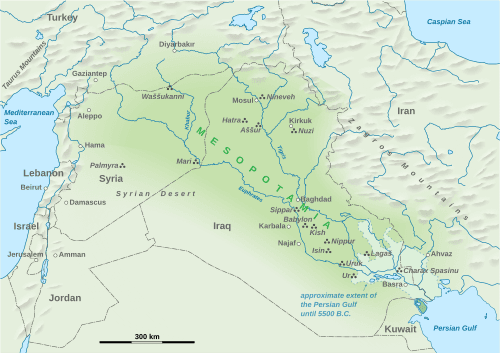
Mesopotamia
LOCATION4 w/ Summa·4 w/ Agnus
Paramount Pictures
ORGANIZATION4 w/ Summa·4 w/ Agnus
the Financial Stability Board
ORGANIZATION4 w/ Summa·4 w/ Agnus
Marc Rich
PERSON4 w/ Summa·4 w/ Agnus
Daniel Kahneman
PERSON4 w/ Summa·4 w/ Agnus
GE
Geometria
PERSON3 w/ Summa·3 w/ Agnus
LP
Luca Pacioli
PERSON3 w/ Summa·3 w/ Agnus
Houghton & Byrne
ORGANIZATION2 w/ Summa·2 w/ Agnus
JC
Joichi Ito czi
PERSON2 w/ Summa·2 w/ Agnus
Reinventing Bookkeeping and Accounting (In Search of Certainty
ORGANIZATION2 w/ Summa·2 w/ Agnus