Back to Network

4
Shared Docs
4
Same-Page
4 / 4
Mentions
Document Mentions (4 shared documents)
2 mentions1 same-page
Page ?Same page
create an affirmative appearance that the agreement contemplated barring districts other than the particular district entering into the agreement." Salarneh, 152 F.3d at 120 (citations and internal quotation marks omitted). This rule also extends to plea agreements that use the term "United States." See
nzburg v. Hayes, 408 U.S. 665 (1972) 110 Bridges v. United States, 346 U.S. 209 (1953) 53 Bronston v. United States, 409 U.S. 352 (1973) 181 Bryson v. United States, 396 U.S. 64 (1969) 147 Burgess v. United States, 552 U.S. 124 (2008) 51 Caplin & Drysdale, Chartered v. United States, 491 U.S. 617 (1989) 1
2 mentions1 same-page
Page ?Same page
the indictment was committed by one or more of the members of the conspiracy in furtherance of the objectives of the conspiracy." United States v. Salarneh, 152 F.3d 88, 145-46 (2d Cir. 1998). Because a conspiracy does not require the completion of a substantive crime, it does not matter whether Minor
Government could, on pain of criminal sanctions, compel an answer to its incriminating questions, a citizen is not at liberty to answer falsely."); Bryson v. United States, 396 U.S. 64, 72, 90 (1969) (rejecting challenge to false statement prosecution; "[I]t cannot be thought that as a general principle of our law a ci
2 mentions1 same-page
Page ?Same page
the indictment was committed by one or more of the members of the conspiracy in furtherance of the objectives of the conspiracy." United States v. Salarneh, 152 F.3d 88, 145-46 (2d Cir. 1998). Because a conspiracy does not require the completion of a substantive crime, it does not matter whether Minor
Government could, on pain of criminal sanctions, compel an answer to its incriminating questions, a citizen is not at liberty to answer falsely."); Bryson v. United States, 396 U.S. 64, 72, 90 (1969) (rejecting challenge to false statement prosecution; "[I]t cannot be thought that as a general principle of our law a ci
Sponsored
2 mentions1 same-page
Page ?Same page
the indictment was committed by one or more of the members of the conspiracy in furtherance of the objectives of the conspiracy." United States v. Salarneh, 152 F.3d 88, 145-46 (2d Cir. 1998). Because a conspiracy does not require the completion of a substantive crime, it does not matter whether Minor
Government could, on pain of criminal sanctions, compel an answer to its incriminating questions, a citizen is not at liberty to answer falsely."); Bryson v. United States, 396 U.S. 64, 72, 90 (1969) (rejecting challenge to false statement prosecution; "[I]t cannot be thought that as a general principle of our law a ci
Sponsored
Mutual Connections (252)
Entities connected to both Salarneh and Bryson v. United States
New Haven
LOCATION4 w/ Salarneh·10 w/ Bryson
CH
Chuang
PERSON4 w/ Salarneh·10 w/ Bryson
CR
Cromitie
PERSON4 w/ Salarneh·10 w/ Bryson
DE
DeFilippo
PERSON4 w/ Salarneh·10 w/ Bryson
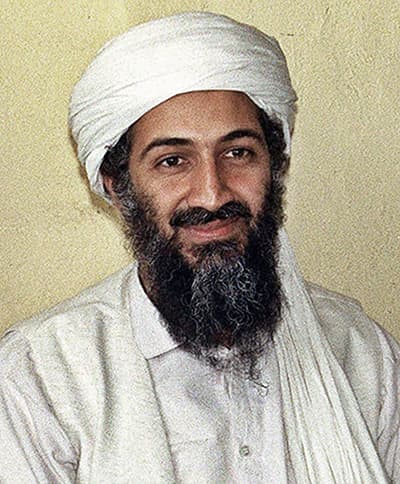
Bin Laden
PERSON4 w/ Salarneh·10 w/ Bryson
GH
Ghavami
PERSON4 w/ Salarneh·10 w/ Bryson
DO
Dorvee
PERSON4 w/ Salarneh·10 w/ Bryson
Martinez
PERSON4 w/ Salarneh·10 w/ Bryson
DI
DiGregorio
PERSON4 w/ Salarneh·10 w/ Bryson
OL
Olivieri
PERSON4 w/ Salarneh·10 w/ Bryson
DE
Dewar
PERSON4 w/ Salarneh·10 w/ Bryson
BO
Botha
PERSON4 w/ Salarneh·10 w/ Bryson
MA
Mazzuca
PERSON4 w/ Salarneh·10 w/ Bryson
FI
Fisher
PERSON4 w/ Salarneh·10 w/ Bryson
FL
Flagg
PERSON4 w/ Salarneh·10 w/ Bryson
MC
McAleenan
PERSON4 w/ Salarneh·10 w/ Bryson
SC
Scully
PERSON4 w/ Salarneh·10 w/ Bryson
PE
Pearce
PERSON4 w/ Salarneh·10 w/ Bryson
EL
Elstad
PERSON4 w/ Salarneh·10 w/ Bryson
AK
Al Kassar
PERSON4 w/ Salarneh·10 w/ Bryson