Back to Network






3
Shared Docs
2
Same-Page
5 / 5
Mentions
Document Mentions (3 shared documents)
4 mentions1 same-page
Page ?Same page
Easton, 2013; Goodman-Brown, Edelstein, Goodman, Jones, & Gordon, 2003; Hershkowitz, Lanes, & Lamb; 2007; Jonzon & Lindblad, 2004; McElvaney, 2015; Smith et al., 2000). Incidence studies in the United States and Canada report decreasing CSA rates (Fallon et al., 2015; Finkelhor, Shattuck, Turner, & Hamby,
mdolt, 2012). Other studies simply reported average years of delay sometimes as long as from 20 to 46 years (Easton, 2013; Jonzon & Linblad, 2004; Smith et al., 2000). Second, the number of qualitative studies has increased sig- nificantly over the last 15 years. This rise is in response to a previous dear
for better understanding CSA disclosure within a cultural context (Brazelton, 2015; Fontes & Plummer, 2010). Among these important contributions, Brazelton's (2015) research has deli- neated CSA disclosure processes as "shaped by relational, racial, socio-cultural, historical, and developmental factors"
g toward a holistic understanding of the complex interplay of individual, familial, contextual, and cultural fac- tors (Alaggia & Kirshenbaum, 2005; Brazelton, 2015; Fontes & Plummer, 2010). Where at one time factors examined and identified were predominantly of intrapersonal factors of child victims, kn
3 mentions1 same-page
Page ?Same page
search showing a large number of survivors only dis- closing in adulthood (Collin-Vezina et al., 2015; Easton, 2013; Ilunter, 2011; McElvaney, 2015; Smith et al., 2000), these issues should be a concern for practitioners, policy makers, and the general public (McElvaney, 2015). The longer disclosures are de
mdolt, 2012). Other studies simply reported average years of delay sometimes as long as from 20 to 46 years (Easton, 2013; Jonzon & Linblad, 2004; Smith et al., 2000). Second, the number of qualitative studies has increased sig- nificantly over the last 15 years. This rise is in response to a previous dear
for better understanding CSA disclosure within a cultural context (Brazelton, 2015; Fontes & Plummer, 2010). Among these important contributions, Brazelton's (2015) research has deli- neated CSA disclosure processes as "shaped by relational, racial, sociocultural, historical, and developmental factors"
3 mentions
Page EFTA00024176
Easton, 2013; Goodman-Brown, Edelstein, Goodman, Jones, & Gordon, 2003; Hershkowitz, Lanes, & Lamb; 2007; Jonzon & Lindblad, 2004; McElvaney, 2015; Smith et al., 2000). Incidence studies in the United States and Canada report decreasing CSA rates (Fallon et al., 2015; Finkelhor, Shattuck, Turner, & Hamby,
Page: EFTA00024176 →Page EFTA00024193
his, a few important studies examining critical sociocultural factors now exist for better understanding CSA disclosure within a cultural context (Brazelton, 2015; Fontes & Plummer, 2010). Among these important contributions, Brazelton's (2015) research has deli- neated CSA disclosure processes as "shape
Page: EFTA00024193 →g toward a holistic understanding of the complex interplay of individual, familial, contextual, and cultural fac- tors (Alaggia & Kirshenbaum, 2005; Brazelton, 2015; Fontes & Plummer, 2010). Where at one time factors examined and identified were predominantly of intrapersonal factors of child victims, kn
Page: EFTA00024193 →Sponsored
Mutual Connections (326)
Entities connected to both Smith et al. and Brazelton
Mitch McConnell
PERSON4 w/ Smith·3 w/ Brazelton
Goldman Sachs
ORGANIZATION4 w/ Smith·3 w/ Brazelton
Alan Dershowitz
PERSON4 w/ Smith·3 w/ Brazelton
CO
Collings
PERSON4 w/ Smith·3 w/ Brazelton
KO
Kogan
PERSON4 w/ Smith·3 w/ Brazelton
UN
Ungar
PERSON4 w/ Smith·3 w/ Brazelton
Jensen
PERSON4 w/ Smith·3 w/ Brazelton
EU
Euser
PERSON3 w/ Smith·3 w/ Brazelton
LB
Leon Black
PERSON3 w/ Smith·3 w/ Brazelton
Toronto
LOCATION3 w/ Smith·3 w/ Brazelton
Ontario
LOCATION3 w/ Smith·3 w/ Brazelton
Montreal
LOCATION3 w/ Smith·3 w/ Brazelton
HA
Hansen
PERSON3 w/ Smith·3 w/ Brazelton
GR
Grossman
PERSON3 w/ Smith·3 w/ Brazelton
Greene
PERSON3 w/ Smith·3 w/ Brazelton
SA
Saltzman
PERSON3 w/ Smith·3 w/ Brazelton
Braun
PERSON3 w/ Smith·3 w/ Brazelton
Rosenthal
PERSON3 w/ Smith·3 w/ Brazelton
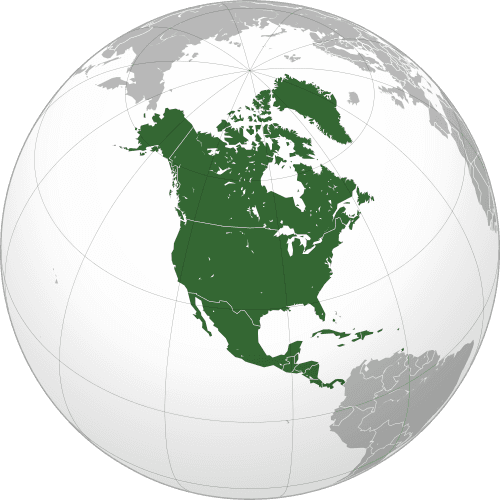
North America
LOCATION3 w/ Smith·3 w/ Brazelton
Ottawa
LOCATION3 w/ Smith·3 w/ Brazelton