Back to Network










3
Shared Docs
3
Same-Page
3 / 6
Mentions
Document Mentions (3 shared documents)
3 mentions1 same-page
Page ?Same page
ng animations of circles, triangles, and squares darting about could identify various shapes as char- acters and infer a narrative. Anthropologist Stewart Guthrie noted in 1993 that this ten- dency could help explain religion, because it implies we attribute "agency" to all kinds of inanimate objects and amb
that children are predisposed to think that the mind persists even after the death of the body—something that approaches the idea of an afterlife. Bering showed children ages 4 through 12 years old a puppet show in which a crocodile ate a mouse. Then he asked the children questions about the mouse.
that children learn about 3 the afterlife from others. Working in Spain CI E and Madagascar, Harris and colleagues did studies somewhat similar to Bering's, asking g children about the physical and psychological ti states of a person who had died. Older chil- dren and adults were more likely than yo
3 mentions1 same-page
Page ?Same page
ng animations of circles, triangles, and squares darting about could identify various shapes as char- acters and infer a narrative. Anthropologist Stewart Guthrie noted in 1993 that this ten- dency could help explain religion, because it implies we attribute "agency" to all kinds of inanimate objects and amb
that children are predisposed to think that the mind persists even after the death of the body—something that approaches the idea of an afterlife. Bering showed children ages 4 through 12 years old a puppet show in which a crocodile ate a mouse. Then he asked the children questions about the mouse.
that children learn about 3 the afterlife from others. Working in Spain CI E and Madagascar, Harris and colleagues did studies somewhat similar to Bering's, asking g children about the physical and psychological ti states of a person who had died. Older chil- dren and adults were more likely than yo
3 mentions1 same-page
Page ?Same page
ng animations of circles, triangles, and squares darting about could identify various shapes as char- acters and infer a narrative. Anthropologist Stewart Guthrie noted in 1993 that this ten- dency could help explain religion, because it implies we attribute "agency" to all kinds of inanimate objects and amb
that children are predisposed to think that the mind persists even after the death of the body—something that approaches the idea of an afterlife. Bering showed children ages 4 through 12 years old a puppet show in which a crocodile ate a mouse. Then he asked the children questions about the mouse.
ty say that children learn about the afterlife from others. Working in Spain and Madagascar, Harris and colleagues did studies somewhat similar to Bering's, asking children about the physical and psychological states of a person who had died. Older chil- dren and adults were more likely than younger
Sponsored
Mutual Connections (58)
Entities connected to both Stewart Guthrie and Bering
Marc Rich
PERSON5 w/ Stewart·4 w/ Bering
Prince Charles
PERSON5 w/ Stewart·3 w/ Bering
Harvard University
ORGANIZATION5 w/ Stewart·3 w/ Bering
Martha Stewart
PERSON5 w/ Stewart·3 w/ Bering
PB
Pascal Boyer
PERSON5 w/ Stewart·3 w/ Bering
Justin Trudeau
PERSON5 w/ Stewart·3 w/ Bering
Jesse
PERSON3 w/ Stewart·3 w/ Bering
Eric Schmidt
PERSON3 w/ Stewart·3 w/ Bering
BO
Boyer
PERSON3 w/ Stewart·3 w/ Bering
BA
Barrett
PERSON3 w/ Stewart·3 w/ Bering
the National Academy of Sciences
ORGANIZATION3 w/ Stewart·3 w/ Bering
Guthrie
PERSON3 w/ Stewart·3 w/ Bering
PH
Paul Harris
PERSON3 w/ Stewart·3 w/ Bering
Mickey Mouse
PERSON3 w/ Stewart·3 w/ Bering
Venus
LOCATION3 w/ Stewart·3 w/ Bering
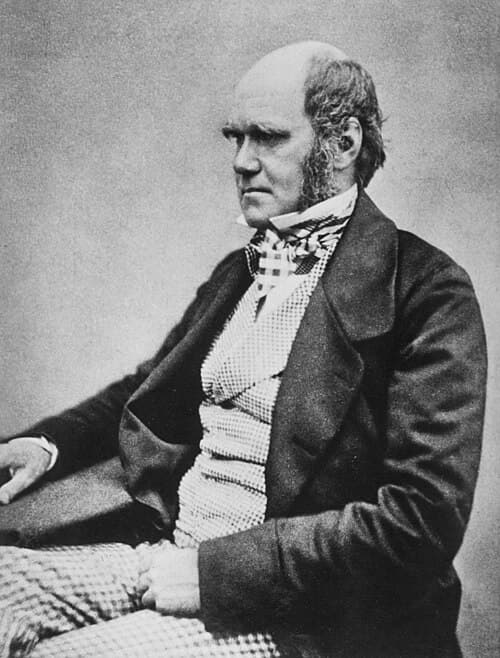
Charles Darwin
PERSON3 w/ Stewart·3 w/ Bering
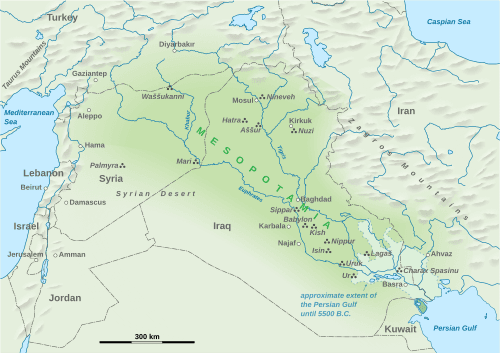
Mesopotamia
LOCATION3 w/ Stewart·3 w/ Bering
Bethesda
LOCATION3 w/ Stewart·3 w/ Bering
Lancaster
LOCATION3 w/ Stewart·3 w/ Bering
the University of Reading
ORGANIZATION3 w/ Stewart·3 w/ Bering