Back to Network


















4
Shared Docs
4
Same-Page
6 / 9
Mentions
Document Mentions (4 shared documents)
5 mentions1 same-page
Page ?Same page
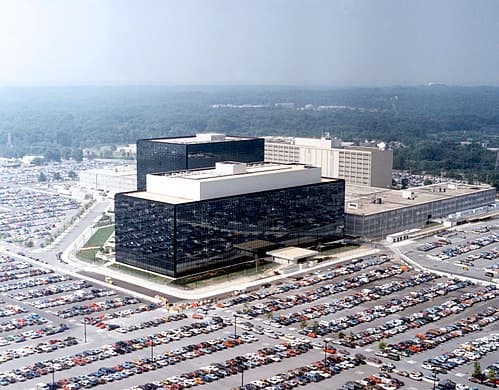
the NSA. In 2010, the NSA’s “Q” division handled such security and espionage threats. It reportedly initiated a counter-espionage probe at the NSA’s Fort Meade headquarters on receiving the tip. But since the NSA’s cryptological service had in 2010 no fewer than 35,000 military and civilian contractor employ
le its adversaries took full advantage of the setback. Several hundred US and British intelligence officers worked around the clock in Washington DC, Fort Meade, Maryland and Cheltenham, England for months on end to determine if which parts could be still salvaged from what had been until the Snowden breach t
ppened to Wang Lijun, a well- connected police chief in China. In February 2012, Wang, walked into at the US consulate in Chengdu asking from asylum. The State Department decided against it. After Wang left US protection, he was arrested for corruption and received a 15 year prison sentence. Such decisions about walk-i
essed an interest in obtaining some form of amnesty from prosecution in America. Wizner was willing to attempt to explore making a possible deal with the Department of Justice, but it would not be an easy task, especially if Snowden had turned over NSA documents to a foreign power. Even to argue that Snowden was merely a N
tions intelligence and the NSA fulfilled them. As the Cold War heated up in the 1960s, the NSA provided intelligence not only to the Pentagon but to the Department of State, Central Intelligence Agency, the Treasury Department, the Atomic Energy Commission, and the FBI. With a multi-billion dollar “black budget” hidden f
4 mentions1 same-page
Page ?Same page
the sensitive job of investigating the breach to Richard “Rick” Ledgett, the Director of the NSA’s Threat Operations Center at NSA’s headquarters in Fort Meade, Maryland. It was a key position since the top- secret unit was responsible for discovering and countering the threats posed by Chinese, Russian and
the newspaper. He was also highly-regarded by the editors there. He was therefore interested in Poitras’ offer (although he would consult a friend at the Justice Department about the legality of publishing NSA documents. Snowden now had laid the groundwork for at least two possible outlets; one an establishment newspape
Hong Kong, the FBI realized Snowden was a possible intelligence defector. It froze his credit and bank cards. It also notified the passport office in the State Department the legal attaches at the Hong Kong consulate. The legal attaches, who were actually FBI field agents posted in Hong Kong, located Snowden at the Mir
the service providers. It also requires a written directive from both the Attorney General and the Director of National Intelligence, and a review by the Department of Justice every three months of each case. After obtaining this data, the NSA ran programs to filter out all domestic Internet communications. In theory at lea
3 mentions1 same-page
Page ?Same page
ing the breach to a team headed by Richard “Rick” Ledgett, who was then director of the NSA’s Threat Opera- tions Center at the NSA’s headquarters in Fort Meade, Maryland. Ledgett was the logical choice to head the damage assessment inves- tigation because the center’s regional branch in Hawaii was under his
cy, there were six government employees who, as a matter of personal conscience, shared classified informa- tion they obtained from the FBI, the CIA, the State Department, and the U.S. Army with journalists. They were all convicted: Sha- mai Leibowitz in 2010, Chelsea Manning in 2013, John Kiriakou in 2013, Donald Sach
the service providers. It also required a written directive from both the attorney general and the director of national intelligence and a review by the Department of Justice every three months for each and every case. After obtain- ing this data, the NSA ran programs, as required by law, to filter out all domestic Interne
Sponsored
3 mentions1 same-page
Page ?Same page
ing the NSA. In 2010, the NSA division that handled such security and espio- nage threats reportedly initiated a counterespionage probe at the NSA’s Fort Meade headquarters. According to a former NSA official, “They [were] looking for one or more Russian spies that NSA [was] convinced resided at Fort Meade a
adversaries took full advantage of the setback. Sev- eral hundred U.S. and British intelligence officers worked around the clock in Washington, D.C., Fort Meade, Maryland, and Cheltenham, England, for months on end to determine which parts of the most powerful communications intelligence system in the world c
intelligence targets for the NSA to pursue. As the Cold War heated up in the 1960s, the NSA provided intel- ligence not only to the Pentagon but to the Department of State, the | | Epst_9780451494566_2p_all_r1.indd 199 @ 9/30/16 8:13AM | | HOUSE_OVERSIGHT_019687 200 | HOW AMERICA LOST ITS SECRETS Central Intelligenc
Sponsored
Mutual Connections (336)
Entities connected to both Fort Meade and Department of Justice
Jeffrey Epstein
PERSON3 w/ Fort·2,961 w/ Department
United States
LOCATION4 w/ Fort·1,116 w/ Department
LB
Leon Black
PERSON2 w/ Fort·746 w/ Department
George W. Bush
PERSON4 w/ Fort·689 w/ Department
Donald Trump
PERSON3 w/ Fort·643 w/ Department
Virginia Giuffre
PERSON3 w/ Fort·522 w/ Department
Bradley Edwards
PERSON2 w/ Fort·503 w/ Department
Bill Clinton
PERSON4 w/ Fort·477 w/ Department
Julie K. Brown
PERSON2 w/ Fort·448 w/ Department
Alan Dershowitz
PERSON4 w/ Fort·418 w/ Department
Stephen Hawking
PERSON2 w/ Fort·343 w/ Department
Barack Obama
PERSON4 w/ Fort·337 w/ Department
George Mitchell
PERSON4 w/ Fort·305 w/ Department
Marc Rich
PERSON4 w/ Fort·295 w/ Department
Prince Charles
PERSON3 w/ Fort·284 w/ Department
South
LOCATION2 w/ Fort·226 w/ Department
John F. Kennedy
PERSON4 w/ Fort·216 w/ Department
Woody Allen
PERSON4 w/ Fort·214 w/ Department
Wilbur Ross
PERSON3 w/ Fort·205 w/ Department
Hillary Clinton
PERSON2 w/ Fort·203 w/ Department