Back to Network










4
Shared Docs
4
Same-Page
4 / 6
Mentions
Document Mentions (4 shared documents)
3 mentions1 same-page
Page ?Same page
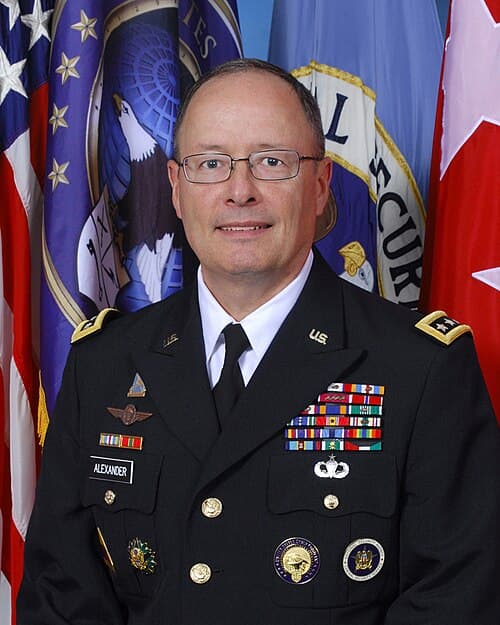
yber-defense units of the army, navy, marines, and air force cyber forces were merged together and put under the command of the NSA director. General Keith Alexander became the first director of this new command. One problem for the Cyber Command was separating attacks by civilians, including criminals, hacktivist
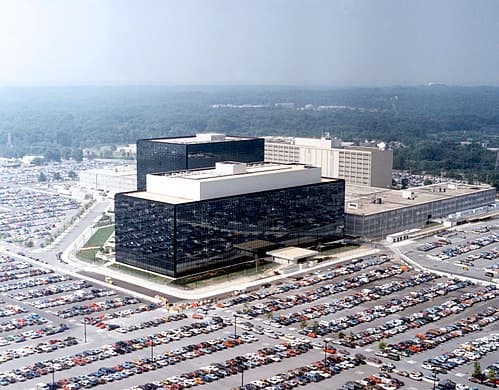
ing the NSA. In 2010, the NSA division that handled such security and espio- nage threats reportedly initiated a counterespionage probe at the NSA’s Fort Meade headquarters. According to a former NSA official, “They [were] looking for one or more Russian spies that NSA [was] convinced resided at Fort Meade a
adversaries took full advantage of the setback. Sev- eral hundred U.S. and British intelligence officers worked around the clock in Washington, D.C., Fort Meade, Maryland, and Cheltenham, England, for months on end to determine which parts of the most powerful communications intelligence system in the world c
3 mentions1 same-page
Page ?Same page
the Army, Navy, Marines, and Air Force cyber forces, were merged together in this new command put under the command of the NSA director. NSA director Keith Alexander became the first director of this new command. One problem for the Cyber command was separating attacks by civilians, including criminals, hacktavist
the NSA. In 2010, the NSA’s “Q” division handled such security and espionage threats. It reportedly initiated a counter-espionage probe at the NSA’s Fort Meade headquarters on receiving the tip. But since the NSA’s cryptological service had in 2010 no fewer than 35,000 military and civilian contractor employ
le its adversaries took full advantage of the setback. Several hundred US and British intelligence officers worked around the clock in Washington DC, Fort Meade, Maryland and Cheltenham, England for months on end to determine if which parts could be still salvaged from what had been until the Snowden breach t
2 mentions1 same-page
Page ?Same page
ed. The FBI always had this power, if it obtained a warrant, but it did not previously have the “haystack” of records in a single database. Gen- eral Keith Alexander, who headed the NSA between 2005 and 2014, believed that maintaining such a haystack database made sense. “His approach was, ‘Let’s collect the whole
ing the breach to a team headed by Richard “Rick” Ledgett, who was then director of the NSA’s Threat Opera- tions Center at the NSA’s headquarters in Fort Meade, Maryland. Ledgett was the logical choice to head the damage assessment inves- tigation because the center’s regional branch in Hawaii was under his
Sponsored
2 mentions1 same-page
Page ?Same page
_—_As a result, Morell concluded “Snowden’s disclosures will go down in history as the greatest compromise of classified information ever.” General Keith Alexander, the head of the NSA at the time, came to a very similar assessment, asserting that Snowden did “the greatest damage to our combined nations’ intelli
the sensitive job of investigating the breach to Richard “Rick” Ledgett, the Director of the NSA’s Threat Operations Center at NSA’s headquarters in Fort Meade, Maryland. It was a key position since the top- secret unit was responsible for discovering and countering the threats posed by Chinese, Russian and
Sponsored
Mutual Connections (336)
Entities connected to both Keith Alexander and Fort Meade
Woody Allen
PERSON8 w/ Keith·4 w/ Fort
North Korea
LOCATION8 w/ Keith·4 w/ Fort
Department of Justice
ORGANIZATION8 w/ Keith·4 w/ Fort
George W. Bush
PERSON7 w/ Keith·4 w/ Fort
Barack Obama
PERSON7 w/ Keith·4 w/ Fort
Sarah Harrison
PERSON6 w/ Keith·4 w/ Fort
John F. Kennedy
PERSON6 w/ Keith·4 w/ Fort
United States
LOCATION6 w/ Keith·4 w/ Fort
Jacob Appelbaum
PERSON6 w/ Keith·4 w/ Fort
MO
Morell
PERSON6 w/ Keith·4 w/ Fort
Micah Lee
PERSON6 w/ Keith·4 w/ Fort
Laura Poitras
PERSON6 w/ Keith·4 w/ Fort
Glenn Greenwald
PERSON6 w/ Keith·4 w/ Fort
George Mitchell
PERSON6 w/ Keith·4 w/ Fort
Booz Allen
PERSON6 w/ Keith·4 w/ Fort
Assange
ORGANIZATION6 w/ Keith·4 w/ Fort
Donald Trump
PERSON7 w/ Keith·3 w/ Fort
BW
Ben Wizner
PERSON6 w/ Keith·4 w/ Fort
Mitch McConnell
PERSON6 w/ Keith·4 w/ Fort
Alan Dershowitz
PERSON6 w/ Keith·4 w/ Fort