Back to Network









3
Shared Docs
2
Same-Page
6 / 3
Mentions
Document Mentions (3 shared documents)
3 mentions1 same-page
Page ?Same page
isclosed cases of child sexual abuse in Switzerland: Results from a Nationwide Agency Survey. International Journal of Public Health. 58, 875-883. Paine. M. L.. & Hansen• D. J. (2002). Factors influencing children to self-disclose sexual abuse. Clinical Psychology Review, 22, 271-295. doi:10.1016602
mining factors influencing CSA disclosure have served the field well but are no longer current. Important contributions on CSA disclosures include Paine and Hansen's (2002) original review covering the liter- ature largely from the premillennium era, followed by London, Bruck, Ceci, and Shuman's (200
to identify a broad range of factors. including family dynamics that contribute to or hinder a child's ability co disclose CSA Alaggia (2005) Collings. Griffiths. and Karnak. (2005). The study purpose was CO qualitatively explore dynamics that impede or promote disclosure by examining a range
3 mentions1 same-page
Page ?Same page
isclosed cases of child sexual abuse in Switzerland: Results from a Nationwide Agency Survey. International Journal of Public Health, 58, 875 883. Paine, M. L., & Hansen, D. J. (2002). Factors influencing children to self disclose sexual abuse. Clinical Psychology Review, 22, 271 295. doi:10.1016/50
mining factors influencing CSA disclosure have served the field well but are no longer current. Important contributions on CSA disclosures include Paine and Hansen's (2002) original review covering the liter- ature largely from the premillennium era, followed by London, Bruck, Ceci, and Shuman's (200
C. It, & Laumann, E. O. (1997). Sexual contact between children and adults: A life course perspective. American Socio logical Review, 62, 540 560. Collings, S. J., Griffiths, S., & Kuntalo, M. (2005). Patterns of disclo sure in child sexual abuse. South African Journal of Psychology, 35,270 285. Colli
3 mentions
Page EFTA00024177
mining factors influencing CSA disclosure have served the field well but are no longer current. Important contributions on CSA disclosures include Paine and Hansen's (2002) original review covering the liter- ature largely from the premillennium era, followed by London, Bruck, Ceci, and Shuman's (200
Page: EFTA00024177 →Page EFTA00024193
n follow-up research by Hunter (2011), and through an extensive file review that used Alaggia's (2004) disclosure framework to analyze their data (Collings et al., 2005) for verification. Interpersonal factors have also emerged in regard to certain family characteristics as disclosure barriers. Familie
Page: EFTA00024193 →Page EFTA00024195
r differentials and dependency needs (Collings et al., 2005; Dumont et al., 2014; Hershkowitz et al., 2005; Kogan, 2004; Leclerc & Wort- ley, 2015; Paine & Hansen, 2002; Schaeffer et al., 2011). Further, the perpetrator residing with their victim(s) increases the likelihood of no disclosure (Leclerc
Page: EFTA00024195 →Sponsored
Mutual Connections (327)
Entities connected to both Paine and Collings
George W. Bush
PERSON19 w/ Paine·2 w/ Collings
Ghislaine Maxwell
PERSON16 w/ Paine·2 w/ Collings
DB
Doug Band
PERSON12 w/ Paine·2 w/ Collings
Stanford University
LOCATION10 w/ Paine·2 w/ Collings
Alan Dershowitz
PERSON8 w/ Paine·4 w/ Collings
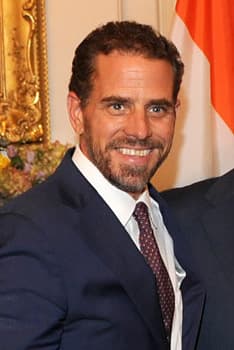
Hunter Biden
PERSON8 w/ Paine·3 w/ Collings
LB
Leon Black
PERSON8 w/ Paine·3 w/ Collings
Lawrence Krauss
PERSON8 w/ Paine·3 w/ Collings
Julie K. Brown
PERSON7 w/ Paine·3 w/ Collings
Goldman Sachs
ORGANIZATION5 w/ Paine·4 w/ Collings
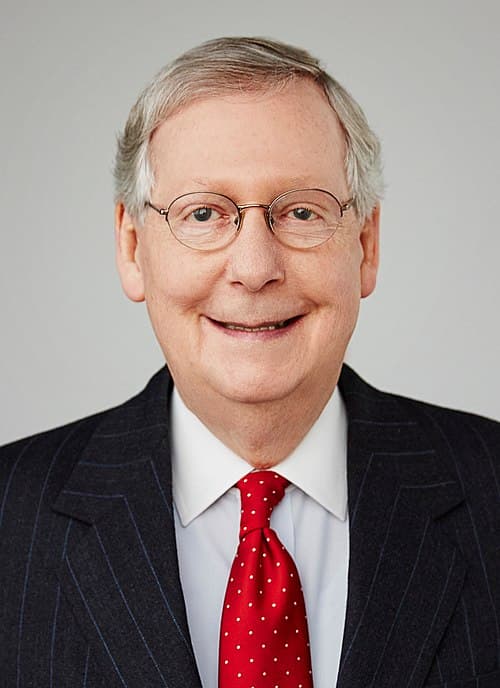
Mitch McConnell
PERSON4 w/ Paine·4 w/ Collings
UN
Ungar
PERSON4 w/ Paine·4 w/ Collings
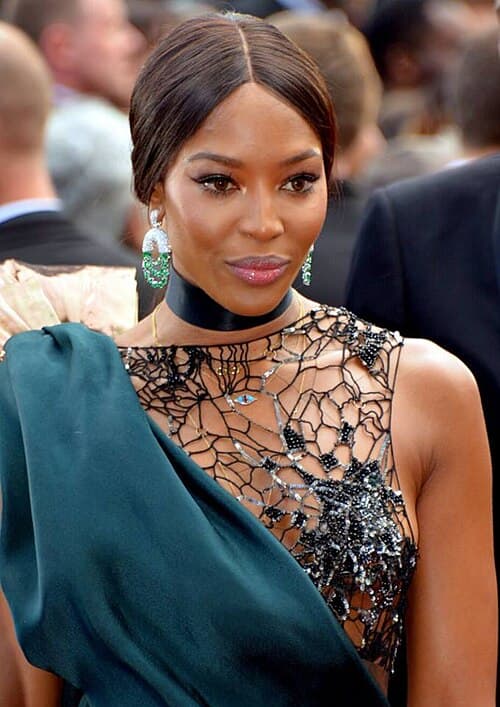
Naomi Campbell
PERSON6 w/ Paine·2 w/ Collings
Los Angeles
LOCATION5 w/ Paine·3 w/ Collings
Jensen
PERSON3 w/ Paine·4 w/ Collings
Maier
ORGANIZATION4 w/ Paine·3 w/ Collings
William Barr
PERSON5 w/ Paine·2 w/ Collings
Smith et al.
ORGANIZATION3 w/ Paine·4 w/ Collings
KO
Kogan
PERSON3 w/ Paine·4 w/ Collings
Clinical Psychology Review
ORGANIZATION3 w/ Paine·3 w/ Collings