Back to Network










5
Shared Docs
5
Same-Page
5 / 5
Mentions
Document Mentions (5 shared documents)
2 mentions1 same-page
Page ?Same page
s diseases and cancer genetics; Martin Seligman, known for his work on Positive Psychology — that is to say the psychology of personal fulfillment; Roger Schank, a leading researcher in the application of cognitive learning theory to the curricula of formal education; the renown physicist/cosmologist Kraus
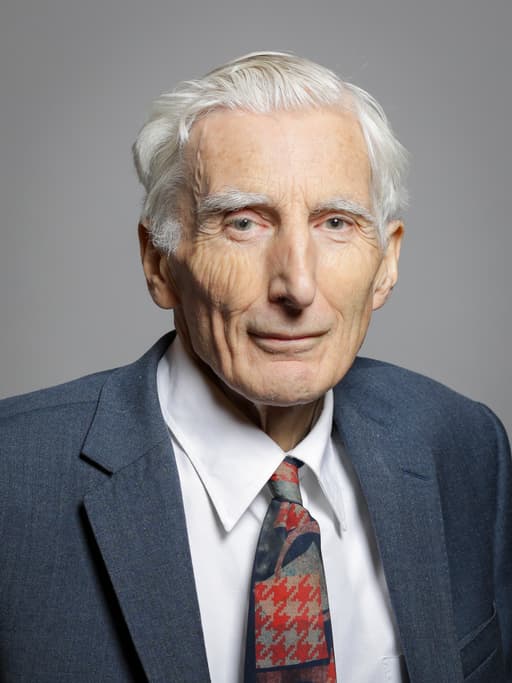
tions, then so is almost anywhere. And the limiting factor, both there and here, is not physical resources but knowledge. The Astronomer Royal, Sir Martin Rees, has written a book about our vulnerability to scientific accidents, terrorism using weapons of mass destruction and other dangers: he thinks civili
2 mentions1 same-page
Page ?Same page
s diseases and cancer genetics; Martin Seligman, known for his work on Positive Psychology — that is to say the psychology of personal fulfillment; Roger Schank, a leading researcher in the application of cognitive learning theory to the curricula of formal education; the renown physicist/cosmologist Lawren
tions, then so is almost anywhere. And the limiting factor, both there and here, is not physical resources but knowledge. The Astronomer Royal, Sir Martin Rees, has written a book about our vulnerability to scientific accidents, terrorism using weapons of mass destruction and other dangers: he thinks civili
2 mentions1 same-page
Page ?Same page
e alongside the leaders of the 1“ generation, Marvin Minsky and John McCarthy, the 2"! generation, Edward Feigenbaum 13 HOUSE_OVERSIGHT_016816 and Roger Schank, and Joseph Traub, head of the National Supercomputer Consortium. In 1981 with Heinz’s help, I had founded “The Reality Club” (the precursor to the
ks to mitigate risks “associated with emerging technologies and human activity” —at the University of Cambridge, along with Philosopher Huw Price and Martin Rees, the Astronomer Royal. He once described himself to me as “a convinced consequentialist” —convinced enough to have given away much of his entreprene
Sponsored
2 mentions1 same-page
Page ?Same page
e alongside the leaders of the 1“ generation, Marvin Minsky and John McCarthy, the 2"! generation, Edward Feigenbaum 13 HOUSE_OVERSIGHT_016233 and Roger Schank, and Joseph Traub, head of the National Supercomputer Consortium. In 1981 with Heinz’s help, I had founded “The Reality Club” (the precursor to the
ks to mitigate risks “associated with emerging technologies and human activity” —at the University of Cambridge, along with Philosopher Huw Price and Martin Rees, the Astronomer Royal. He once described himself to me as “a convinced consequentialist” —convinced enough to have given away much of his entreprene
2 mentions1 same-page
Page ?Same page
s diseases and cancer genetics; Martin Seligman, known for his work on Positive Psychology — that is to say the psychology of personal fulfillment; Roger Schank, a leading researcher in the application of cognitive learnin theory to the curricula of formal education; the renown physicist/cosmologist Krauss
tions, then so is almost anywhere. And the limiting factor, both there and here, is not physical resources but knowledge. The Astronomer Royal, Sir Martin Rees, has written a book about our vulnerability to scientific accidents, terrorism using weapons of mass destruction and other dangers: he thinks civili
Sponsored
Mutual Connections (962)
Entities connected to both Roger Schank and Martin Rees
Jeffrey Epstein
PERSON119 w/ Roger·19 w/ Martin
Alan Dershowitz
PERSON21 w/ Roger·17 w/ Martin
Lawrence Krauss
PERSON15 w/ Roger·18 w/ Martin
Prince Charles
PERSON22 w/ Roger·11 w/ Martin
Marc Rich
PERSON21 w/ Roger·9 w/ Martin
George W. Bush
PERSON16 w/ Roger·14 w/ Martin
Steven Pinker
PERSON11 w/ Roger·19 w/ Martin
LB
Leon Black
PERSON23 w/ Roger·5 w/ Martin
Martin Nowak
PERSON21 w/ Roger·6 w/ Martin
Prince Andrew
PERSON18 w/ Roger·8 w/ Martin
Woody Allen
PERSON13 w/ Roger·12 w/ Martin
Stephen Hawking
PERSON12 w/ Roger·13 w/ Martin
Michael Douglas
PERSON13 w/ Roger·10 w/ Martin
Marvin Minsky
PERSON10 w/ Roger·10 w/ Martin
John Brockman
PERSON7 w/ Roger·12 w/ Martin
Frank Wilczek
PERSON5 w/ Roger·14 w/ Martin
Martha Stewart
PERSON6 w/ Roger·12 w/ Martin
Eric Trump
PERSON9 w/ Roger·9 w/ Martin
Elon Musk
PERSON5 w/ Roger·12 w/ Martin
Joi Ito
PERSON12 w/ Roger·5 w/ Martin