Back to Network









3
Shared Docs
3
Same-Page
5 / 3
Mentions
Document Mentions (3 shared documents)
3 mentions1 same-page
Page ?Same page
e first meeting (in Washington, Connecticut) that preceded the crafting of this book, he commented on the change in how “information” is viewed since Wiener’s time: the military-industrial, Cold War era. Back then, Wiener compared information, metaphorically, to entropy, in that it could not be conserved—
and directed the slaves as they mindlessly (mechanically) churned their oars. The Greek had already migrated into modern English via Latin, going 47 Wiener later had to admit the earlier coinage of the word in 1834 by André-Marie Ampére, who had intended it to mean the “science of government,” a concept
Human Reason, Joseph Weizenbaum argued that machines should not replace Homo in situations requiring respect, dignity, or care, while others (author Pamela McCorduck and computer scientists like John McCarthy and Bill Hibbard) replied that machines can be more impartial, calm, and consistent and less abusive or mi
3 mentions1 same-page
Page ?Same page
e first meeting (in Washington, Connecticut) that preceded the crafting of this book, he commented on the change in how “information” is viewed since Wiener’s time: the military-industrial, Cold War era. Back then, Wiener compared information, metaphorically, to entropy, in that it could not be conserved—
and directed the slaves as they mindlessly (mechanically) churned their oars. The Greek had already migrated into modern English via Latin, going 47 Wiener later had to admit the earlier coinage of the word in 1834 by André-Marie Ampére, who had intended it to mean the “science of government,” a concept
Human Reason, Joseph Weizenbaum argued that machines should not replace Homo in situations requiring respect, dignity, or care, while others (author Pamela McCorduck and computer scientists like John McCarthy and Bill Hibbard) replied that machines can be more impartial, calm, and consistent and less abusive or mi
2 mentions1 same-page
Page ?Same page
d science philanthropist, who, in the abstract for his essay, writes: "An interesting cultural evolution is happening in the AI research community. Wiener's original warnings were buried for 50+ years, only to re-emerge within a small community of 'dissidents,' and are now slowly—and very encouragingl
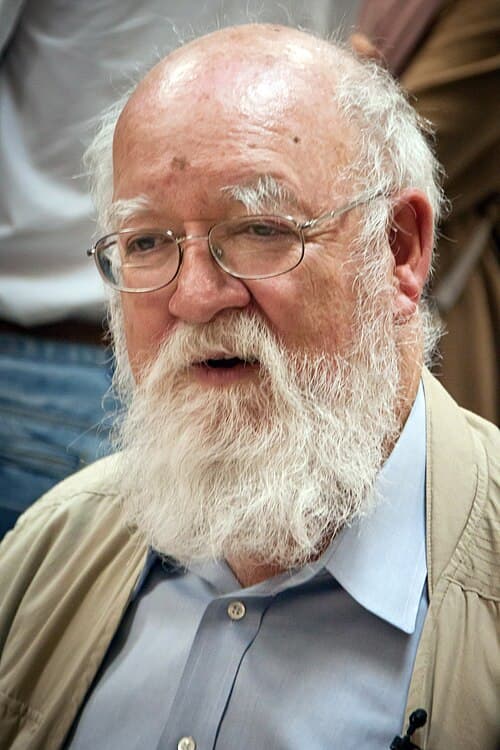
ans Peter Galison, George Dyson, and David Kaiser; the technologist Jaan Tallin; the cognitive scientist Tom Griffiths, the writers Kevin Kelly and Pamela McCorduck. As Daniel C. Dennett notes: "resurrecting Wiener as a major thinker (something I myself agree with) is a sort of thankless task. It will happen in
Sponsored
Mutual Connections (414)
Entities connected to both Wiener and Pamela McCorduck
Jeffrey Epstein
PERSON32 w/ Wiener·6 w/ Pamela
George W. Bush
PERSON23 w/ Wiener·8 w/ Pamela
John Brockman
PERSON15 w/ Wiener·8 w/ Pamela
Daniel Dennett
PERSON10 w/ Wiener·8 w/ Pamela
Martha Stewart
PERSON10 w/ Wiener·8 w/ Pamela
Julie K. Brown
PERSON15 w/ Wiener·2 w/ Pamela
Prince Andrew
PERSON12 w/ Wiener·5 w/ Pamela
Virginia Giuffre
PERSON14 w/ Wiener·3 w/ Pamela
LB
Leon Black
PERSON13 w/ Wiener·2 w/ Pamela
Prince Charles
PERSON13 w/ Wiener·2 w/ Pamela
Stephen Hawking
PERSON8 w/ Wiener·7 w/ Pamela
Alan Dershowitz
PERSON8 w/ Wiener·7 w/ Pamela
Lawrence Krauss
PERSON8 w/ Wiener·6 w/ Pamela
David Kaiser
PERSON11 w/ Wiener·3 w/ Pamela
Freeman Dyson
PERSON8 w/ Wiener·6 w/ Pamela
Jaan Tallinn
PERSON10 w/ Wiener·3 w/ Pamela
Joi Ito
PERSON8 w/ Wiener·5 w/ Pamela
Frank Wilczek
PERSON10 w/ Wiener·3 w/ Pamela
Danny Hillis
PERSON6 w/ Wiener·7 w/ Pamela
Philadelphia
LOCATION11 w/ Wiener·2 w/ Pamela