Back to Network









5
Shared Docs
5
Same-Page
7 / 7
Mentions
Document Mentions (5 shared documents)
3 mentions1 same-page
Page ?Same page
r machine, now known as a Universal Turing Machine, an arbitrary set of computing instructions could be encoded on that same tape. In the 1940s, von Neumann developed an abstract self-reproducing machine called a cellular automaton. In this case it occupied a finite subset of an infinite two- dimensional
ng us. The fruit of the long history of Brockman’s profound engagement with the most important scientific minds who have been thinking about AI—from Alison Gopnik and David Deutsch to Frank Wilczek and Stephen Wolfram— Deep Thinking 1s an ideal introduction to the landscape of crucial issues AI presents. The c
e is the author of AB, co-author (with Alan Gershenfeld & Joel Cutcher-Gershenfeld) of Designing Reality, and founder of the global fab lab network. Alison Gopnik is a developmental psychologist at UC Berkeley; her books include The Philosophical Baby and, most recently, Zhe Gardener and the Carpenter: What the
3 mentions1 same-page
Page ?Same page
rate of knowledge accumulation. John von Neumann also has a cameo in Zhe Human Use of Human Beings, for game theory. What Wiener missed here was von Neumann’s seminal role in digitizing computation. Whereas analog communication degraded with distance, analog computing (like the Differential Analyzer) degr
inging the programmability of bits to the world of atoms. By digitizing not just designs but the construction of materials, the same lessons that von Neumann and Shannon taught us apply to exponentially increasing fabricational complexity. I’ve defined digital materials to be those constructed from a disc
tic and non-utilitarian in its plurality of perspectives and diversity of understandings will undoubtedly be essential. 150 HOUSE_OVERSIGHT_016953 Alison Gopnik is an international leader in the field of children’s learning and development and was one of the founders of the field of “theory of mind.” She has
3 mentions1 same-page
Page ?Same page
r machine, now known as a Universal Turing Machine, an arbitrary set of computing instructions could be encoded on that same tape. In the 1940s, von Neumann developed an abstract self-reproducing machine called a cellular automaton. In this case it occupied a finite subset of an infinite two- dimensional
ng us. The fruit of the long history of Brockman’s profound engagement with the most important scientific minds who have been thinking about AI—from Alison Gopnik and David Deutsch to Frank Wilczek and Stephen Wolfram— Deep Thinking 1s an ideal introduction to the landscape of crucial issues AI presents. The c
e is the author of AB, co-author (with Alan Gershenfeld & Joel Cutcher-Gershenfeld) of Designing Reality, and founder of the global fab lab network. Alison Gopnik is a developmental psychologist at UC Berkeley; her books include The Philosophical Baby and, most recently, Zhe Gardener and the Carpenter: What the
Sponsored
3 mentions1 same-page
Page ?Same page
rate of knowledge accumulation. John von Neumann also has a cameo in Zhe Human Use of Human Beings, for game theory. What Wiener missed here was von Neumann’s seminal role in digitizing computation. Whereas analog communication degraded with distance, analog computing (like the Differential Analyzer) degr
inging the programmability of bits to the world of atoms. By digitizing not just designs but the construction of materials, the same lessons that von Neumann and Shannon taught us apply to exponentially increasing fabricational complexity. I’ve defined digital materials to be those constructed from a disc
tic and non-utilitarian in its plurality of perspectives and diversity of understandings will undoubtedly be essential. 150 HOUSE_OVERSIGHT_016370 Alison Gopnik is an international leader in the field of children’s learning and development and was one of the founders of the field of “theory of mind.” She has
2 mentions1 same-page
Page ?Same page
Bigelow's "Behavior, Purpose and Teleology" (1943); McCullouch & Pitts's "A Logical Calculus of the Ideas Immanent in Nervous Activity" (1943); von Neumann's book Theory of Games and Economic Behavior (with Oskar Morgenstem) 1944; Shannon's "A Mathematical Theory of Communication" (1948); Wiener's Cybe
k are Chris Anderson, Rodney Brooks, George M. Church, Daniel C. Dennett, David Deutsch, Anca Dragan, George Dyson, Peter Galison, Neil Gershenfeld, Alison Gopnik, Tom Griffiths, Danny Hillis, Caroline A. Jones, David Kaiser, Seth Lloyd, Hans Ulrich Obrist, Judea Pearl, Sandy Pentland, Steven Pinker, Venki Ra
Sponsored
Mutual Connections (693)
Entities connected to both Neumann and Alison Gopnik
John Brockman
PERSON7 w/ Neumann·19 w/ Alison
Martha Stewart
PERSON7 w/ Neumann·16 w/ Alison
Jeffrey Epstein
PERSON9 w/ Neumann·14 w/ Alison
Daniel Kahneman
PERSON5 w/ Neumann·18 w/ Alison
Prince Andrew
PERSON9 w/ Neumann·13 w/ Alison
George W. Bush
PERSON12 w/ Neumann·7 w/ Alison
Stewart Brand
PERSON3 w/ Neumann·14 w/ Alison
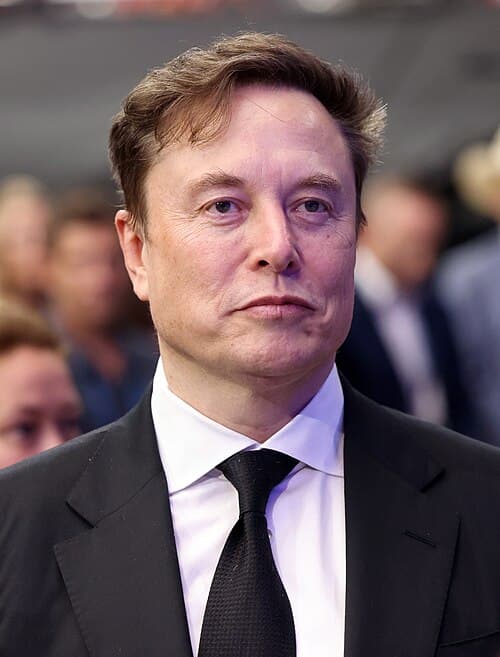
Elon Musk
PERSON5 w/ Neumann·12 w/ Alison
Chris Anderson
PERSON3 w/ Neumann·14 w/ Alison
George Dyson
PERSON3 w/ Neumann·13 w/ Alison
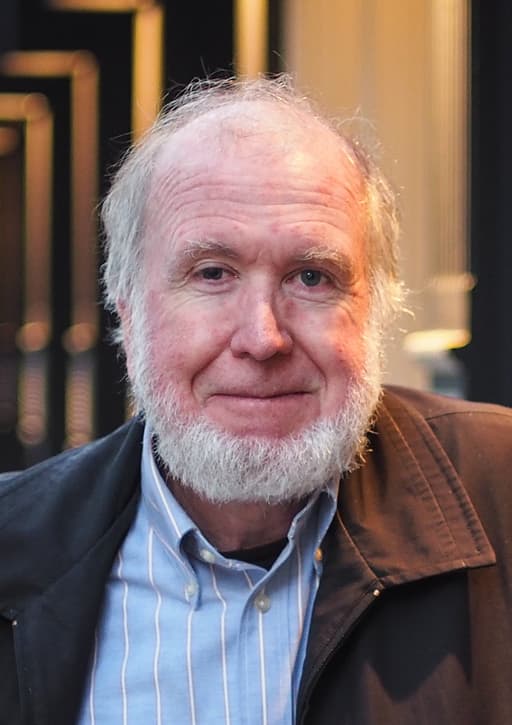
Kevin Kelly
PERSON2 w/ Neumann·13 w/ Alison
LB
Leon Black
PERSON11 w/ Neumann·4 w/ Alison
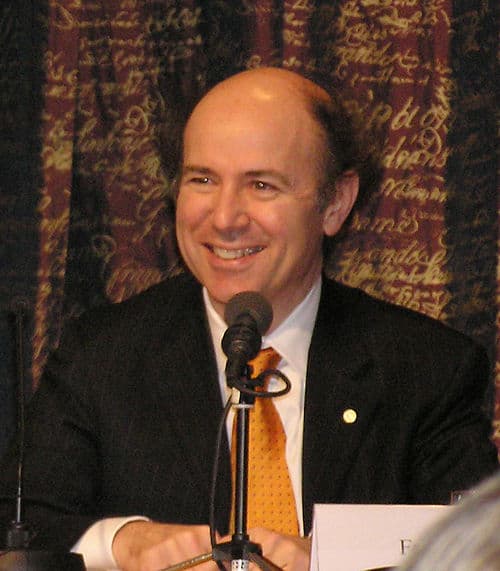
Frank Wilczek
PERSON6 w/ Neumann·9 w/ Alison
Stephen Hawking
PERSON7 w/ Neumann·8 w/ Alison
Ghislaine Maxwell
PERSON10 w/ Neumann·4 w/ Alison
Eric Trump
PERSON7 w/ Neumann·7 w/ Alison
Marc Rich
PERSON9 w/ Neumann·5 w/ Alison
Wilbur Ross
PERSON7 w/ Neumann·6 w/ Alison
David Kaiser
PERSON5 w/ Neumann·8 w/ Alison
Daniel Dennett
PERSON5 w/ Neumann·8 w/ Alison