Back to Network















5
Shared Docs
5
Same-Page
5 / 5
Mentions
Document Mentions (5 shared documents)
2 mentions1 same-page
Page ?Same page
w to represent, organize, and use much of commonsense knowledge, let alone build a machine that could learn all of that automatically on its own. As John McCarthy noted long ago: "in order for a program to be capable of learning something, it must first be able to represent that knowledge." There arc very few
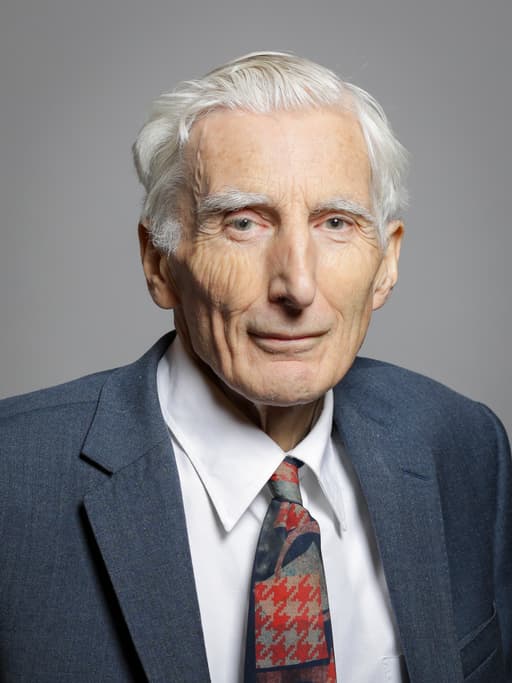
tions, then so is almost anywhere. And the limiting factor, both there and here, is not physical resources but knowledge. The Astronomer Royal, Sir Martin Rees, has written a book about our vulnerability to scientific accidents, terrorism using weapons of mass destruction and other dangers: he thinks civili
2 mentions1 same-page
Page ?Same page
w to represent, organize, and use much of commonsense knowledge, let alone build a machine that could learn all of that automatically on its own. As John McCarthy noted long ago: "in order for a program to be capable of learning something, it must first be able to represent that knowledge? There are very few
tions, then so is almost anywhere. And the limiting factor, both there and here, is not physical resources but knowledge. The Astronomer Royal, Sir Martin Rees, has written a book about our vulnerability to scientific accidents, terrorism using weapons of mass destruction and other dangers: he thinks civili
2 mentions1 same-page
Page ?Same page
eagues, including John von Neumann and Claude Shannon, who were interested in the commercialization of the new technologies. Second, computer pioneer John McCarthy disliked Wiener and refused to use Wiener’s term “Cybernetics.” McCarthy, in turn, coined the term “artificial intelligence” and became a founding fa
ks to mitigate risks “associated with emerging technologies and human activity” —at the University of Cambridge, along with Philosopher Huw Price and Martin Rees, the Astronomer Royal. He once described himself to me as “a convinced consequentialist” —convinced enough to have given away much of his entreprene
Sponsored
2 mentions1 same-page
Page ?Same page
eagues, including John von Neumann and Claude Shannon, who were interested in the commercialization of the new technologies. Second, computer pioneer John McCarthy disliked Wiener and refused to use Wiener’s term “Cybernetics.” McCarthy, in turn, coined the term “artificial intelligence” and became a founding fa
ks to mitigate risks “associated with emerging technologies and human activity” —at the University of Cambridge, along with Philosopher Huw Price and Martin Rees, the Astronomer Royal. He once described himself to me as “a convinced consequentialist” —convinced enough to have given away much of his entreprene
2 mentions1 same-page
Page ?Same page
w to represent, organize, and use much of commonsense knowledge, let alone build a machine that could learn all of that automatically on its own. As John McCarthy noted long ago: "in order for a program to be capable of learning something, it must first be able to represent that knowledge." There are very few
tions, then so is almost anywhere. And the limiting factor, both there and here, is not physical resources but knowledge. The Astronomer Royal, Sir Martin Rees, has written a book about our vulnerability to scientific accidents, terrorism using weapons of mass destruction and other dangers: he thinks civili
Sponsored
Mutual Connections (944)
Entities connected to both Joseph McCarthy and Martin Rees
Jeffrey Epstein
PERSON117 w/ Joseph·19 w/ Martin
Marc Rich
PERSON113 w/ Joseph·9 w/ Martin
Prince Andrew
PERSON114 w/ Joseph·8 w/ Martin
Donald Trump
PERSON114 w/ Joseph·4 w/ Martin
LB
Leon Black
PERSON112 w/ Joseph·5 w/ Martin
Jared Kushner
PERSON105 w/ Joseph·7 w/ Martin
Steve Bannon
PERSON107 w/ Joseph·3 w/ Martin
Tony Blair
PERSON106 w/ Joseph·3 w/ Martin
J. Robert Oppenheimer
PERSON106 w/ Joseph·2 w/ Martin
Michael Milken
PERSON104 w/ Joseph·3 w/ Martin
MW
Martin Weinberg
PERSON102 w/ Joseph·4 w/ Martin
Bear Stearns
ORGANIZATION103 w/ Joseph·2 w/ Martin
CH
Chill
PERSON101 w/ Joseph·3 w/ Martin
George W. Bush
PERSON52 w/ Joseph·14 w/ Martin
Justin Trudeau
PERSON44 w/ Joseph·3 w/ Martin
Lawrence Krauss
PERSON9 w/ Joseph·18 w/ Martin
Alan Dershowitz
PERSON9 w/ Joseph·17 w/ Martin
Steven Pinker
PERSON5 w/ Joseph·19 w/ Martin
Stephen Hawking
PERSON11 w/ Joseph·13 w/ Martin
Julie K. Brown
PERSON18 w/ Joseph·6 w/ Martin