Back to Network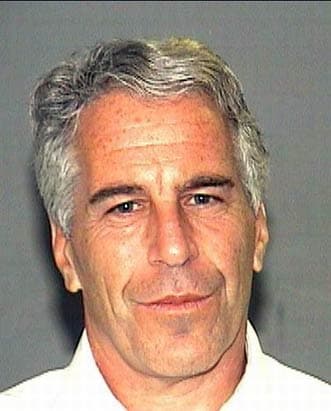










10
Shared Docs
9
Same-Page
13 / 18
Mentions
Document Mentions (10 shared documents)
4 mentions1 same-page
Page ?Same page
, Marvin Minsky (Massachusetts Institute of Technology), Erik Mueller (IBM T. J. WatsonResearch Center), Srini Narayanan (University of California, Berkeley), Ashwin Ram (Georgia Institute of Technology), Doug Riecken (IBM T. J. Watson Research Center), Roger Schank (Carnegie Mellon University), Mary She
er, if there is no answer. or if a modem or intercept recording is reached. Example system with architecture of diversity. Thus far, the Sloman and Minsky architectures arc theoretical constructs and have not yet been implemented. However, there are examples of working systems that capture the spirit
C-NO: 119024857 LENGTH: 7274 words HEADLINE: The St. Thomas common sense symposium: designing architectures for human-level intelligence. BYLINE: Minsky, Marvin; Singh, Push; Stomas, Aaron BODY: To build a machine that has "common sense" was once a principal goal in the field of artificial intellig
eveloped at this meeting and subsequent thoughts by the authors on how to make progress. (1) Organizing the Diversity of Al Methods EFTA00176560 Marvin Minsky kicked off the meeting by discussing how we might begin to organize the many techniques that have been developed in AI so far. While AI researchers
4 mentions1 same-page
Page ?Same page
rol, planning, estimation, learning, and cognitive science. Barely into her thirties herself, she has co-authored a number of papers with her veteran Berkeley colleague and mentor Stuart Russell which address various aspects of machine learning and the knotty problems of value alignment. She shares Stuart’
ces at UC Berkeley. She co-founded and serves on the steering committee for the Berkeley AI Research (BAIR) Lab and is a co-principal investigator in Berkeley’s Center for Human-Compatible AI. George Dyson is a historian of science and technology and the author of Baidarka: the Kayak, Darwin Among the Mach
ct with any precision when such a development might occur.” e You're just a Luddite. It’s an odd definition of Luddite that includes Turing, Wiener, Minsky, Musk, and Gates, who rank among the most prominent contributors to technological progress in the 20th and 21st centuries.* Furthermore, the epithet
g organized by Heinz Pagels, the president of the New York Academy of Sciences. I had a seat at the table alongside the leaders of the 1“ generation, Marvin Minsky and John McCarthy, the 2"! generation, Edward Feigenbaum 13 HOUSE_OVERSIGHT_016816 and Roger Schank, and Joseph Traub, head of the National Superc
4 mentions1 same-page
Page ?Same page
rol, planning, estimation, learning, and cognitive science. Barely into her thirties herself, she has co-authored a number of papers with her veteran Berkeley colleague and mentor Stuart Russell which address various aspects of machine learning and the knotty problems of value alignment. She shares Stuart’
ces at UC Berkeley. She co-founded and serves on the steering committee for the Berkeley AI Research (BAIR) Lab and is a co-principal investigator in Berkeley’s Center for Human-Compatible AI. George Dyson is a historian of science and technology and the author of Baidarka: the Kayak, Darwin Among the Mach
ct with any precision when such a development might occur.” e You're just a Luddite. It’s an odd definition of Luddite that includes Turing, Wiener, Minsky, Musk, and Gates, who rank among the most prominent contributors to technological progress in the 20th and 21st centuries.* Furthermore, the epithet
g organized by Heinz Pagels, the president of the New York Academy of Sciences. I had a seat at the table alongside the leaders of the 1“ generation, Marvin Minsky and John McCarthy, the 2"! generation, Edward Feigenbaum 13 HOUSE_OVERSIGHT_016233 and Roger Schank, and Joseph Traub, head of the National Superc
Sponsored
4 mentions1 same-page
Page ?Same page
Marvin Minsky (Massachusetts Institute of Technology), Erik Mueller (IBM T. J. Watson Research Center), Srini Narayanan (University of California, Berkeley), Ashwin Ram (Georgia Institute of Technology), Doug Riecken (IBM T. J. Watson Research Center), Roger Schank (Carnegie Mellon University), Mary She
C-NO: 119024857 LENGTH: 7274 words HEADLINE: The St. Thomas common sense symposium: designing architectures for human-level intelligence. BYLINE: Minsky, Marvin; Singh, Push; Sloman, Aaron BODY: To build a machine that has "common sense" was once a principal goal in the field of artificial intellig
eveloped at this meeting and subsequent thoughts by the authors on how to make progress. (1) Organizing the Diversity of AI Methods EFTA00226802 Marvin Minsky kicked off the meeting by discussing how we might begin to organize the many techniques that have been developed in Al so far. While Al researchers
er, if there is no answer, or if a modem or intercept recording is reached. Example system with architecture of diversity. Thus far, the Sloman and Minsky architectures arc theoretical constructs and have not yet been implemented. However, there are examples of working systems that capture the spirit
3 mentions1 same-page
Page ?Same page
Marvin Minsky (Massachusetts Institute of Technology), Erik Mueller (IBM T. J. Watson Research Center), Srini Narayanan (University of California, Berkeley), Ashwin Ram (Georgia Institute of Technology), Doug Riecken (IBM T. J. Watson Research Center), Roger Schenk (Carnegie Mellon University), Mary She
C-NO: 119024857 LENGTH: 7274 words HEADLINE: The St. Thomas common sense symposium: designing architectures for human-level intelligence. BYLINE: Minsky, Marvin; Singh, Push; Sloman, Aaron BODY: To build a machine that has 'common sense" was once a principal goal in the field of artificial intellig
eveloped at this meeting and subsequent thoughts by the authors on how to make progress. (1) Organizing the Diversity of AI Methods EFTA00284227 Marvin Minsky kicked off the meeting by discussing how we might begin to organize the many techniques that have been developed in AI so far. While AI researchers
2 mentions1 same-page
Page ?Same page
urg, VA David Buss, Psychologist, U. of Texas, Austin William Calvin, Neuroscientist, U. of Washington Fritjof Capra, Director, Elmwood Institute, Berkeley, CA Sean Carroll, Physicist, CalTech Daniel Charles, Technology Correspondent, NPR Michael Castleman, Health and Medical Writer, San Francisco Ni
ert, Daniel Goleman, Brian Greene, Alan Guth, W. Daniel Hillis, Daniel Kahneman, Eric ICandel,Kevin Kelly, Jaron Lanier, Joseph LeDoux, Andre Linde, Marvin Minsky, Benoit Mandelbrot (Estate), John Markoff, Martin Nowak, Elaine Pagels, Steven Pinker, V.S. Ramachandran, Martin Rees, Clay Shirky, Lee Smolin, Geo
Sponsored
2 mentions1 same-page
Page ?Same page
op on Deep Learning for Speech Recognition and Related Applications, 2009. Arn69. Rudolf Arnheim. Visual Thinking. University of California Press. Berkeley, 1969. AS94. Rakesh Agrawal and Ra0takrishnan Srilaint. Fast algorithms for mining association rules. In Proc. 20th Int. Conf. Very Large Data Bas
for Computational Linguistics. Mih07. Rada Nlihalcea. Wand sense disambiguation. Encyclopedia of Machine Learning. Springer-Verlag, 2007. Min88. Marvin Minsky. The Society of Mind. MIT Press, 1988. Mit96. Steven !Althorn The Prehistory of Mind. Thames and Hudson, 1996. MS99. Christopher Manning and Hein
2 mentions1 same-page
Page ?Same page
that she treats them coldly, as if they were mere laboratory animals. They appear to revel in her company, and in the blinking, thrumming toys in her Berkeley lab. For years after her own children had outgrown it, she kept a playpen in her office. Her investigations into just how we learn, and the parallel
the 1955 proposal thought to be the first printed usage of the phrase “artificial intelligence,” computer scientist John McCarthy and his colleagues Marvin Minsky, Nathaniel Rochester, and Claude Shannon conjectured that “every aspect of learning or any other feature of intelligence can in principle be so preci
2 mentions1 same-page
Page ?Same page
that she treats them coldly, as if they were mere laboratory animals. They appear to revel in her company, and in the blinking, thrumming toys in her Berkeley lab. For years after her own children had outgrown it, she kept a playpen in her office. Her investigations into just how we learn, and the parallel
the 1955 proposal thought to be the first printed usage of the phrase “artificial intelligence,” computer scientist John McCarthy and his colleagues Marvin Minsky, Nathaniel Rochester, and Claude Shannon conjectured that “every aspect of learning or any other feature of intelligence can in principle be so preci
Sponsored
Page ?
m MIT under doctoral advisers Gerald Jay Sussman, Marvin Minsky and Claude Shannon. Hillis co-founded Thinking M
Page HOUSE_OVERSIGHT_017542
, and as we doit, machines will be more and more like people. It will be a gradual process, and that’s been happening. This is not so different from Marvin Minsky’s Society of Mind theory, which holds that mind is a collection of agents, each one taking care of a particular aspect of intelligence, and communicati
Page: HOUSE_OVERSIGHT_017542 →Page HOUSE_OVERSIGHT_017562
hall. He subsequently taught at many other universities, including Columbia, NYU, Boston University, the University of California, both at Irvine and Berkeley, before finally becoming a professor at George Mason University, then moving in 1995 to Princeton University, where he has taught poetry workshops an
Page: HOUSE_OVERSIGHT_017562 →Sponsored
Mutual Connections (1,903)
Entities connected to both Berkeley and Marvin Minsky
Jeffrey Epstein
PERSON154 w/ Berkeley·441 w/ Marvin
MA
Marvin
PERSON6 w/ Berkeley·127 w/ Marvin
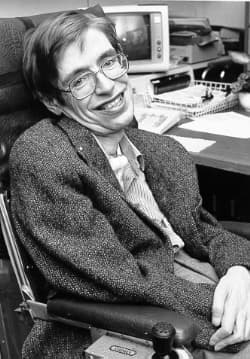
Stephen Hawking
PERSON39 w/ Berkeley·85 w/ Marvin
Lesley Groff
PERSON11 w/ Berkeley·104 w/ Marvin
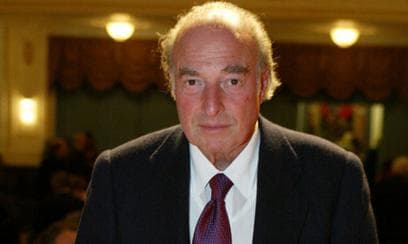
Marc Rich
PERSON53 w/ Berkeley·60 w/ Marvin
Lawrence Krauss
PERSON32 w/ Berkeley·78 w/ Marvin
Martin Nowak
PERSON10 w/ Berkeley·99 w/ Marvin
Prince Andrew
PERSON43 w/ Berkeley·62 w/ Marvin
George W. Bush
PERSON65 w/ Berkeley·39 w/ Marvin
Prince Charles
PERSON48 w/ Berkeley·46 w/ Marvin
LB
Leon Black
PERSON41 w/ Berkeley·49 w/ Marvin
Donald Trump
PERSON44 w/ Berkeley·44 w/ Marvin
Alan Dershowitz
PERSON26 w/ Berkeley·61 w/ Marvin
Ghislaine Maxwell
PERSON24 w/ Berkeley·54 w/ Marvin
Julie K. Brown
PERSON44 w/ Berkeley·29 w/ Marvin
Eric Trump
PERSON32 w/ Berkeley·40 w/ Marvin
Woody Allen
PERSON29 w/ Berkeley·36 w/ Marvin
Virginia Giuffre
PERSON36 w/ Berkeley·28 w/ Marvin
Joe Biden
PERSON30 w/ Berkeley·33 w/ Marvin
Bill Clinton
PERSON27 w/ Berkeley·36 w/ Marvin