Back to Network









7
Shared Docs
7
Same-Page
9 / 9
Mentions
Document Mentions (7 shared documents)
3 mentions1 same-page
Page ?Same page
rol, planning, estimation, learning, and cognitive science. Barely into her thirties herself, she has co-authored a number of papers with her veteran Berkeley colleague and mentor Stuart Russell which address various aspects of machine learning and the knotty problems of value alignment. She shares Stuart’
ces at UC Berkeley. She co-founded and serves on the steering committee for the Berkeley AI Research (BAIR) Lab and is a co-principal investigator in Berkeley’s Center for Human-Compatible AI. George Dyson is a historian of science and technology and the author of Baidarka: the Kayak, Darwin Among the Mach
at our door.” In the wake of advances in unsupervised, self-improving machine learning, a small but influential community of thinkers is considering Wiener’s words again. In Deep Thinking, John Brockman gathers their disparate visions of where AI might be taking us. The fruit of the long history of Broc
3 mentions1 same-page
Page ?Same page
that she treats them coldly, as if they were mere laboratory animals. They appear to revel in her company, and in the blinking, thrumming toys in her Berkeley lab. For years after her own children had outgrown it, she kept a playpen in her office. Her investigations into just how we learn, and the parallel
e first meeting (in Washington, Connecticut) that preceded the crafting of this book, he commented on the change in how “information” is viewed since Wiener’s time: the military-industrial, Cold War era. Back then, Wiener compared information, metaphorically, to entropy, in that it could not be conserved—
and directed the slaves as they mindlessly (mechanically) churned their oars. The Greek had already migrated into modern English via Latin, going 47 Wiener later had to admit the earlier coinage of the word in 1834 by André-Marie Ampére, who had intended it to mean the “science of government,” a concept
3 mentions1 same-page
Page ?Same page
rol, planning, estimation, learning, and cognitive science. Barely into her thirties herself, she has co-authored a number of papers with her veteran Berkeley colleague and mentor Stuart Russell which address various aspects of machine learning and the knotty problems of value alignment. She shares Stuart’
ces at UC Berkeley. She co-founded and serves on the steering committee for the Berkeley AI Research (BAIR) Lab and is a co-principal investigator in Berkeley’s Center for Human-Compatible AI. George Dyson is a historian of science and technology and the author of Baidarka: the Kayak, Darwin Among the Mach
at our door.” In the wake of advances in unsupervised, self-improving machine learning, a small but influential community of thinkers is considering Wiener’s words again. In Deep Thinking, John Brockman gathers their disparate visions of where AI might be taking us. The fruit of the long history of Broc
Sponsored
3 mentions1 same-page
Page ?Same page
that she treats them coldly, as if they were mere laboratory animals. They appear to revel in her company, and in the blinking, thrumming toys in her Berkeley lab. For years after her own children had outgrown it, she kept a playpen in her office. Her investigations into just how we learn, and the parallel
e first meeting (in Washington, Connecticut) that preceded the crafting of this book, he commented on the change in how “information” is viewed since Wiener’s time: the military-industrial, Cold War era. Back then, Wiener compared information, metaphorically, to entropy, in that it could not be conserved—
and directed the slaves as they mindlessly (mechanically) churned their oars. The Greek had already migrated into modern English via Latin, going 47 Wiener later had to admit the earlier coinage of the word in 1834 by André-Marie Ampére, who had intended it to mean the “science of government,” a concept
2 mentions1 same-page
Page ?Same page
ucation Fall Conference, San Francisco, CA, October 21- 24, 1998. 98. Research and treatment with highly traumatized preschoolers. Wright Institute, Berkeley, Feb. 4, 2002. 12 EFTA00221813 Case 9:08-cv-80119-KAM Document 144-3 Entered on FLSD Docket 06/08/2009 Page 12 of 23 99. Five year and thirt
, N. Understanding Bereavement and Grief Yeshiva University Press, New York, 1977. 22. "Childhood Mourning: A Taboo Within a Taboo," in Gerber, I., Wiener, A., Kutscher, A., et al., Perspectives on Bereavement, MSS Information Corporation, New York, 1979. 5 EFTA00221806 Case 9:08-cv-80119-KAM Doc
2 mentions1 same-page
Page ?Same page
bridge, Mass.: M.I.T. Press, 1967), p. 199. kelt is important . . . the imposed disturbance)* A A 36. Carlos Castenedas, The Teachings of Don Juan (Berkeley, Calif.: University of California Press, 1968), p. 76. *o All paths are . . . they lead nowhere.fi AA 317 New York Post, April 7, 1968, p. 11. Deat
ooks: The Hidden Dimension (New York: Doubleday & Company, Inc., 1966) and The Silent Language (New York: Doubleday & Company, Inc., 1959). A A 31 Wiener, op. cit., p. 325. kenew concepts of .. . and of society.' A A 14. Alfred North Whitehead, Science and the Modern World (New York: The Free Press, 1
Sponsored
2 mentions1 same-page
Page ?Same page
ucation Fall Conference, San Francisco, CA, October 21- 24, 1998. 98. Research and treatment with highly traumatized preschoolers. Wright Institute, Berkeley, Feb. 4, 2002. 12 EFTA00182872 Case 9:08-cv-80119-KAM Document 144-3 Entered on FLSD Docket 06/08/2009 Page 13 of 23 110. Presentations of v
hoanalytic Study of the Child, Volume 34, The New York Times Press, New York, 1979. 24. "Facilitation of Mourning During Childhood," in Gerber, I., Wiener, A., Kutscher, A., et al., Perspectives on Bereavement, MSS Information Corporation, New York, 1979. 25. "The Cornerstone Treatment of a Preschool
Sponsored
Mutual Connections (1,257)
Entities connected to both Berkeley and Wiener
Jeffrey Epstein
PERSON154 w/ Berkeley·32 w/ Wiener
George W. Bush
PERSON65 w/ Berkeley·23 w/ Wiener
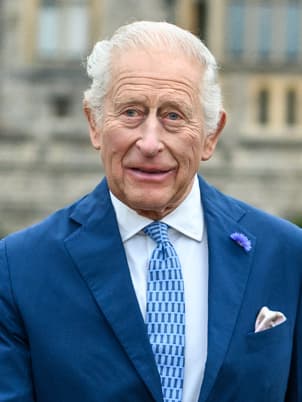
Prince Charles
PERSON48 w/ Berkeley·13 w/ Wiener
Julie K. Brown
PERSON44 w/ Berkeley·15 w/ Wiener
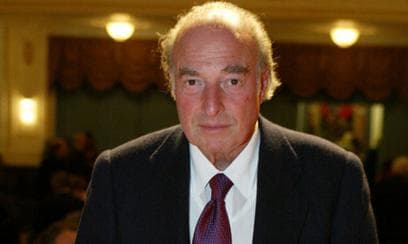
Marc Rich
PERSON53 w/ Berkeley·5 w/ Wiener
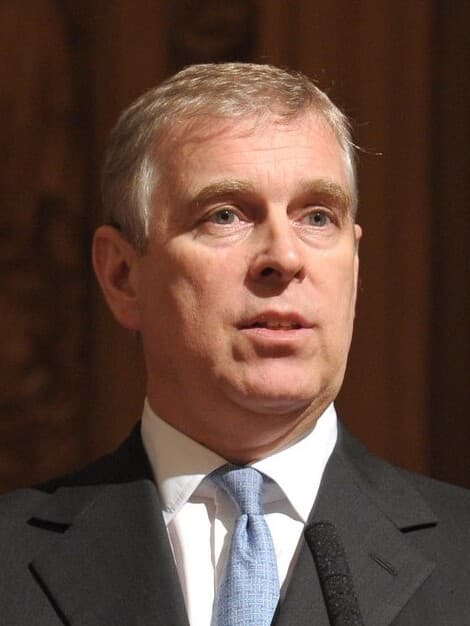
Prince Andrew
PERSON43 w/ Berkeley·12 w/ Wiener
Donald Trump
PERSON44 w/ Berkeley·10 w/ Wiener
LB
Leon Black
PERSON41 w/ Berkeley·13 w/ Wiener
United States
LOCATION44 w/ Berkeley·6 w/ Wiener
Virginia Giuffre
PERSON36 w/ Berkeley·14 w/ Wiener
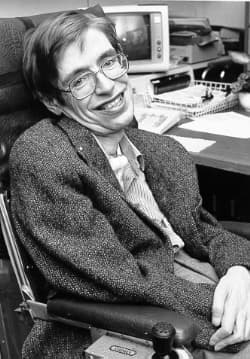
Stephen Hawking
PERSON39 w/ Berkeley·8 w/ Wiener
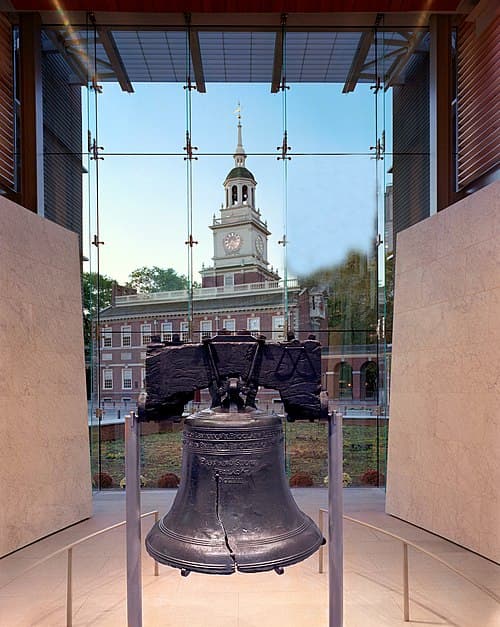
Philadelphia
LOCATION34 w/ Berkeley·11 w/ Wiener
ET
Emmy Taylor
PERSON35 w/ Berkeley·8 w/ Wiener
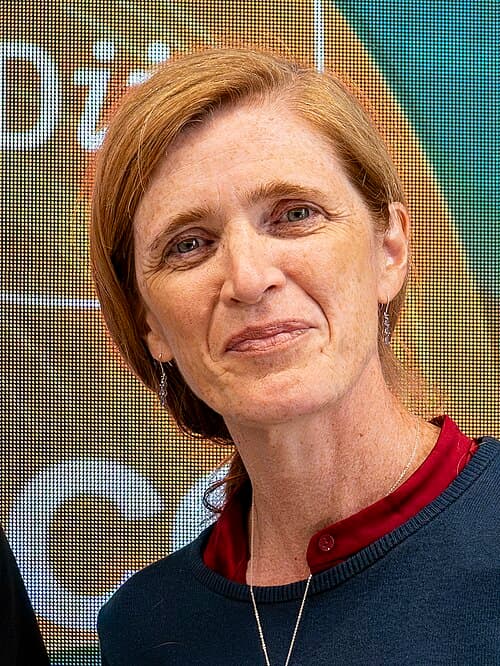
Samantha Power
PERSON34 w/ Berkeley·8 w/ Wiener
Barack Obama
PERSON37 w/ Berkeley·5 w/ Wiener
Eric Trump
PERSON32 w/ Berkeley·9 w/ Wiener
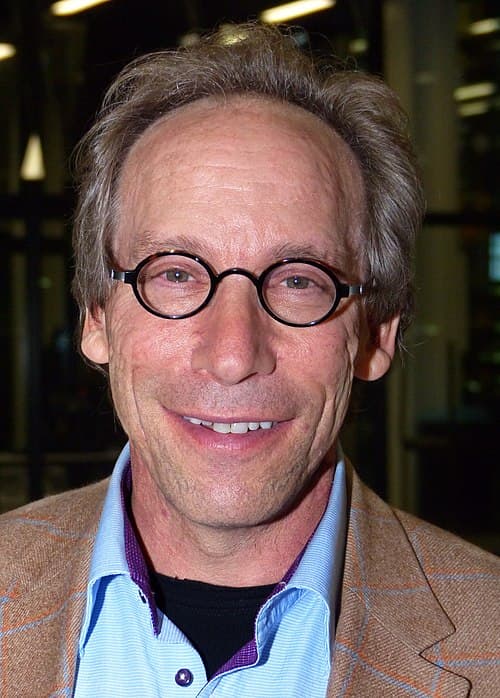
Lawrence Krauss
PERSON32 w/ Berkeley·8 w/ Wiener
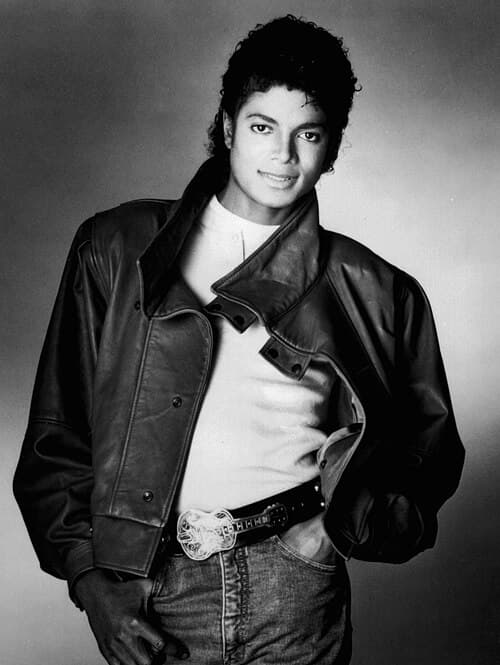
Michael Jackson
PERSON30 w/ Berkeley·10 w/ Wiener
Joe Biden
PERSON30 w/ Berkeley·9 w/ Wiener
MF
Maria Farmer
PERSON29 w/ Berkeley·10 w/ Wiener