Back to Network













4
Shared Docs
4
Same-Page
4 / 4
Mentions
Document Mentions (4 shared documents)
2 mentions1 same-page
Page ?Same page
n Turing wondered what it would take for machines to become intelligent. John von Neumann wondered what it would take for machines to self-reproduce. Claude Shannon wondered what it would take for machines to communicate reliably, no matter how much noise intervened. Norbert Wiener wondered how long it wo
edia arts and sciences, MIT; director of the Human Dynamics and Connection Science labs and the Media Lab Entrepreneurship Program, and the author of Social Physics. New Science of Cause and Effect. Steven Pinker, a Johnstone Family Professor in the Department of Psychology at Harvard University, is an experime
2 mentions1 same-page
Page ?Same page
, “A Scientist Rebels,” Zhe Atlantic Monthly, January 1947. 31 Warren Weaver, “Recent Contributions to the Mathematical Theory of Communication,” in Claude Shannon & Warren Weaver, The Mathematical Theory of Communication (Urbana, IL: University of Illinois Press, 1949), p. 8 (emphasis in original). Shan
edia arts and sciences, MIT; director of the Human Dynamics and Connection Science labs and the Media Lab Entrepreneurship Program, and the author of Social Physics. In the last half-century, the idea of AI and intelligent robots has dominated thinking about the relationship between humans and computers. In part
2 mentions1 same-page
Page ?Same page
n Turing wondered what it would take for machines to become intelligent. John von Neumann wondered what it would take for machines to self-reproduce. Claude Shannon wondered what it would take for machines to communicate reliably, no matter how much noise intervened. Norbert Wiener wondered how long it wo
edia arts and sciences, MIT; director of the Human Dynamics and Connection Science labs and the Media Lab Entrepreneurship Program, and the author of Social Physics. New Science of Cause and Effect. Steven Pinker, a Johnstone Family Professor in the Department of Psychology at Harvard University, is an experime
Sponsored
2 mentions1 same-page
Page ?Same page
, “A Scientist Rebels,” Zhe Atlantic Monthly, January 1947. 31 Warren Weaver, “Recent Contributions to the Mathematical Theory of Communication,” in Claude Shannon & Warren Weaver, The Mathematical Theory of Communication (Urbana, IL: University of Illinois Press, 1949), p. 8 (emphasis in original). Shan
edia arts and sciences, MIT; director of the Human Dynamics and Connection Science labs and the Media Lab Entrepreneurship Program, and the author of Social Physics. In the last half-century, the idea of AI and intelligent robots has dominated thinking about the relationship between humans and computers. In part
Sponsored
Mutual Connections (688)
Entities connected to both Claude and Social Physics
Stephen Hawking
PERSON10 w/ Claude·4 w/ Social
Julie K. Brown
PERSON10 w/ Claude·4 w/ Social
Prince Andrew
PERSON10 w/ Claude·4 w/ Social
Ghislaine Maxwell
PERSON9 w/ Claude·4 w/ Social
Eric Trump
PERSON9 w/ Claude·4 w/ Social
Alan Dershowitz
PERSON9 w/ Claude·4 w/ Social
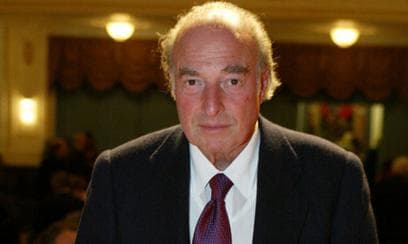
Marc Rich
PERSON9 w/ Claude·4 w/ Social
LB
Leon Black
PERSON8 w/ Claude·4 w/ Social
DB
Doug Band
PERSON8 w/ Claude·4 w/ Social
George W. Bush
PERSON8 w/ Claude·4 w/ Social
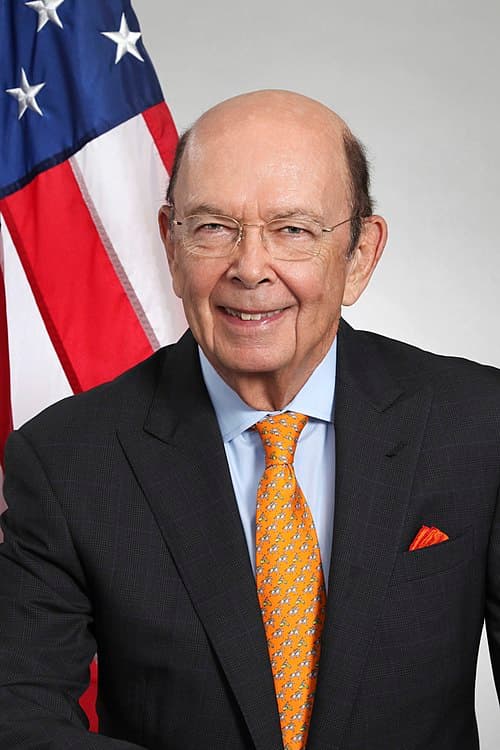
Wilbur Ross
PERSON7 w/ Claude·4 w/ Social
Harvey Weinstein
PERSON7 w/ Claude·4 w/ Social
Earth
LOCATION6 w/ Claude·4 w/ Social
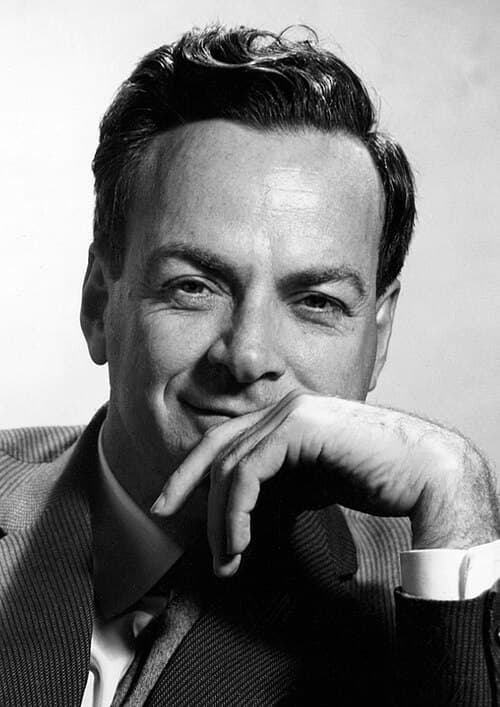
Feynman
PERSON6 w/ Claude·4 w/ Social
Cambridge University
ORGANIZATION6 w/ Claude·4 w/ Social
Oliver Stone
PERSON6 w/ Claude·4 w/ Social
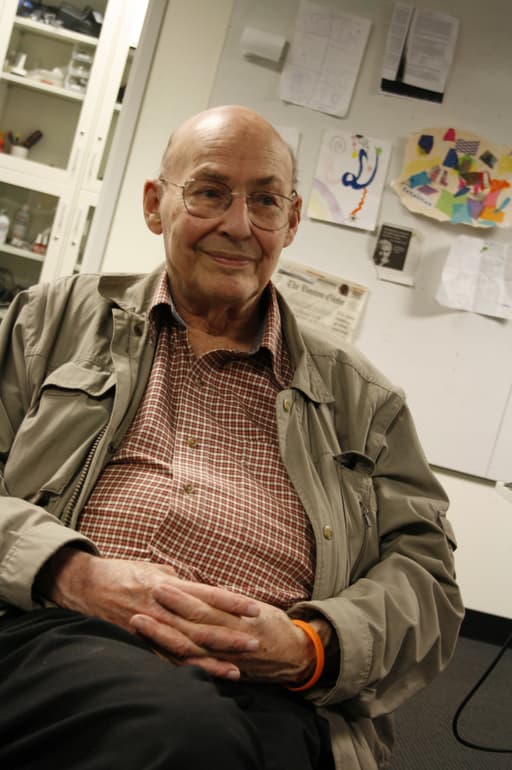
Marvin Minsky
PERSON6 w/ Claude·4 w/ Social
Elon Musk
PERSON6 w/ Claude·4 w/ Social
Joe Biden
PERSON8 w/ Claude·2 w/ Social
Barack Obama
PERSON6 w/ Claude·4 w/ Social