Back to Network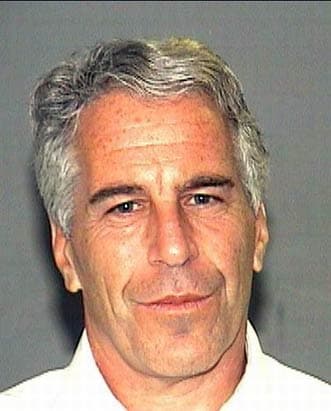

4
Shared Docs
4
Same-Page
4 / 6
Mentions
Document Mentions (4 shared documents)
3 mentions1 same-page
Page ?Same page
n Turing wondered what it would take for machines to become intelligent. John von Neumann wondered what it would take for machines to self-reproduce. Claude Shannon wondered what it would take for machines to communicate reliably, no matter how much noise intervened. Norbert Wiener wondered how long it wo
rol, planning, estimation, learning, and cognitive science. Barely into her thirties herself, she has co-authored a number of papers with her veteran Berkeley colleague and mentor Stuart Russell which address various aspects of machine learning and the knotty problems of value alignment. She shares Stuart’
ces at UC Berkeley. She co-founded and serves on the steering committee for the Berkeley AI Research (BAIR) Lab and is a co-principal investigator in Berkeley’s Center for Human-Compatible AI. George Dyson is a historian of science and technology and the author of Baidarka: the Kayak, Darwin Among the Mach
3 mentions1 same-page
Page ?Same page
n Turing wondered what it would take for machines to become intelligent. John von Neumann wondered what it would take for machines to self-reproduce. Claude Shannon wondered what it would take for machines to communicate reliably, no matter how much noise intervened. Norbert Wiener wondered how long it wo
rol, planning, estimation, learning, and cognitive science. Barely into her thirties herself, she has co-authored a number of papers with her veteran Berkeley colleague and mentor Stuart Russell which address various aspects of machine learning and the knotty problems of value alignment. She shares Stuart’
ces at UC Berkeley. She co-founded and serves on the steering committee for the Berkeley AI Research (BAIR) Lab and is a co-principal investigator in Berkeley’s Center for Human-Compatible AI. George Dyson is a historian of science and technology and the author of Baidarka: the Kayak, Darwin Among the Mach
2 mentions1 same-page
Page ?Same page
, “A Scientist Rebels,” Zhe Atlantic Monthly, January 1947. 31 Warren Weaver, “Recent Contributions to the Mathematical Theory of Communication,” in Claude Shannon & Warren Weaver, The Mathematical Theory of Communication (Urbana, IL: University of Illinois Press, 1949), p. 8 (emphasis in original). Shan
that she treats them coldly, as if they were mere laboratory animals. They appear to revel in her company, and in the blinking, thrumming toys in her Berkeley lab. For years after her own children had outgrown it, she kept a playpen in her office. Her investigations into just how we learn, and the parallel
Sponsored
2 mentions1 same-page
Page ?Same page
, “A Scientist Rebels,” Zhe Atlantic Monthly, January 1947. 31 Warren Weaver, “Recent Contributions to the Mathematical Theory of Communication,” in Claude Shannon & Warren Weaver, The Mathematical Theory of Communication (Urbana, IL: University of Illinois Press, 1949), p. 8 (emphasis in original). Shan
that she treats them coldly, as if they were mere laboratory animals. They appear to revel in her company, and in the blinking, thrumming toys in her Berkeley lab. For years after her own children had outgrown it, she kept a playpen in her office. Her investigations into just how we learn, and the parallel
Sponsored
Mutual Connections (842)
Entities connected to both Claude and Berkeley
Jeffrey Epstein
PERSON22 w/ Claude·154 w/ Berkeley
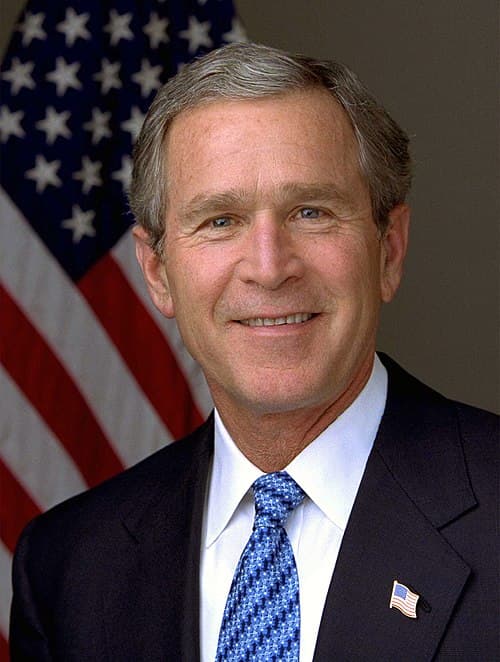
George W. Bush
PERSON8 w/ Claude·65 w/ Berkeley
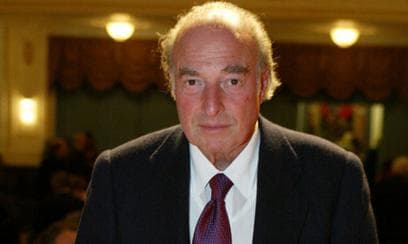
Marc Rich
PERSON9 w/ Claude·53 w/ Berkeley
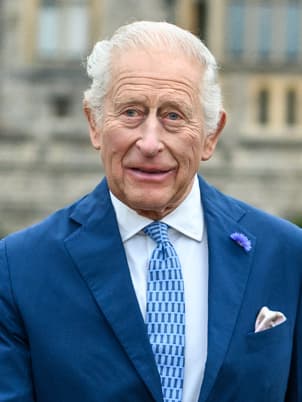
Prince Charles
PERSON7 w/ Claude·48 w/ Berkeley
Julie K. Brown
PERSON10 w/ Claude·44 w/ Berkeley
Prince Andrew
PERSON10 w/ Claude·43 w/ Berkeley
Donald Trump
PERSON8 w/ Claude·44 w/ Berkeley
LB
Leon Black
PERSON8 w/ Claude·41 w/ Berkeley
Stephen Hawking
PERSON10 w/ Claude·39 w/ Berkeley
Barack Obama
PERSON6 w/ Claude·37 w/ Berkeley
Virginia Giuffre
PERSON5 w/ Claude·36 w/ Berkeley
Eric Trump
PERSON9 w/ Claude·32 w/ Berkeley
ET
Emmy Taylor
PERSON5 w/ Claude·35 w/ Berkeley
Philadelphia
LOCATION5 w/ Claude·34 w/ Berkeley
Samantha Power
PERSON5 w/ Claude·34 w/ Berkeley
Joe Biden
PERSON8 w/ Claude·30 w/ Berkeley
Lawrence Krauss
PERSON5 w/ Claude·32 w/ Berkeley
John F. Kennedy
PERSON5 w/ Claude·32 w/ Berkeley
Michael Jackson
PERSON6 w/ Claude·30 w/ Berkeley
Alan Dershowitz
PERSON9 w/ Claude·26 w/ Berkeley