Back to Network

















3
Shared Docs
3
Same-Page
6 / 3
Mentions
Document Mentions (3 shared documents)
3 mentions1 same-page
Page ?Same page
calm and, before each turn, looks to a screen at the side of the board, reads the instruction, and makes his move. This is the famous match between Garry Kasparov and IBM’s Deep Blue. Kasparov, a child prodigy, became world chess champion at the age of fifteen and, to this day, holds the record for the highest
o a screen at the side of the board, reads the instruction, and makes his move. This is the famous match between Garry Kasparov and IBM’s Deep Blue. Kasparov, a child prodigy, became world chess champion at the age of fifteen and, to this day, holds the record for the highest chess ranking ever achieved. S
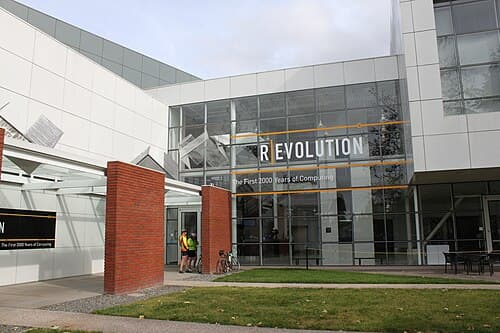
ek Island of Antikythera had cogs and gears and could accurately predict the motions of the sun and planets. Many Babbage’s Difference Engine No. 2, Computer History Museum, CA HOUSE_OVERSIGHT_015705 16 Are the Androids Dreaming Yet? of these skills were lost in the Dark Ages but, once the Renaissance was underway in
3 mentions1 same-page
Page ?Same page
ne article described Deep Blue’s victory not as that of a computer, which was just a dumb machine, but as the victory of hundreds of programmers over Kasparov, a single individual. That way of programming is changing dramatically. After a long hiatus, the power of machine learning has taken off. Much of th
, we programmed computers using algorithms we understood at least in principle. So when machines did amazing things like beating world chess champion Garry Kasparov, we could say that the victorious programs were designed with algorithms based on our own understanding—using, in this instance, the experience and a
n undergraduate at MIT, he built a computer out of Tinkertoys. It has around 10,000 wooden parts, plays tic-tac-toe, and never loses; it’s now in the Computer History Museum, in Mountain View, California. As a graduate student at the MIT Computer Science and Artificial Intelligence Laboratory in the early 1980s, Danny de
3 mentions1 same-page
Page ?Same page
ne article described Deep Blue’s victory not as that of a computer, which was just a dumb machine, but as the victory of hundreds of programmers over Kasparov, a single individual. That way of programming is changing dramatically. After a long hiatus, the power of machine learning has taken off. Much of th
, we programmed computers using algorithms we understood at least in principle. So when machines did amazing things like beating world chess champion Garry Kasparov, we could say that the victorious programs were designed with algorithms based on our own understanding—using, in this instance, the experience and a
n undergraduate at MIT, he built a computer out of Tinkertoys. It has around 10,000 wooden parts, plays tic-tac-toe, and never loses; it’s now in the Computer History Museum, in Mountain View, California. As a graduate student at the MIT Computer Science and Artificial Intelligence Laboratory in the early 1980s, Danny de
Sponsored
Mutual Connections (380)
Entities connected to both Garry Kasparov and Computer History Museum
Stephen Hawking
PERSON17 w/ Garry·3 w/ Computer
Prince Andrew
PERSON15 w/ Garry·3 w/ Computer
Ghislaine Maxwell
PERSON16 w/ Garry·2 w/ Computer
Marc Rich
PERSON12 w/ Garry·3 w/ Computer
LB
Leon Black
PERSON12 w/ Garry·3 w/ Computer
DB
Doug Band
PERSON12 w/ Garry·3 w/ Computer
Samantha Power
PERSON11 w/ Garry·3 w/ Computer
George W. Bush
PERSON12 w/ Garry·2 w/ Computer
Eric Trump
PERSON11 w/ Garry·2 w/ Computer
Barack Obama
PERSON11 w/ Garry·2 w/ Computer
Deep Blue
PERSON10 w/ Garry·3 w/ Computer
Alan Dershowitz
PERSON9 w/ Garry·3 w/ Computer
Danny Hillis
PERSON10 w/ Garry·2 w/ Computer
John F. Kennedy
PERSON9 w/ Garry·2 w/ Computer
Earth
LOCATION8 w/ Garry·3 w/ Computer
Nigeria
LOCATION9 w/ Garry·2 w/ Computer
Julie K. Brown
PERSON9 w/ Garry·2 w/ Computer
AG
Ace Greenberg
PERSON9 w/ Garry·2 w/ Computer
Harvey Weinstein
PERSON7 w/ Garry·3 w/ Computer
Oliver Stone
PERSON8 w/ Garry·2 w/ Computer