Back to Network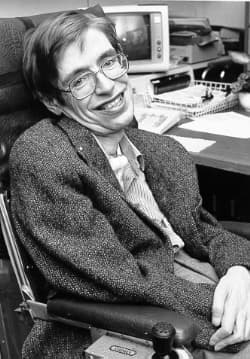




6
Shared Docs
6
Same-Page
9 / 6
Mentions
Document Mentions (6 shared documents)
3 mentions1 same-page
Page ?Same page
ley. withdrew from the competition because of pancreatic cancer.) Chinook had no machine learned aspects. EFTA_R1_02074941 EFTA02702510 In 1997, Garry Kasparov lost to Deep Blue at chess—Kasp- arov was the reigning world chess champion. In one pivotal game Kasparov remarked on the "superior intelligence" of
R1_02074941 EFTA02702510 In 1997, Garry Kasparov lost to Deep Blue at chess—Kasp- arov was the reigning world chess champion. In one pivotal game Kasparov remarked on the "superior intelligence" of the machine during the first game (won by Kasparov) by avoiding a dangerous position that had short-term
y "Ws° • evaluations with Monte-Carlo rollouts. Our uitar-sha browsing g p loud, soft, complex, plain. Not a single track." ed coloring program AlphaGo integrates these components purpose-built software robots like those that play checkers, chess, backgammon, and Go. These are intended to show that
3 mentions1 same-page
Page ?Same page
ne article described Deep Blue’s victory not as that of a computer, which was just a dumb machine, but as the victory of hundreds of programmers over Kasparov, a single individual. That way of programming is changing dramatically. After a long hiatus, the power of machine learning has taken off. Much of th
, we programmed computers using algorithms we understood at least in principle. So when machines did amazing things like beating world chess champion Garry Kasparov, we could say that the victorious programs were designed with algorithms based on our own understanding—using, in this instance, the experience and a
rs relied a great deal on intuition and a feel for position, so proficiency was thought to require a particularly human kind of intelligence. But the AlphaGo program produced by DeepMind, after being trained on thousands of high-level Go games played by humans and then millions of games with itself, was ab
3 mentions1 same-page
Page ?Same page
ne article described Deep Blue’s victory not as that of a computer, which was just a dumb machine, but as the victory of hundreds of programmers over Kasparov, a single individual. That way of programming is changing dramatically. After a long hiatus, the power of machine learning has taken off. Much of th
, we programmed computers using algorithms we understood at least in principle. So when machines did amazing things like beating world chess champion Garry Kasparov, we could say that the victorious programs were designed with algorithms based on our own understanding—using, in this instance, the experience and a
rs relied a great deal on intuition and a feel for position, so proficiency was thought to require a particularly human kind of intelligence. But the AlphaGo program produced by DeepMind, after being trained on thousands of high-level Go games played by humans and then millions of games with itself, was ab
Sponsored
2 mentions1 same-page
Page ?Same page
ed Crazy Stone.1-le had thought computer mastery of the game was a decade away. The IBM chess computer Deep Blue, which famously beat grandmaster Garry Kasparov in 1997, was explicitly programmed to win at the game. But AlphaGo was not preprogrammed to play Go: rather, it learned using a general- purpose a
away. The IBM chess computer Deep Blue, which famously beat grandmaster Garry Kasparov in 1997, was explicitly programmed to win at the game. But AlphaGo was not preprogrammed to play Go: rather, it learned using a general- purpose algorithm that allowed it to interpret the game's patterns, in a simi
2 mentions1 same-page
Page ?Same page
a vast selection of possible future moves. But the majority of predictions of AI, e.g., robotic maids, turned out to be illusory. When Deep Blue beat Garry Kasparov at chess in 1997, the most 20 HOUSE_OVERSIGHT_016823 powerful room-cleaning robot was a Roomba, which moved around vacuuming at random and squeake
o communicate with other humans, learn from them, instruct them, and motivate them in our own native language. If our robots will all be as opaque as AlphaGo, we won’t be able to hold a meaningful conversation with them, and that would be unfortunate. We will need to retrain them whenever we make a slight
2 mentions1 same-page
Page ?Same page
a vast selection of possible future moves. But the majority of predictions of AI, e.g., robotic maids, turned out to be illusory. When Deep Blue beat Garry Kasparov at chess in 1997, the most 20 HOUSE_OVERSIGHT_016240 powerful room-cleaning robot was a Roomba, which moved around vacuuming at random and squeake
o communicate with other humans, learn from them, instruct them, and motivate them in our own native language. If our robots will all be as opaque as AlphaGo, we won’t be able to hold a meaningful conversation with them, and that would be unfortunate. We will need to retrain them whenever we make a slight
Sponsored
Mutual Connections (689)
Entities connected to both Garry Kasparov and AlphaGo
Stephen Hawking
PERSON17 w/ Garry·6 w/ AlphaGo
Ghislaine Maxwell
PERSON16 w/ Garry·4 w/ AlphaGo
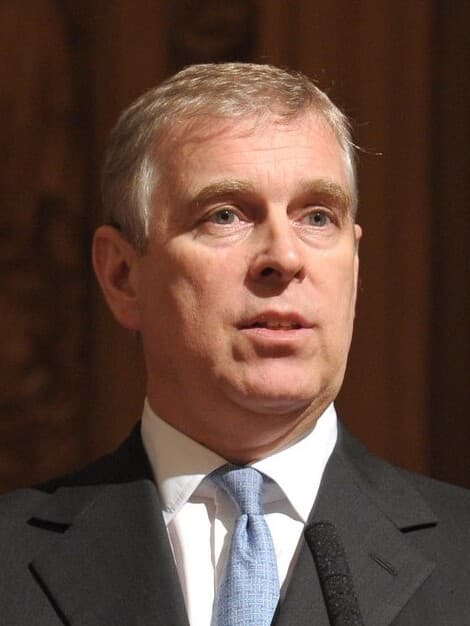
Prince Andrew
PERSON15 w/ Garry·4 w/ AlphaGo
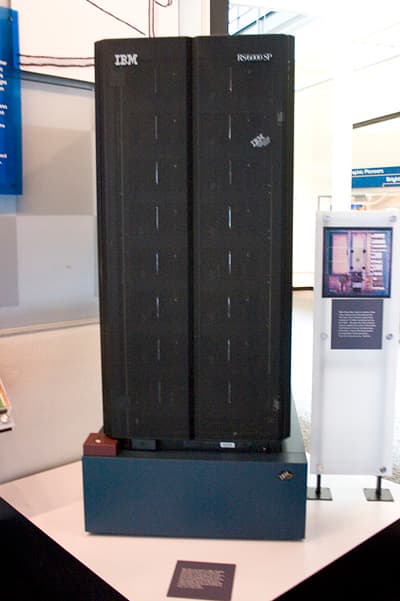
Deep Blue
PERSON10 w/ Garry·8 w/ AlphaGo
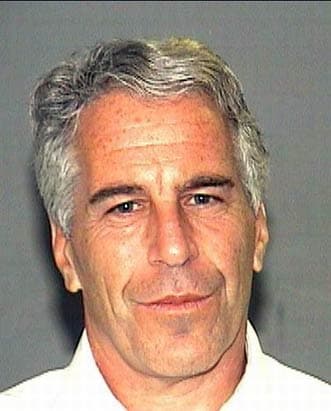
Jeffrey Epstein
PERSON12 w/ Garry·5 w/ AlphaGo
LB
Leon Black
PERSON12 w/ Garry·4 w/ AlphaGo
George W. Bush
PERSON12 w/ Garry·4 w/ AlphaGo
Samantha Power
PERSON11 w/ Garry·5 w/ AlphaGo
Marc Rich
PERSON12 w/ Garry·4 w/ AlphaGo
DB
Doug Band
PERSON12 w/ Garry·4 w/ AlphaGo
Danny Hillis
PERSON10 w/ Garry·5 w/ AlphaGo
Barack Obama
PERSON11 w/ Garry·4 w/ AlphaGo
Eric Trump
PERSON11 w/ Garry·4 w/ AlphaGo
Alan Dershowitz
PERSON9 w/ Garry·5 w/ AlphaGo
AG
Ace Greenberg
PERSON9 w/ Garry·4 w/ AlphaGo
Oliver Stone
PERSON8 w/ Garry·5 w/ AlphaGo
Julie K. Brown
PERSON9 w/ Garry·4 w/ AlphaGo
Elon Musk
PERSON7 w/ Garry·5 w/ AlphaGo
Earth
LOCATION8 w/ Garry·4 w/ AlphaGo
Robert Gates
PERSON7 w/ Garry·5 w/ AlphaGo