Back to Network


















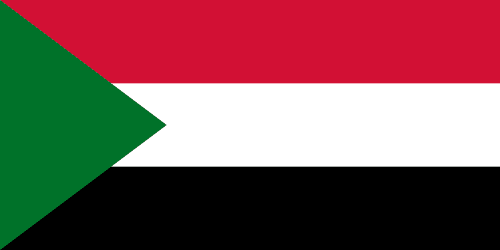
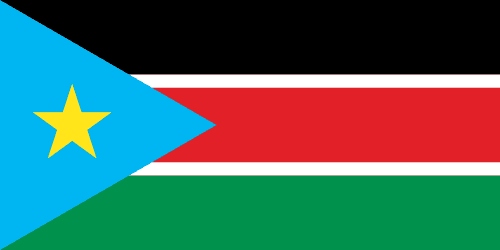
11
Shared Docs
11
Same-Page
11 / 11
Mentions
Document Mentions (11 shared documents)
2 mentions1 same-page
Page HOUSE_OVERSIGHT_032181Same page
ies or foreign powers could exploit to fragment some Arab states into smaller units that would then be more reliant on foreign support or protection. Sudan has already split into northern and southern states, while Yemen, Iraq and possibly a few others are similarly susceptible to subdivision into smalle
Page: HOUSE_OVERSIGHT_032181 →s difficult issues about the inviolability of the current Arab borders that the retreating Europeans created last century. I thought the secession of South Sudan was a perfectly acceptable development, if it reflected the will of the people of the south, and was not imposed on them. The operative principle in
Page: HOUSE_OVERSIGHT_032181 →2 mentions1 same-page
Page ?Same page
ountries was independent when the agreement was signed. The agreement allocated 48 million cubic meters of water per year to Egypt and 4 million to Sudan—but it neglected the other eight countries. In 1959, Egypt and Sudan agreed to increase their share of the Nile water to 55 million and 18 million
in East Africa including Ethiopia. The agreement allows for the signatories to carry out water projects on the Nile without the approval of Egypt. South Sudan said it will join the agreement while Congo and Eretria remained on the sidelines. But the agreement was opposed by both Egypt and Sudan, which, fo
2 mentions1 same-page
Page ?Same page
tary President General Ibrahim Babangida, is a prominent northerner and cousin to the Sultan of Sokoto, Nigeria's highest Muslim spiritual figure. Sudan: A $2.4 billion deficit and 30 percent inflation rate, combined with pressure from the International Monetary Fund to launch an emergency austerity
lls will determine whether Khartoum is willing to appease internal tensions, while also continuing to negotiate complex post-referendum issues with South Sudan. Latin America Mexico: Enrique Pena Nieto, the candidate of the Institutional Revolutionary Party (PRI), was elected president on July 1, bringing
Sponsored
2 mentions1 same-page
Page ?Same page
s, here are the six areas of conflict—all tied to energy supplies—that have made news in just the first few months of 2012: * A brewing war between Sudan and South Sudan: On April 10, forces from the newly independent state of South Sudan occupied [5] the oil center of Heglig, a town granted to Sudan
e the six areas of conflict—all tied to energy supplies—that have made news in just the first few months of 2012: * A brewing war between Sudan and South Sudan: On April 10, forces from the newly independent state of South Sudan occupied [5] the oil center of Heglig, a town granted to Sudan as part of a pe
2 mentions1 same-page
Page ?Same page
cos' Series, Could Be Released From Prison In Days • U.S. Wires Ukraine With Radiation Sensors to Detect Nuclear Blasts • American Doctor Killed in Sudan Had Stayed to Treat His Patients as Bombs Fell OTHER WASHINGTON NEWS • U.S. Senator Introduces Bill Targeting Al's Shortfalls • U.S. Justice Depar
om Sudan War • Associated Press: U.S. Conducts 1st Evacuation Of Its Citizens From Sudan War • Reuters: U.S. Citizens Evacuated From Bor to Juba in South Sudan • CNN: First Red Cross Aid Arrives in Sudan After Weeks of Fighting • New York Times: U.S. Begins Overland Evacuation of American Civilians From Su
2 mentions1 same-page
Page ?Same page
or foreign powers could exploit to fragment some Arab states into smaller units that would then be more reliant on foreign support or protection. Sudan has already split into northern and southern states, while Yemen, Iraq and possibly a few others are similarly susceptible to subdivision into smal
difficult issues about the inviolability of the current Arab borders that the retreating Europeans created last century. I thought the secession of South Sudan was a perfectly acceptable development, if it reflected the will of the people of the south, and was not imposed on them. The operative principle
Sponsored
2 mentions1 same-page
Page ?Same page
acel Islands, Paraguay, Peru, Russia, Saint Kitts and Nevis, Saudi Arabia, Senegal, Seychelles, Sierra Leone, Somalia, South Sudan. Spratly Islands, Sudan, Swaziland, Syria, Tajikistan, Tanzania, Timor-Leste, Togo. Tonga, Trinidad and Tobago, Tunisia, Turkey, Turkmenistan, Turks and Caicos Islands, Ug
Panama, Papua New Guinea, Paracel Islands, Paraguay, Peru, Russia, Saint Kitts and Nevis, Saudi Arabia, Senegal, Seychelles, Sierra Leone, Somalia, South Sudan. Spratly Islands, Sudan, Swaziland, Syria, Tajikistan, Tanzania, Timor-Leste, Togo. Tonga, Trinidad and Tobago, Tunisia, Turkey, Turkmenistan, Turks
2 mentions1 same-page
Page ?Same page
icymakers. How then can China's recent veto behavior in the Security Council be explained? Previous Chinese actions vis- a-vis the atrocities inside Sudan provide insights. While China still cherishes the principle of state sovereignty, Beijing has actually over time become more socialized into the fr
st expansion. Arguably, however, the three capitals of Khartoum, Juba and Beijing have mutual vulnerabilities. The two Sudanese states, especially South Sudan are in desperate need of investments for development. With more than $12.5 billion invested in the petro- sector, much of it in the disputed Abyei a
2 mentions1 same-page
Page ?Same page
s between Egypt and these states and to discuss issues relating to the sharing of the Nile's water. NATIONAL SECURITY ISSUES: Meanwhile, Egypt and Sudan have said they will not sign the Cooperative Framework Agreement (CFA) signed by most of the other Nile Basin states unless they are guaranteed th
he other Nile Basin states, building further bridges between them. As if to demonstrate this idea, last week saw the conclusion of a 10-day tour to South Sudan, Uganda, Rwanda and Ethiopia, in order to involve civil society organisations in boosting cooperation with the Nile Basin states, according to Magd
Sponsored
2 mentions1 same-page
Page ?Same page
opolitical tensions, and weak regional cooperation, all of which shape its political and security landscape. Ongoing conflicts in Somalia, Ethiopia, Sudan, and South Sudan, along with territorial disputes, continue to strain relations among neighboring countries and hinder efforts toward stability. •
tensions, and weak regional cooperation, all of which shape its political and security landscape. Ongoing conflicts in Somalia, Ethiopia, Sudan, and South Sudan, along with territorial disputes, continue to strain relations among neighboring countries and hinder efforts toward stability. • Carnegie: The Fut
Sponsored
Mutual Connections (451)
Entities connected to both Sudan and South Sudan
Jeffrey Epstein
PERSON104 w/ Sudan·8 w/ South
United States
LOCATION90 w/ Sudan·14 w/ South
Barack Obama
PERSON84 w/ Sudan·13 w/ South
Donald Trump
PERSON83 w/ Sudan·13 w/ South
George W. Bush
PERSON78 w/ Sudan·12 w/ South
Yemen
LOCATION65 w/ Sudan·11 w/ South
Bill Clinton
PERSON68 w/ Sudan·7 w/ South
Joe Biden
PERSON66 w/ Sudan·7 w/ South
Prince Andrew
PERSON64 w/ Sudan·8 w/ South
Department of Justice
ORGANIZATION62 w/ Sudan·7 w/ South
LB
Leon Black
PERSON63 w/ Sudan·4 w/ South
Bloomberg L.P.
ORGANIZATION59 w/ Sudan·5 w/ South
Virginia Giuffre
PERSON56 w/ Sudan·7 w/ South
Lebanon
LOCATION54 w/ Sudan·9 w/ South
Prince Charles
PERSON57 w/ Sudan·6 w/ South
Marc Rich
PERSON50 w/ Sudan·11 w/ South
Michael Jackson
PERSON52 w/ Sudan·6 w/ South
Julie K. Brown
PERSON52 w/ Sudan·6 w/ South
North Korea
LOCATION54 w/ Sudan·4 w/ South
Tehran
LOCATION48 w/ Sudan·9 w/ South