Back to Network














4
Shared Docs
4
Same-Page
7 / 4
Mentions
Document Mentions (4 shared documents)
3 mentions1 same-page
Page ?Same page
LENGTH: 7274 words HEADLINE: The St. Thomas common sense symposium: designing architectures for human-level intelligence. BYLINE: Minsky, Marvin; Singh, Push; Stomas, Aaron BODY: To build a machine that has "common sense" was once a principal goal in the field of artificial intelligence. But most
encountered while reasoning in one set of mental realms can be overcome within others. Further information about these architectures can be found in Singh and Minsky (2003), Sloman (2001), and McCarthy et al. (2002). Minsky's model will be described in detail in his new book The Emotion Machine (Minsk
iven Understanding: An Integrated Theory of Story Understanding, Memory, and Learning, Technical Report YALE/DCS(tr710, Computer Science Department. Yale University, New Haven, CT (1989). (15.) C. Dolan, Tensor Manipulation Networks: Connectionist and Symbolic Approaches to Comprehension, Learning, and Planning
3 mentions1 same-page
Page ?Same page
encountered while reasoning in one set of mental realms can be overcome within others. Further information about these architectures can be found in Singh and Minsky (2003), Sloman (2001), and McCarthy et aL (2002). Minsky's model will be described in detail in his new book The Emotion Machine (Minsky
LENGTH: 7274 words HEADLINE: The St. Thomas common sense symposium: designing architectures for human-level intelligence. BYLINE: Minsky, Marvin; Singh, Push; Sloman, Aaron BODY: To build a machine that has 'common sense" was once a principal goal in the field of artificial intelligence. But most
-Driven Understanding: An Integrated Theory of Story Understanding, Memory, and Learning, Technical Report YALVDCS4710, Computer Science Department, Yale University, New Haven, CT (1989). (15.) C. Dolan, Tensor Manipulation Networks: Connectionist and Symbolic Approaches to Comprehension, Learning, and Planning
3 mentions1 same-page
Page ?Same page
LENGTH: 7274 words HEADLINE: The St. Thomas common sense symposium: designing architectures for human-level intelligence. BYLINE: Minsky, Marvin; Singh, Push; Sloman, Aaron BODY: To build a machine that has "common sense" was once a principal goal in the field of artificial intelligence. But most
encountered while reasoning in one set of mental realms can be overcome within others. Further information about these architectures can be found in Singh and Minsky (2003), Sloman (2001), and McCarthy et al. (2002). Minsky's model will be described in detail in his new book The Emotion Machine (Minsk
iven Understanding: An Integrated Theory of Story Understanding, Memory, and Learning, Technical Report YALE/DCSitr710, Computer Science Department, Yale University, New Haven, CT (1989). (15.) C. Dolan, Tensor Manipulation Networks: Connectionist and Symbolic Approaches to Comprehension, Learning, and Planning
Sponsored
2 mentions1 same-page
Page ?Same page
Jain, Mruthinti, Muehsam, Vieten,&=bsp;Yijun Liu,Ying-Tung Lin C21: Artificial Intel=igence and Models of Reality=/p> Panov, Beck, Shirtz, Char=n, Singh, Ju Lee, Kanta Arora C22: Consciousness an= Models of Reality 3 Khabeev, Narayanan, Pyari, Jain,=/b> Cortel, Kim, Vallederes C23: Consciousness an
ss Ani=ban Bandyopadhyay= NIMS, Tsukuba, 'Vibrational Frequencies of Biomaterials are the Key t= Integration of Information' liarei Dai, South Cen=ral University, China, 'Biophotonic Activities and Transmission in Relation=to Consciousness' Eri= Viirre, UCSD, 'A=ditory Vibrations and Frequencies: Sounds in Y
Sponsored
Mutual Connections (1,091)
Entities connected to both Singh and Yale University
Jeffrey Epstein
PERSON72 w/ Singh·99 w/ Yale
Prince Andrew
PERSON44 w/ Singh·29 w/ Yale
Julie K. Brown
PERSON50 w/ Singh·20 w/ Yale
Donald Trump
PERSON49 w/ Singh·20 w/ Yale
George W. Bush
PERSON45 w/ Singh·23 w/ Yale
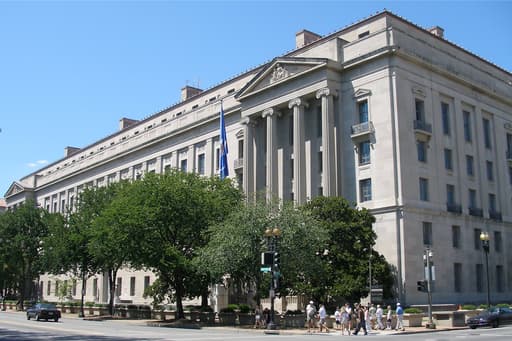
Department of Justice
ORGANIZATION47 w/ Singh·18 w/ Yale
LB
Leon Black
PERSON46 w/ Singh·18 w/ Yale
Prince Charles
PERSON45 w/ Singh·18 w/ Yale
United States
LOCATION40 w/ Singh·22 w/ Yale
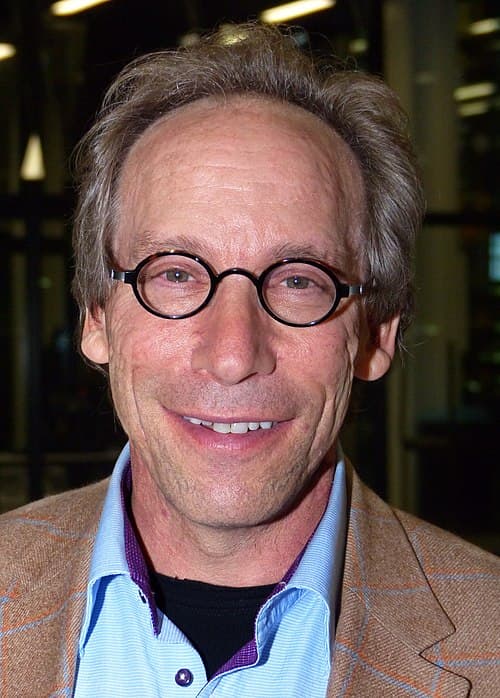
Lawrence Krauss
PERSON12 w/ Singh·49 w/ Yale
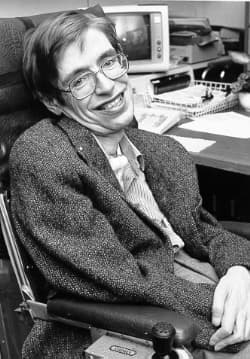
Stephen Hawking
PERSON40 w/ Singh·18 w/ Yale
Virginia Giuffre
PERSON35 w/ Singh·20 w/ Yale
Joe Biden
PERSON45 w/ Singh·9 w/ Yale
Michael Jackson
PERSON39 w/ Singh·13 w/ Yale
The New York Post
ORGANIZATION43 w/ Singh·6 w/ Yale
Paul Ryan
PERSON31 w/ Singh·16 w/ Yale
Bill Clinton
PERSON23 w/ Singh·24 w/ Yale
George Mitchell
PERSON38 w/ Singh·9 w/ Yale
New York
LOCATION32 w/ Singh·14 w/ Yale
Bloomberg L.P.
ORGANIZATION39 w/ Singh·6 w/ Yale