Back to Network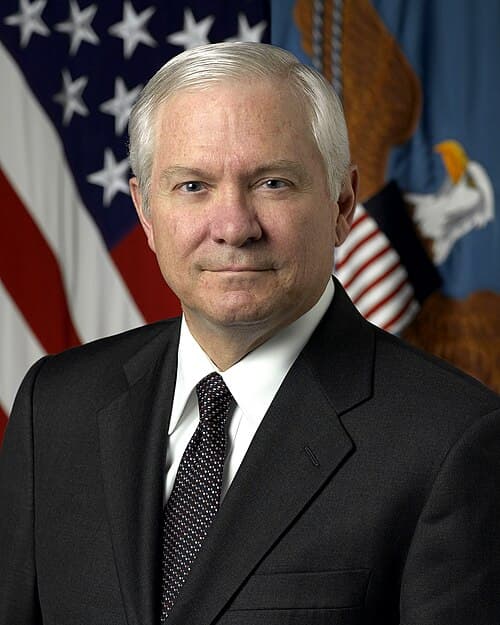















4
Shared Docs
4
Same-Page
4 / 4
Mentions
Document Mentions (4 shared documents)
2 mentions1 same-page
Page ?Same page
From: John Brockman < INIMI> To: Paul Allen , Sergey Brin Ginevra Elkann , John Doerr Tony Fadell Bill Gates Maja Hoffmann , Bill Joy , Daniel Kahneman Vinod Khosla , Milner Yuri Elon Musk , Nathan Myhrvold , Pierre Omid ar Page , Lori Park , Jean
ear-old graduate student, not by building a computer, but by writing a purely mathematical paper, "On Computable Numbers, with an Application to the Entscheidungsproblem," published in 1936. The Decision Problem, articulated by Gottingen's David Hilbert, concerned the abstract mathematical question of whether there
2 mentions1 same-page
Page ?Same page
h a new and intuitive software creation environment where almost all the tedium was removed. A wealth of tools for creating software was pioneered by Bill Gates of HOUSE_OVERSIGHT_015926 Software 237 Microsoft and Philip Kahn of Borland, along with intuitive applications such as the spreadsheet invented by
at King’s College, Cambridge and was made a Fellow at only 22. In 1936 Turing, aged 24, published On Computable Numbers and their Application to the Entscheidungsproblem, not a snappy title, but one of the most influential mathematical works of the 20" century. The paper described the new the science of computing and
2 mentions1 same-page
Page ?Same page
desire. . . . In my view, this is the source of the existential risk from superintelligent AI cited in recent years by such observers as Elon Musk, Bill Gates, Stephen Hawking, and Nick Bostrom. Putting Purposes Into Machines The goal of AI research has been to understand the principles underlying intelli
e. Turing contributed a fundamental model of computation—now known as a Turing Machine—in his paper “On Computable Numbers with an Application to the Entscheidungsproblem,” written and revised in 1936 and published in 1937. In these machines, a linear tape of symbols from a finite alphabet encodes the input for a compu
Sponsored
Mutual Connections (435)
Entities connected to both Bill Gates and Entscheidungsproblem
Robert Gates
PERSON1,023 w/ Bill·5 w/ Entscheidungsproblem
Prince Andrew
PERSON227 w/ Bill·4 w/ Entscheidungsproblem
LB
Leon Black
PERSON223 w/ Bill·4 w/ Entscheidungsproblem
Marc Rich
PERSON199 w/ Bill·2 w/ Entscheidungsproblem
Woody Allen
PERSON177 w/ Bill·3 w/ Entscheidungsproblem
Alan Dershowitz
PERSON164 w/ Bill·5 w/ Entscheidungsproblem
Donald Trump
PERSON131 w/ Bill·2 w/ Entscheidungsproblem
George W. Bush
PERSON118 w/ Bill·5 w/ Entscheidungsproblem
Ghislaine Maxwell
PERSON117 w/ Bill·3 w/ Entscheidungsproblem
Joe Biden
PERSON116 w/ Bill·3 w/ Entscheidungsproblem
Richard Kahn
PERSON97 w/ Bill·2 w/ Entscheidungsproblem
Prince Charles
PERSON96 w/ Bill·3 w/ Entscheidungsproblem
Julie K. Brown
PERSON94 w/ Bill·3 w/ Entscheidungsproblem
Elon Musk
PERSON93 w/ Bill·3 w/ Entscheidungsproblem
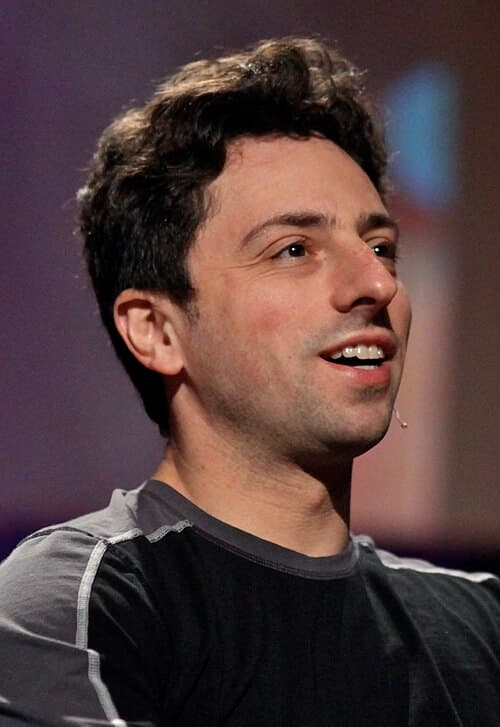
Sergey Brin
PERSON84 w/ Bill·2 w/ Entscheidungsproblem
Samantha Power
PERSON82 w/ Bill·3 w/ Entscheidungsproblem
Stephen Hawking
PERSON80 w/ Bill·4 w/ Entscheidungsproblem
Barack Obama
PERSON80 w/ Bill·2 w/ Entscheidungsproblem
MF
Maria Farmer
PERSON76 w/ Bill·3 w/ Entscheidungsproblem
John Brockman
PERSON75 w/ Bill·3 w/ Entscheidungsproblem