Back to Network












3
Shared Docs
2
Same-Page
8 / 3
Mentions
Document Mentions (3 shared documents)
4 mentions1 same-page
Page ?Same page
top to bottom. Disturbingly, the leaders of some dem- ocratic societies have begun to embrace the majoritarian idea The Hungarian prime minister, Viktor °Man, has instituted a thorough overhaul of the country's constitution and national leg- islation with an eye toward measures that will insulate hi
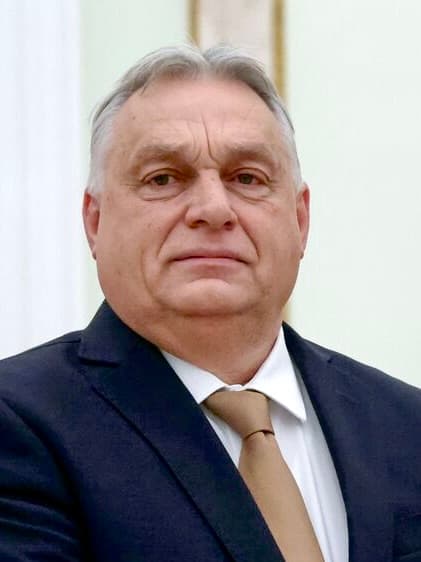
tssias.tarrihle.oast.515,906. 34 EFTA00804758 Freedom House Chapter 5 The Rise of 'Illiberal Democracy' In July 2014, Hungarian prime minister Viktor Orban gave what has come to be known as his "illiberal democracy' speech before an ethnic Hungarian audi- ence in Bane Tu§nad, Romania.' Several points i
s his "illiberal democracy' speech before an ethnic Hungarian audi- ence in Bane Tu§nad, Romania.' Several points in his remarks are worth noting: Orban urged his listeners to no longer regard the 1989 triumph over communism as the reference point for developments in Hungary. Instead of measuring p
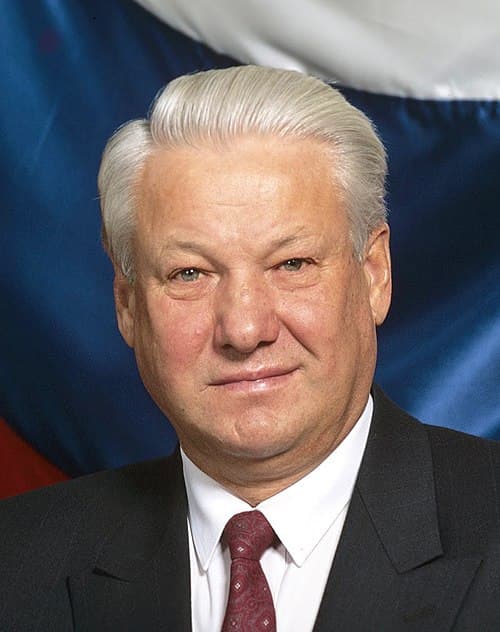
bjective and independent, Russian television and Russian media generally were no- table for their liveliness and diversity during the presidency of Boris Yeltsin. All did not sing out of the same hymnal, and most influential outlets reflected a variety of opinions about government policies, including the Kr
3 mentions1 same-page
Page ?Same page
xpanding program inside the EU and NATO as well as outside it. Linking up with anti-Brussels, anti-Berlin politicians like Hungarian Prime Minister Victor Orban, Russia is developing deeper financial, economic and even political links well inside the divided Union. With business and especially the energy bu
to cultivate a sense of pan-Slavic unity that looks to Mother Russia, and to provide aid and encouragement for anti-western leaders like Hungary's Orban would suit Putin very well. The EU is currently struggling in the southeast of Europe. The Balkans and Hungary are not doing well, and efforts to b
lagrantly ignored German wishes and interests. This is how we treated Russia in the 1990s. The West provided economic aid to the "Weimar Russia" of Boris Yeltsin much as the Young and the Dawes plans helped Germany relaunch its economy in the 1920s. But in the 1990s as in the 1920s the West was uninterested
HOUSE_OVERSIGHT_019233 - HOUSE_OVERSIGHT_019296
FH_Authoritarians_Report_2017.indd
4 mentions
Page HOUSE_OVERSIGHT_019241
om top to bottom. Disturbingly, the leaders of some dem- ocratic societies have begun to embrace the majoritarian idea. The Hungarian prime minister, Viktor Orban, has instituted a thorough overhaul of the country's constitution and national leg- islation with an eye toward measures that will insulate his party
Page: HOUSE_OVERSIGHT_019241 →Page HOUSE_OVERSIGHT_019250
objective and independent, Russian television and Russian media generally were no- table for their liveliness and diversity during the presidency of Boris Yeltsin. All did not sing out of the same hymnal, and most influential outlets reflected a variety of opinions about government policies, including the Kreml
Page: HOUSE_OVERSIGHT_019250 →Page HOUSE_OVERSIGHT_019269
his “illiberal democracy" speech before an ethnic Hungarian audi- ence in Baile Tusnad, Romania.! Several points in his remarks are worth noting: ¢ Orban urged his listeners to no longer regard the 1989 triumph over communism as the reference point for developments in Hungary. Instead of measuring prog
Page: HOUSE_OVERSIGHT_019269 →Sponsored
Mutual Connections (358)
Entities connected to both Viktor Orbán and Boris Yeltsin
Jeffrey Epstein
PERSON43 w/ Viktor·2 w/ Boris
Donald Trump
PERSON41 w/ Viktor·2 w/ Boris
George Soros
PERSON26 w/ Viktor·3 w/ Boris
Barack Obama
PERSON17 w/ Viktor·8 w/ Boris
LB
Leon Black
PERSON17 w/ Viktor·5 w/ Boris
George W. Bush
PERSON16 w/ Viktor·6 w/ Boris
Bill Clinton
PERSON15 w/ Viktor·7 w/ Boris
Marine Le Pen
PERSON19 w/ Viktor·3 w/ Boris
Vladimir Putin
PERSON14 w/ Viktor·7 w/ Boris
Nigel Farage
PERSON19 w/ Viktor·2 w/ Boris
Boris Nikolic
PERSON13 w/ Viktor·7 w/ Boris
Hungary
LOCATION17 w/ Viktor·2 w/ Boris
Angela Merkel
PERSON11 w/ Viktor·7 w/ Boris
Joe Biden
PERSON14 w/ Viktor·3 w/ Boris
Samantha Power
PERSON12 w/ Viktor·5 w/ Boris
Prince Andrew
PERSON14 w/ Viktor·2 w/ Boris
Julie K. Brown
PERSON13 w/ Viktor·2 w/ Boris
United States
LOCATION9 w/ Viktor·6 w/ Boris
Department of Justice
ORGANIZATION11 w/ Viktor·4 w/ Boris
James Baker
PERSON11 w/ Viktor·2 w/ Boris