Back to Network


















6
Shared Docs
6
Same-Page
8 / 6
Mentions
Document Mentions (6 shared documents)
3 mentions1 same-page
Page ?Same page
tional (continued) EFTA00156877 Table I. (continued) Study Purpose Design Sample Findings Summary Kogan (2004) Goodman-Brown. Edelstein. Goodman. Jones. and Gordon (2003) The purpose of this study was co identify factors chat influence the disclosures made by female survivors of USE in
elayed disclosures (Collin-Vezina, Sablonni, Palmer, & Milne, 2015; Crisma, Bascelli, Paci, & Romito, 2004; Easton, 2013; Goodman-Brown, Edelstein, Goodman, Jones, & Gordon, 2003; Hershkowitz, Lanes, & Lamb; 2007; Jonzon & Lindblad, 2004; McElvancy, 2015; Smith et al.. 2000). Incidence studies in the
gia, R., & Kirshenbaum, S. (2005). Speaking the unspeakable: Exploring the impact of family dynamics on child sexual abuse disclosures. Families in Society. 86, 227-234. Braun. V.. & Clarke, V. (2006). Using thematic analysis in psychology. Qualitative Research in Psychology. 3, 93. doi:10.1191/ 14780
3 mentions1 same-page
Page ?Same page
children about the CSA than supportive mothers do or fail to legitimate their children's al- legations, long-term memory may be adversely affected (Goodman, Quas, Battentran-Faunce, Riddlesberger, & Kuhn, 1994; Haden, Mayne, & Fivush, 1997). Furthermore, individ- uals abused by an emotionally close care
l touching, rape, oral sex, or intercourse (completed or attempted acts) that occurred before age 18 and with a person more than 4 years older (see Goodman et al.. 2003). Of the 103 individuals (2.3 males, 80 females) who completed all portions of Phase 3, 7 said they were never abused (although 3 of
elated infommtion (e.g.. Ike r. Shobe. & Kililstmni. 2000: Edwank. Finsh. Anda. Felitii. & Node berg, 2001: C.0 00,0i t 2015 Anwritan No. 6,4opgal Society 33 3534-009 Page 1 of 8 EFTA_000 10253 EFTA00159901 Memory for Child Sexual Abuse Hunter & Andrews, 2002; McNally, Lasko, Macklin, & Pitman.
2 mentions1 same-page
Page ?Same page
tialities central to IPV such as its frequency and direct gender entrapment that distinguish IPV from other fonns of power and control. Dutton and Goodman (2005) have also conceptualized coercive control as it relates to 1PV. These authors suggested that perpetra- tors prime victims for coercion throug
0814732939.001.0001 Gilpin. J. F. (1994). Avengers. conquerors- playmates. and lovers: Roles played by child sexual abuse perpetrators. Families in Society. 75. 467-480. hup://dx.doi.ofg/10.1177/104438949407500801 Hamberger. L K.. Larsen. S. E.. & Lehner. A. (2017). Coercive control in intimate partne
Sponsored
2 mentions1 same-page
Page ?Same page
, Hendrix, C.T., Jenny C., & Reid, T.A. (Eds.), APSAC handbook on child maltreatment (2nd ed) (pp. 379402). Thousand Oaks, CA: Sage. Saywitz, K.J., Goodman, G.S., & Lyon, T.D. (2002). Interviewing children in and out of court Current research and practice implications. In Myers, J.E.B., Berliner, L., B
nonetheless, that such victim behavior does have significance in the perception of society and in the "real world" of the criminal justice system. Society's lack of understanding and acceptance of the reality ofcompliant child victims often results in the following: I. Victims failing to disclose and
2 mentions1 same-page
Page ?Same page
ence Foundation, 1986-88; 1988-91 (Jury Comprehension--w/Greene-Goodman) Fund for Research on Dispute Resolution, 1989-91 (Predictions of Success--w/Goodman) National Institute of Health, 1991-95 (Cognition & Health--w/Croyle) National Institute of Health, 1993-94 (Health/sex memory: subcontract from UC
d, England & NY: Oxford University Press., p 60-75. . Garry, M. & Loftus, E.F. (2007) Repressed memory. in Clark, D.S. (Ed) Encyclopedia of Law and Society. Thousand Oaks, Ca.: Sage Publishers. p. 1307-1309. Loftus, E. F. & Steinberg, R.L. (2007, March 9). If memory serves. Wall Street Journal, p. A14.(
2 mentions1 same-page
Page ?Same page
elayed disclosures (Collin-VEzina, Sablonni, Palmer, & Milne, 2015; Crisma, Bascelli, Paci, & Romito, 2004; Easton, 2013; Goodman-Brown, Edelstein, Goodman, Jones, & Gordon, 2003; Hershkowitz, Lanes, & Lamb; 2007; Jonzon & Lindblad, 2004; McElvaney, 2015; Smith et al., 2000). Incidence studies in the
ia, It., & Kirshenbaum, S. (2005). Speaking the unspeakable: Exploring the impact of family dynamics on child sexual abuse disclosures. Families in Society, 86, 227 234. Braun, V., & Clarke, V. (2006). Using thematic analysis in psychology. Qualitative Research in Psychology, 3, 93. doi:10.1191/ 14780
Sponsored
Mutual Connections (620)
Entities connected to both Goldman Sachs and Society
Jeffrey Epstein
PERSON184 w/ Goldman·38 w/ Society
Ghislaine Maxwell
PERSON130 w/ Goldman·9 w/ Society
Donald Trump
PERSON119 w/ Goldman·8 w/ Society
George W. Bush
PERSON97 w/ Goldman·29 w/ Society
LB
Leon Black
PERSON96 w/ Goldman·18 w/ Society
Julie K. Brown
PERSON88 w/ Goldman·17 w/ Society
Prince Andrew
PERSON76 w/ Goldman·13 w/ Society
Bloomberg L.P.
ORGANIZATION86 w/ Goldman·2 w/ Society
Prince Charles
PERSON74 w/ Goldman·13 w/ Society
Samantha Power
PERSON64 w/ Goldman·19 w/ Society
Department of Justice
ORGANIZATION72 w/ Goldman·9 w/ Society
Stephen Hawking
PERSON69 w/ Goldman·8 w/ Society
Marc Rich
PERSON53 w/ Goldman·19 w/ Society
United States
LOCATION59 w/ Goldman·13 w/ Society
Virginia Giuffre
PERSON62 w/ Goldman·10 w/ Society
Barack Obama
PERSON61 w/ Goldman·8 w/ Society
Wilbur Ross
PERSON60 w/ Goldman·8 w/ Society
Bill Clinton
PERSON54 w/ Goldman·10 w/ Society
Michael Cohen
PERSON58 w/ Goldman·6 w/ Society
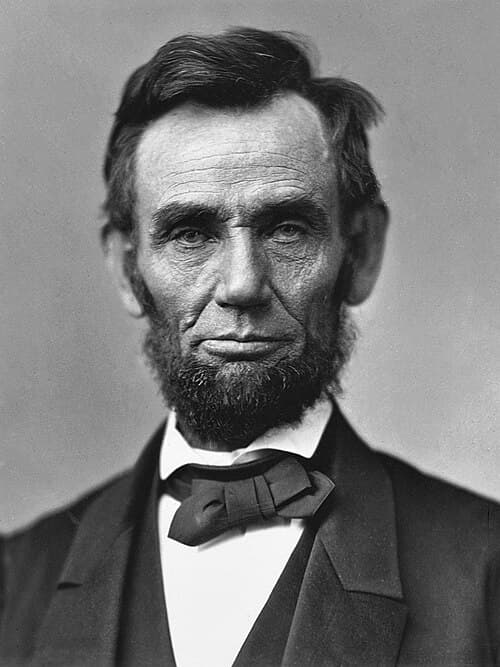
Abraham Lincoln
PERSON57 w/ Goldman·6 w/ Society